
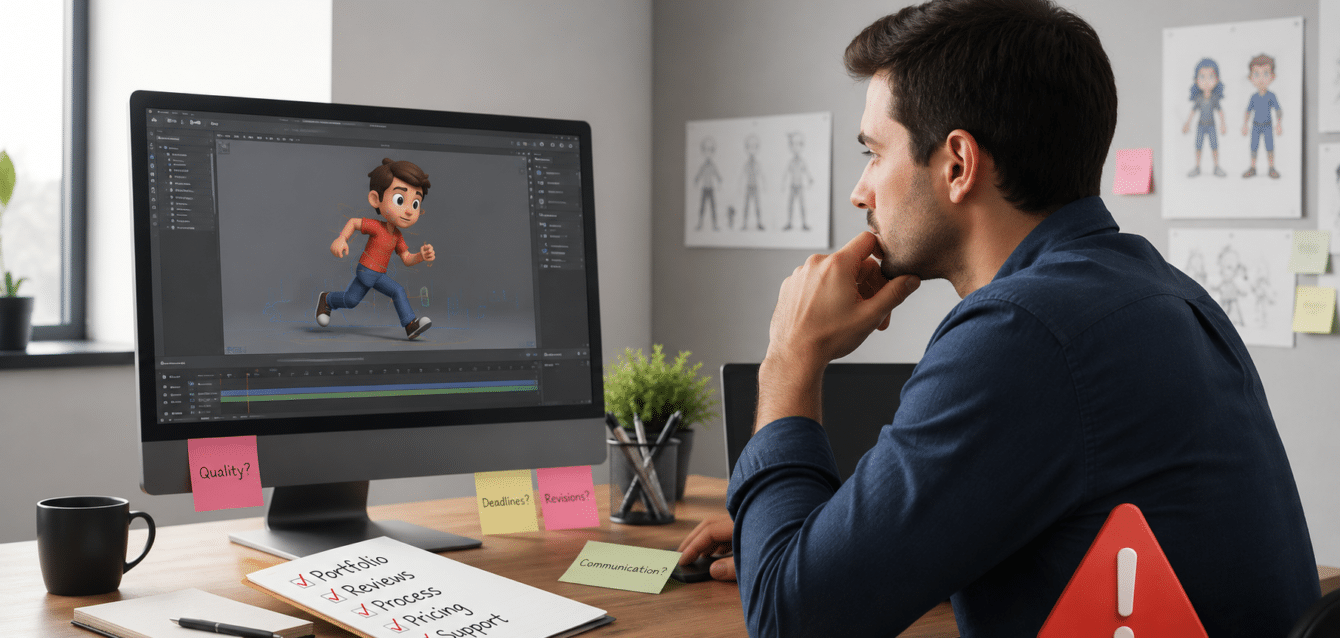
⚡ TL;DR — QUICK ANSWER
Before hiring an animation service in the USA in 2026, watch for these 10 red flags: no original portfolio work, vague or absent pricing, no revision policy, zero discovery process, one-size-fits-all packages, no clear point of contact, 100% upfront payment, stock animation passed off as original, no contract or IP clause, and unrealistically fast timelines.
A legitimate animation service will have a verifiable portfolio, a structured production process, a written brief and contract, and a clear revision policy before any money changes hands. Studios like Ink N Algorithm include all of these as standard practice.
Introduction: The Animation Market in the USA Is Big — and Uneven
The demand for animation service in the USA has never been higher. Brands need explainer videos. Startups need product demos. E-commerce businesses need motion graphics for social media. Tech companies need character animations for onboarding flows. The result is a market flooded with providers — agencies, freelancers, offshore studios reselling work, and everything in between.
That variety is both a blessing and a problem. Somewhere in that mix is the right animation service for your project: a team with genuine skill, a structured process, clear communication, and the track record to back up their pitch. But there are also providers who overpromise on timelines, underdeliver on quality, use stock templates without disclosing it, and disappear after collecting an upfront payment.
Knowing the difference before you sign anything is what this article is about. Here are the ten red flags that experienced marketing managers, brand directors, and creative leads look for when evaluating any animation service in 2026 — along with what the right answer actually looks like.
10 Red Flags to Check Before Hiring an Animation Service in USA
🚩 RED FLAG #1: Their Portfolio Shows No Original Work
The most important thing any animation service can show you is original work they actually made — real projects for real clients, demonstrating range, quality, and craft. If a studio’s portfolio is full of generic reels, stock footage with their name on it, or the same two or three demo animations for every inquiry, that’s a significant problem.
✅ WHAT GOOD LOOKS LIKE:
A credible motion graphics studio has a portfolio of named client projects with context — what the brief was, what approach they took, and what the outcome was. Ask for case studies, not just a showreel.
🚩 RED FLAG #2: Pricing Is Vague, Hidden, or Suspiciously Lowanimation service will be upfront about how they price work and what drives cost. A studio that gives you a “starts from” figure without any further detail, or one whose quote is dramatically lower than every other provider, is telling you something.
✅ WHAT GOOD LOOKS LIKE:
Transparent pricing includes a line-by-line breakdown: scripting, storyboardvisual contentgn, animation, sound, revisions, and final delivery. When a studio explains why something costs what it costs, they understand their own work.
🚩 RED FLAG #3: No Defined Revision Policy
One of the most common sources of friction in any animation service engagement is revision scope. If a studio’s proposal doesn’t include a clear revision policy — how many rounds of feedback are included, at which stages, and what constitutes a revision versus a new deliverable — you’re setting yourself up for either a frustrating experience or an unexpectedly large bill.
✅ WHAT GOOD LOOKS LIKE: 🚩 RED FLAG #4: No Discovery or BriefCGI/strong>
Good animation starts with a good brief. If an animation service is willing to start work without spending meaningful time understanding your goals, audience, tone, brand guidelines, and key message — they’re going to make assumptions. Those assumptions rarely align with what you actually need. Skipping discovery is often how a studio cuts corners to hit a low quote.
✅ WHAT GOOD LOOKS LIKE: 🚩 RED FLAG #5: One-Size-Fits-All Packages With No Customization
If every potential client gets offered the same three packages regardless of their brief, the studio isn’t actually listening to your project — they’re fitting your project into a box that makes their workflow easier. Genuine animation service providers scope work based on your specific brief, not based on a tiered menu that was written before they heard a single detail about your needs.
✅ WHAT GOOD LOOKS LIKE:
Studios like Ink N Algorithm scope animation service engagements based on the specifics of each client’s brief — considering style, length, complexity, platform, and audience before making any recommendation about approach or budget.
🚩 RED FLAG #6: No Clear Point of Contact or Account Management
Dealing with a rotating cast of anonymous contacts over email, or not knowing who’s actually responsible for your project, is a warning sign that the studio either lacks structure or is managing more work than their team can handle. Effective animation service delivery requires clear communication, and that requires a specific, accountable person on the studio side.
✅ WHAT GOOD LOOKS LIKE:
Before signing, know the name and role of the person who will be your primary contact throughout the project — and confirm that person’s availability for the duration of your timeline.
🚩 RED FLAG #7: 100% Payment Required Upfront
Requiring full payment before any work begins removes all of your leverage as a client. While deposits are standard and reasonable in any animation service engagement, a demand for 100% payment before a single storyboard frame has been reviewed is a warning sign. It either indicates cash flow problems on the studio side or a model that prioritizes revenue capture over client relationships.
✅ WHAT GOOD LOOKS LIKE:
Stananimated contentent structures for animation services typically involve a deposit at project start, a milestone payment at a design or storyboard approval stage, and a final payment on delivery. This structure protects both parties.
🚩 RED FLAG #8: Stock Templates Presented as Original Work
This is more common than many clients realize. Some animatvisual contentce providers buy animation templates or stock motion graphics packs and customize them minimally, then present the result3D visualsinal work. The telltale signs: animations that look oddly familiar, characters or environments that you’ve seen in other brands’ content, and a quote that’s far too low to cover genuinely original production.
✅ WHAT GOOD LOOKS LIKE:
Ask directly whether the studio produces original assets or uses templates, and ask to see the working files at delivery. Original work comes with layered, editable project files. Template-based work often doesn’t.
🚩 RED FLAG #9: No Contract, No IP Clause, No Written Scope
Any professional animation service engagement should be governed by a written contract that clearly specifies: what’s being delivered, when it’s being delivered, who owns the final assets, what happens if either party needs to change scope, and how disputes are resolved. An animation service that works on a handshake or a brief email exchange is either very informal or hoping you won’t ask about IP ownership later.
✅ WHAT GOOD LOOKS LIKE:
Before any deposit is paid, confirm in writing: (a) you will own all final delivered assets outranimated video the studio will not reuse your animation in their promotional material without permission, and (c) the scope, deliverables, and timeline are documented in a signed agreement.
🚩 RED FLAG #10: Unrealistically Fast Timelines
Quality animation service takes time. A 60-second, fully original explainer video — properly scripted, storyboarded, designed, animated, and sound-designed — typically takes three to five weeks minimum. A CGIomising a week turnaround on complex animation is either planning to use templates, outsourcing to low-quality contractors, or simply going to miss the deadline and apologize later.
✅ WHAT GOOD LOOKS LIKE:
Align your project timeline with industry-standard production schedules. If you genuinely need fast turnaround, be upfront about it and ask the studio how they’ll achieve it without compromising quality — and ask to see examples of comparable fast-turnaround work.
Quick Reference: All 10 Red Flags at a Glance
Use this checklist when evaluating any animation service in the USA:
| # | Red Flag | Why It Matters |
| 1 | No original portfolio work | Templates or generic reels signal limited real-world capability |
| 2 | Vague or suspiciously low pricing | Transparent pricing reflects understanding of the work involved |
| 3 | No revision policy | Unlimited or undefined revisions lead to scope creep or disputes |
| 4 | No discovery or brief process | No brief = assumptions = misaligned output |
| 5 | One-size-fits-all packages | Cookie-cutter packages ignore what your project actually needs |
| 6 | No clear point of contact | Disorganized communication leads to errors and delays |
| 7 | 100% upfront payment | Removes client leverage; normal deposit is 30–50% |
| 8 | Stock templates sold as original | You pay for original; you receive something off the shelf |
| 9 | No contract or IP clause | Without written agreement, IP ownership is legally unclear |
| 10 | Unrealistically fast timelines | Fast promises often mean template shortcuts or outsourcing |