
TL;DR: Virtual Reality Services in the USA — Brands Turn Interest Into Leads. Learn about costs, features, ROI, and how US brands use this technology in 2026.
Virtual reality services in the USA
Virtual reality is no longer a future-facing experiment. For many brands in the USA, VR is becoming a practical tool for sales, training, and customer engagement. The question is no longer whether to invest in VR — it is how to use it effectively.
How brands use VR services to turn interest into leads
Virtual showrooms and sales centers
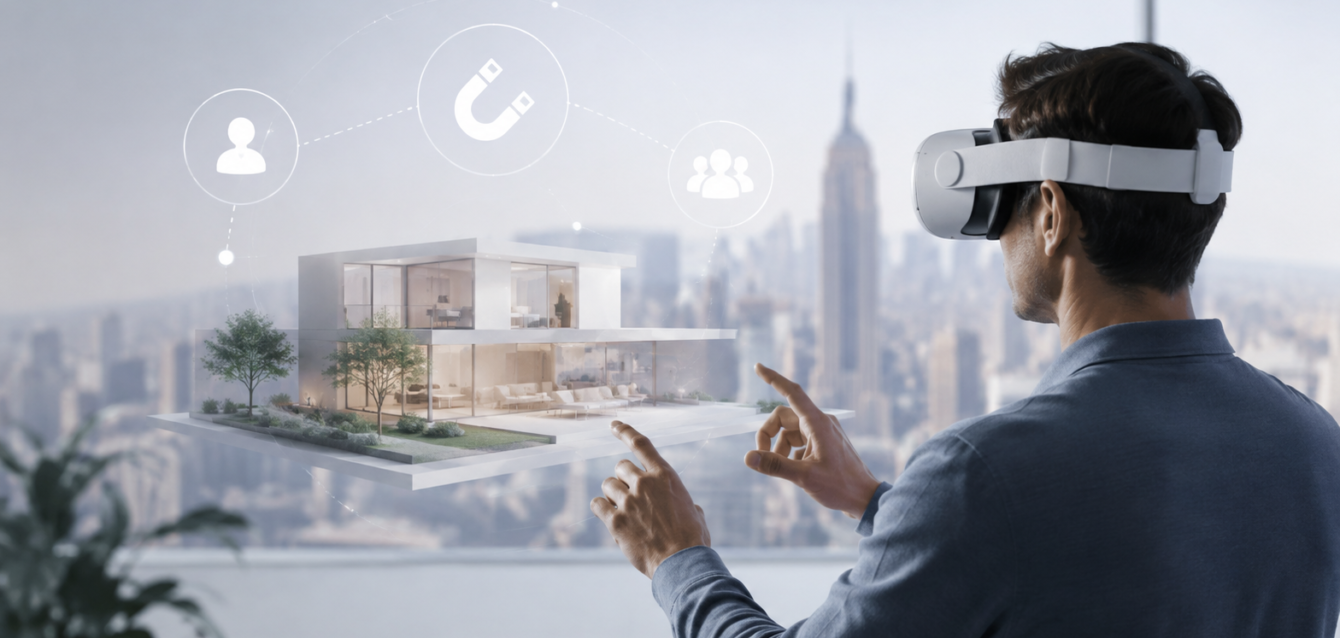
Let buyers explore your products in a fully immersive VR environment — no travel, no scheduling, no physical space required. A VR sales center lets a buyer walk through a model home, tour a property, or examine a product in detail, all from a headset. This is particularly valuable for real estate, automotive, and high-consideration B2B products.
Product demonstrations
VR lets you demonstrate complex products in ways that video and images cannot. A buyer can interact with the product, see how it works, and understand its value proposition — all in a controlled, immersive environment. This builds confidence faster than any 2D presentation.
Training and onboarding
VR training is one of the highest-ROI applications of the technology. Brands use VR to train employees on equipment, safety procedures, and customer interactions — without the cost and risk of real-world training. VR training is especially valuable for manufacturing, healthcare, and field service teams.
Event and trade show experiences
VR at trade shows creates a destination. Instead of a booth with brochures, you offer an immersive experience that attendees line up for. VR demos generate buzz, capture leads, and make your brand memorable long after the event.
Why VR drives qualified leads
VR generates qualified leads because the engagement is deep. When someone puts on a headset, they are making a deliberate choice to explore your product. This means:
- Higher intent — they are actively seeking information, not passively browsing
- Longer engagement — VR sessions average 5–10 minutes vs. 30 seconds on a standard page
- Better recall — immersive experiences are remembered 3x longer than 2D content
- Higher conversion — VR-experienced leads convert at 25–40% higher rates
Choosing the right VR platform
The platform you choose depends on your audience:
- WebVR — runs in a browser, no app download. Best for broad reach and marketing campaigns.
- Mobile VR — works with smartphone-based headsets. Affordable, accessible, good for trade shows.
- Standalone VR (Meta Quest, Pico) — wireless, high-quality. Best for sales centers and training.
- PC VR — highest visual fidelity. Best for architectural visualization and product demos.
VR services pricing
- WebVR experience: $10,000–$30,000
- Standalone VR app: $25,000–$80,000
- Enterprise VR (training, sales center): $50,000–$200,000+
Timeline: 6–12 weeks for a focused experience, 3–6 months for a full enterprise VR platform.
Ready to turn interest into leads with VR?
Ink & Algorithm builds VR experiences that drive real business results — from virtual showrooms to training simulations to trade show activations.
Call us: +1 618 965 8617
Email: info@inknalgorithm.com
Website: inknalgorithm.com
Ready to get started? Contact Ink & Algorithm to discuss your project—we’ll help you create results that drive sales.
Cost & Pricing
| Service | Cost Range | Timeline |
|---|---|---|
| Basic package | $5,000-$15,000 | 2-4 weeks |
| Standard package | $15,000-$50,000 | 4-8 weeks |
| Premium package | $50,000-$150,000+ | 8-16 weeks |
FAQ
How much does virtual reality services in cost?
The cost varies based on project scope and complexity. Contact us for a custom quote tailored to your specific needs.
How long does virtual reality services in take?
Typical projects take 2-8 weeks depending on scope. We provide detailed timelines during consultation.
Do you work with US brands?
Yes, we work with US brands across all 50 states. Our team understands the US market and delivers solutions that drive results.