

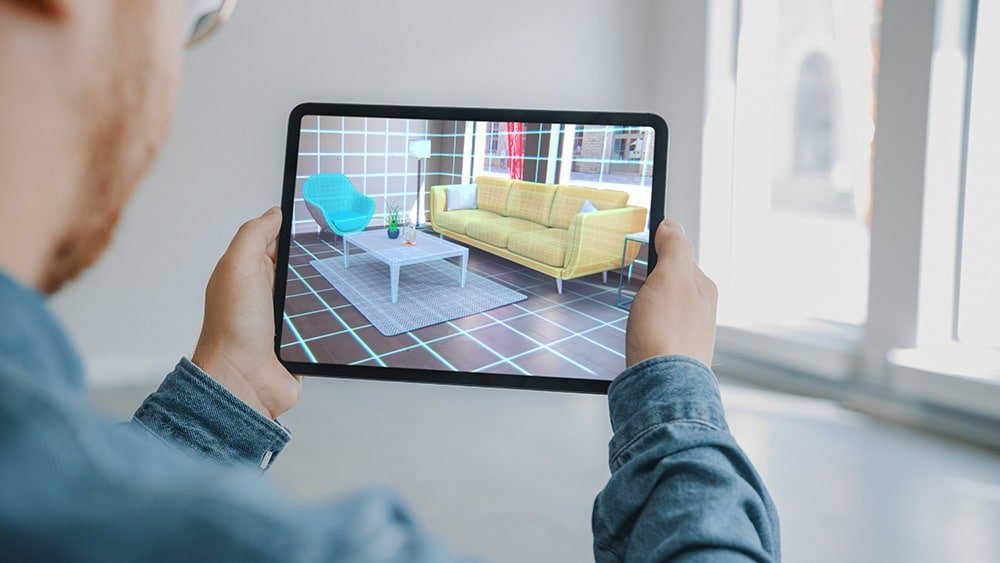
TL;DR: Augmented Reality Services in the USA 2026. Learn about costs, features, ROI, and how US brands use this technology in 2026.
Walk into any Walmart in Texas, launch a furniture app on your phone in California, or sit through a Boeing technician’s training programme in Seattle, and you will encounter the same quiet revolution reshaping how American businesses operate: augmented reality. Not the clunky, headset-dependent AR of five years ago, but seamless, photorealistic, commercially deployed augmented reality services that are directly moving revenue needles for businesses across every sector of the US economy.
In 2026, the United States is the world’s largest and most sophisticated market for augmented reality services. American enterprises from startups in Austin to Fortune 500 corporations in New York are deploying AR not as a novelty demonstration but as a core operational and customer experience tool. This guide is for every US business decision-maker who wants to understand what augmented reality services genuinely are, what the US market looks like right now, which industries are seeing the most measurable returns, and how to evaluate whether AR belongs in your organisation’s strategy for the years ahead.
1. What Are Augmented Reality Services?
Augmented reality services encompass the full range of professional capabilities that design, develop, deploy, and maintain AR-powered experiences for businesses. An augmented reality service provider is not simply a software developer who adds a camera layer to an app. A genuine AR services company combines spatial computing expertise, 3D asset creation, user experience design, backend integration, device management, and ongoing content strategy into a single, commercially oriented offering.
At its most practical level, augmented reality overlays digital content — three-dimensional objects, text annotations, video, interactive elements, directional markers — onto the user’s real-world view in real time. The critical difference between AR and virtual reality is that AR does not replace the real world; it enhances it. The user remains fully present in their physical environment while receiving digitally enriched information or experiences layered on top.
“Augmented reality does not take people out of the world. It makes the world smarter, richer, and more responsive around them.”
The ecosystem of augmented reality services in the USA in 2026 covers a wide spectrum, from enterprise-grade AR platforms built for industrial applications to consumer-facing AR experiences deployed through mobile apps, WebAR, and wearable devices. Key service categories include AR app development, WebAR experiences (no app download required), enterprise AR for training and field operations, AR marketing and advertising campaigns, AR e-commerce and retail try-on, mixed reality solutions for industrial and medical applications, and spatial computing development for platforms like Apple Vision Pro and Meta Quest.
2. The USA Augmented Reality Market in 2026
The United States AR market in 2026 is no longer an emerging technology conversation — it is an active, commercially mature, and fiercely competitive landscape where market position is being established right now. Understanding the market dynamics helps businesses make smarter decisions about when and how to invest in augmented reality services.
Market Size and Growth
The North American augmented reality market is valued at approximately $28 billion in 2026, representing the single largest regional market globally. The compound annual growth rate has held consistently above 35 percent since 2022, driven by enterprise adoption, consumer hardware improvements, and the explosive growth of spatial computing platforms. Analysts project the US AR market will exceed $75 billion by 2029 as enterprise deployment scales and AR-native generations of consumers reshape purchase behaviour.
Driving Forces Behind 2026 Demand
Three structural forces are driving the acceleration of augmented reality services demand in the USA this year. First, the maturation of WebAR technology has removed the app download barrier that previously limited consumer AR adoption. Today, a customer can access a fully interactive AR experience by scanning a QR code or clicking a link, with no installation required. This has made AR commercially viable for mid-market retailers and brands that previously could not justify a dedicated app. Second, enterprise investment in AR for workforce productivity has accelerated dramatically following widely published ROI results from early adopters in manufacturing, logistics, and healthcare. Third, the arrival of Apple Vision Pro as a mainstream spatial computing platform in the American market has permanently elevated consumer expectations for immersive digital experiences, creating a rising tide that lifts all AR deployment.
The Competitive Landscape
The US augmented reality services industry in 2026 is divided into three tiers: large enterprise technology vendors (Microsoft, PTC, ServiceNow) who offer AR as part of broader digital transformation platforms; mid-market specialist AR agencies who bring deep creative and technical expertise across sectors; and freelance or boutique shops who serve specific verticals or project types. For most American businesses seeking commercially effective augmented reality experiences, the mid-market specialist agency tier — organisations like Ink N Algorithm that combine strategic thinking with genuine technical execution — consistently delivers the strongest return on investment.
3. The Numbers Driving AR Investment in 2026
The business case for augmented reality services is no longer built on projections and pilots. It is built on documented, repeatable commercial outcomes across US industries. Here is what the data shows:
| $28B
US AR market value in 2026 |
35%
Annual growth rate of US AR services demand |
94%
Of retailers say AR improves the buying decision |
40%
Faster employee training completion with AR vs. classroom |
| 200M+
US consumers who used AR features in 2025 |
3×
Higher engagement rate for AR ads vs. standard digital ads |
25%
Reduction in product returns for brands using AR try-on |
$75B
Projected US AR market value by 2029 |
4. Types of Augmented Reality Services Available in the USA
The augmented reality services landscape in the USA is broad and continually evolving. Here is a clear breakdown of the primary service categories available to US businesses in 2026:
| 📱 AR App Development
Custom native AR applications built for iOS and Android using ARKit, ARCore, and LiDAR-enabled platforms. AR apps deliver the highest fidelity experience, deepest personalisation, and strongest data capture capabilities. Best for: Retail, real estate, healthcare, education, and any brand with an existing app ecosystem. AR app development from a specialist agency typically ranges from $25,000 for a focused single-feature app to $250,000+ for enterprise-grade multi-feature platforms. |
| 🌐 WebAR Development
Browser-based augmented reality experiences accessible via any smartphone camera without app download. WebAR uses 8th Wall, Zappar, and similar platforms to deliver AR at massive scale with zero installation friction. Best for: Marketing campaigns, product launches, packaging activations, and any brand that needs to reach a broad audience with minimal barriers. WebAR is the fastest-growing segment of the US augmented reality services market in 2026. |
| 🏭 Enterprise AR & Industrial AR
Heads-up display AR for manufacturing, logistics, field service, and maintenance operations. Workers receive real-time guidance, data overlays, remote expert annotation, and procedural instructions through AR headsets or mobile devices. Best for: Manufacturing plants, utilities, aerospace and defence, oil and gas, and any organisation where frontline worker efficiency and safety are strategic priorities. Enterprise AR services typically deliver ROI within 12 to 18 months of deployment. |
| 🛒 AR E-Commerce & Virtual Try-On
Product visualisation AR that lets consumers see furniture in their home, try on glasses or jewellery, preview paint colours on their walls, or model clothing on their body before purchase. Best for: Retail, fashion, beauty, home furnishings, and any product category where uncertainty about fit or appearance drives abandonment and returns. Brands deploying AR try-on in the US consistently report 20 to 35 percent reductions in return rates. |
| 🎯 AR Marketing & Advertising Services
Interactive AR campaigns delivered through social media filters (Instagram, Snapchat, TikTok), branded WebAR experiences, AR print and packaging activations, and spatial AR billboards. Best for: Consumer brands, agencies, event marketers, and anyone seeking to generate measurable engagement in a digitally saturated environment. AR advertising consistently outperforms standard digital formats on dwell time, share rate, and purchase intent lift. |
| 🩺 Medical & Healthcare AR Services
Anatomy visualisation, surgical planning, patient education, medical device training, and clinical procedure simulation delivered through augmented reality platforms. Best for: Hospital systems, medical device manufacturers, pharmaceutical companies, and healthcare education providers. The US healthcare AR market is one of the fastest-growing and highest-value segments of the broader AR services industry. |
5. Industries Using Augmented Reality Services in the USA
Augmented reality services have moved well beyond early adopter verticals. In 2026, documented, commercially deployed AR is operating across virtually every major sector of the US economy. Here is where adoption is deepest and outcomes are most proven:
| 🛍️ Retail & E-Commerce
Virtual try-on, product visualisation in home environments, AR-powered in-store navigation, and interactive packaging are standard tools for US retailers in 2026. |
🏭 Manufacturing & Industrial
Assembly guidance, quality inspection overlays, maintenance instructions, and safety training delivered through enterprise AR to frontline workers at scale. |
| 🏥 Healthcare & Medical
AR-guided surgery, anatomy education, medical device training, and patient-facing condition explanation tools are transforming clinical practice across US health systems. |
🏗️ Architecture & Real Estate
Pre-construction AR walkthroughs, interior design visualisation, virtual staging, and planning approval presentations are reshaping the US property industry. |
| ✈️ Aerospace & Defence
Maintenance and repair AR, training simulations, mission planning overlays, and situational awareness tools are deeply embedded in the US aerospace and defence sector. |
🎓 Education & Training
Immersive AR learning for K-12 and higher education, professional certification training, and corporate onboarding are delivering measurable learning outcomes across the US. |
| 🚗 Automotive
AR-guided vehicle configuration, service and repair overlays for technicians, and augmented showroom experiences are reshaping the US auto retail and service industries. |
💳 Banking & Finance
AR-powered branch experiences, interactive financial planning tools, fraud detection training, and customer engagement applications are emerging across US financial services. |
6. AR Services in Action: Before vs. After
The most compelling way to understand the business impact of augmented reality services is to look at what changes when AR is deployed across specific use cases. Here is a direct comparison across the most common applications in the US market:
| Business Use Case | Before AR Services | After AR Integration |
| Retail Shopping | Static images, guess sizing | Virtual try-on, 3D product view in home |
| Employee Onboarding | Day-long classroom sessions | Immersive AR simulations, 40% faster |
| Product Demos | Physical samples, shipping delays | Photorealistic AR demo on any device |
| Field Service Repair | Paper manuals, phone support | AR overlay instructions hands-free |
| Architecture & Design | 2D blueprints, scale models | Walk-through AR visualization pre-build |
| Medical Training | Cadavers, expensive simulators | AR anatomy overlays, repeatable practice |
| Customer Support | Call centres, screen sharing | AR-guided self-service resolution |
| Marketing Campaigns | Print, video, static digital ads | AR interactive brand experiences |
What this table cannot capture is the compounding effect of these improvements. A furniture retailer that deploys AR try-on does not just reduce returns — it also increases average order value, improves time spent on site, generates shareable social content, and differentiates the brand in a crowded market. Augmented reality services rarely solve a single problem. They systematically improve the entire customer journey or operational workflow they touch.
7. How to Choose an Augmented Reality Services Company in the USA
The quality difference between AR agencies in the US market in 2026 is enormous. A weak AR implementation can actively damage your brand — a slow, unrealistic, or crash-prone AR experience leaves users more frustrated than a simple static image would have. Choosing the right augmented reality development company is one of the most consequential technology decisions a US business can make. Here is what to evaluate:
| 01 | Proven Portfolio in Your Category
Request case studies with specific, documented outcomes in your industry or use case. Any agency can show you a slick demo reel. What matters is evidence of commercial deployment, user adoption rates, and measurable business impact for clients comparable to your organisation. |
| 02 | Full-Stack AR Capability
Genuine augmented reality services require simultaneous expertise in 3D asset creation, spatial computing, UX design, device optimisation, backend API integration, and performance engineering. An agency that subcontracts any of these disciplines introduces quality, timeline, and IP risk. Ask who builds every component of the experience and where. |
| 03 | Platform Breadth and Technology Neutrality
The AR platform landscape — ARKit, ARCore, 8th Wall, Snapchat Lens Studio, WebXR, Apple Vision Pro, Meta Quest — is complex and rapidly evolving. Your AR partner should be genuinely fluent across multiple platforms and able to recommend the right technology for your specific audience and use case rather than defaulting to whatever they know best. |
| 04 | Measurement and Analytics Framework
AR experiences that cannot be measured cannot be optimised. Your AR services partner should instrument every experience with meaningful engagement metrics: session duration, interaction rate, conversion lift, share rate, return reduction. If they do not discuss measurement before development, that is a significant red flag. |
| 05 | Strategic Partnership, Not Just Execution
The best augmented reality agencies in the USA think about your business objectives first and the technology second. They push back on briefs that are technically feasible but strategically weak. They bring ideas to the relationship rather than simply waiting to be briefed. They are invested in your success, not just your sign-off. |
| 06 | Post-Launch Support and Content Evolution
An AR experience launched today will need updating as your products change, your platforms evolve, and your audience’s device capabilities improve. Understand upfront what the agency’s support model looks like post-launch and what content update cycles cost. The best US AR agencies build for maintainability from day one. |
8. Why Ink N Algorithm for Augmented Reality Services in the USA
At Ink N Algorithm, we have built our entire practice around one conviction: the most powerful augmented reality services are not the ones with the most sophisticated technology stack, but the ones that solve the most genuine business problems with the most considered creative execution. We bring both sides of that equation to every engagement.
What Makes Ink N Algorithm Different
We operate as a full-service augmented reality development company, which means we own every stage of the production process from concept to deployment. Our team combines spatial computing engineers, 3D artists, UX strategists, and marketing specialists who work as a single integrated unit rather than a collection of subcontractors passing files across time zones. This integration is what allows us to deliver AR experiences that are technically precise, creatively compelling, and commercially effective.
Our Augmented Reality Service Offering
We provide the complete spectrum of augmented reality services for US businesses. This includes custom AR app development for iOS and Android, WebAR experiences accessible on any device without installation, enterprise AR solutions for training and field operations, AR marketing campaigns and interactive brand activations, AR e-commerce integration and virtual product visualisation, and spatial computing experiences for Apple Vision Pro and other emerging platforms.
Built for US Business Reality
We understand the specific commercial pressures, regulatory environments, and user behaviour patterns that define the US market. We know that an AR experience for a Midwest manufacturing plant has entirely different requirements from an AR campaign for a New York fashion brand. We have delivered both, and we bring that contextual intelligence to every brief regardless of sector or scale.
“Every augmented reality experience we build has a single objective: to make your customers’ or employees’ interaction with your business genuinely better than it was before.”
9. Augmented Reality Services Cost Guide for US Businesses — 2026
One of the most common questions US businesses ask about AR services is: what does it actually cost? The honest answer is that pricing varies substantially based on the complexity of the experience, the platform, the number of 3D assets required, and the level of backend integration. Here is a transparent framework:
| AR Service Type | Typical US Market Range | Primary Driver of Cost |
| WebAR Campaign (single) | $8,000 – $35,000 | Experience complexity & asset quality |
| AR App (focused, single use) | $25,000 – $80,000 | Platform scope & interaction depth |
| AR App (multi-feature) | $80,000 – $250,000+ | Feature set, integrations, 3D library |
| Enterprise AR Training | $40,000 – $200,000 | Scenario complexity & content breadth |
| Industrial AR (field service) | $60,000 – $300,000+ | Integration depth & device deployment |
| AR Marketing Campaign | $15,000 – $60,000 | Creative scope & platform distribution |
| Medical AR Solution | $75,000 – $500,000+ | Accuracy requirements & compliance |
| Spatial Computing (VisionPro) | $50,000 – $200,000+ | Spatial UI complexity & content depth |
The most important cost consideration for US businesses evaluating augmented reality services is not the upfront investment but the total value created over the asset’s lifecycle. A $50,000 AR product visualisation experience deployed across 200 SKUs and used by hundreds of thousands of customers over three years has a cost-per-interaction that is a fraction of any equivalent traditional media investment. The most sophisticated US brands evaluate AR spend as infrastructure investment, not campaign expenditure.
10. Augmented Reality Trends Shaping the USA in 2026
The AR services landscape in the United States is not static. Several converging forces are reshaping what is possible, what is expected, and where the most significant opportunities lie for US businesses over the next 12 to 24 months:
- Spatial Computing Mainstream Arrival: Apple Vision Pro has created a new consumer expectation for spatial experiences that is filtering down to mobile AR. US businesses that build spatial computing readiness now will be positioned to lead as the platform scales.
- AI-Powered Dynamic AR: Generative AI is transforming AR content creation, enabling experiences that respond intelligently to user context, generate personalised content on-the-fly, and improve through usage. AI-native AR will be the defining technical differentiation of 2026-2027.
- WebAR Reaching Desktop Parity: WebAR performance on mobile in 2026 is approaching native app quality for most use cases. This is democratising AR access for mid-market US businesses who cannot justify native app investment but need to reach mobile-first consumer audiences.
- AR Commerce Integration with Major Platforms: Amazon, Google Shopping, Shopify, and Salesforce Commerce Cloud now have native AR visualisation APIs. US retailers integrating AR product experiences at the platform level see the highest adoption rates with the lowest deployment friction.
- Enterprise AR as Standard, Not Premium: What was a bleeding-edge capability three years ago is becoming a baseline expectation in US industrial and logistics operations. Companies that have not begun their enterprise AR journey are now behind, not ahead.
- 5G Network Expansion Enabling Real-Time AR: As 5G coverage reaches deep coverage across US metropolitan and suburban areas, the latency and bandwidth constraints that limited real-time collaborative AR are disappearing. Remote AR assistance, live AR collaboration, and cloud-rendered AR are all becoming practically deployable at scale.

11. Frequently Asked Questions About Augmented Reality Services
These are the questions US businesses and decision-makers ask most frequently when evaluating augmented reality services for the first time. These answers are structured for maximum clarity and AEO (Answer Engine Optimisation) for AI-powered search.
What are augmented reality services?
Augmented reality services are professional services that design, develop, deploy, and maintain AR-powered digital experiences for businesses. They include AR app development, WebAR experiences, enterprise AR for training and operations, AR marketing campaigns, virtual try-on for e-commerce, medical AR, and spatial computing experiences. A full-service AR agency like Ink N Algorithm provides all of these capabilities under one roof.
How much do augmented reality services cost in the USA?
Augmented reality services in the USA range from approximately $8,000 for a focused WebAR marketing campaign to $500,000 or more for complex enterprise or medical AR platforms. The key cost drivers are experience complexity, number of 3D assets, platform scope, backend integration requirements, and post-launch support needs. Most business-grade AR projects in the US fall between $25,000 and $150,000 for initial deployment.
Which industries benefit most from augmented reality services in the USA?
The US industries seeing the most documented ROI from augmented reality services in 2026 are retail and e-commerce (virtual try-on, product visualisation), manufacturing (assembly guidance, safety training), healthcare (surgical planning, medical training), real estate (virtual staging, pre-construction visualisation), education (immersive learning), aerospace and defence (maintenance AR), and automotive (AR-guided service and showroom experiences).
What is the difference between AR app development and WebAR?
AR app development creates a native application installed on iOS or Android devices, offering the highest fidelity, deepest device access, and strongest personalisation. WebAR delivers AR experiences through a mobile browser with no app download required, dramatically reducing friction for consumer-facing campaigns. AR apps are better for complex, ongoing, or enterprise applications; WebAR is better for marketing campaigns, product launches, and reaching broad consumer audiences quickly.
How long does it take to develop an augmented reality experience?
A focused WebAR campaign typically takes 4 to 8 weeks from briefing to launch. A native AR app with standard features typically takes 10 to 20 weeks. Complex enterprise AR platforms with multiple integrations can take 6 to 12 months. Working with an experienced augmented reality development company with in-house 3D, development, and UX capabilities significantly compresses these timelines compared to agencies that subcontract.
Why should US businesses invest in augmented reality services in 2026?
US businesses should invest in augmented reality services in 2026 because the technology has crossed from early adopter territory into mainstream commercial deployment, meaning first-mover advantages in specific verticals are still available but closing rapidly. Documented outcomes include 25 to 35 percent reductions in e-commerce return rates, 40 percent faster employee training completion, 3x higher engagement on AR advertising versus standard formats, and significant competitive differentiation in crowded markets. The cost of inaction is now measurable.
12. Conclusion: AR Is Not Coming — It Is Already Here
The conversation about augmented reality in the USA has decisively shifted from “when will this technology be ready” to “how quickly can we deploy it and how much ground have we already given up to competitors who moved first.” In 2026, augmented reality services are not a speculative technology investment. They are a commercially proven, extensively documented, strategically significant capability that is reshaping competitive dynamics across virtually every sector of the American economy.
The brands and businesses that will dominate their categories over the next three to five years are the ones making deliberate, informed decisions about AR strategy today. Not necessarily the ones spending the most, but the ones who understand their specific opportunity, choose the right augmented reality services partner, and execute with genuine creative and technical quality.
Whether your augmented reality priority is reducing e-commerce returns, accelerating workforce training, creating unforgettable marketing campaigns, or building the spatial computing experiences that will define consumer expectations in the decade ahead, the investment case is clear, the technology is ready, and the partnership opportunities are here.
“The question is no longer whether augmented reality services will transform your industry. It is whether you will be the brand that leads that transformation or the one that follows it.”
Ink N Algorithm is a specialist augmented reality services agency working with US businesses across retail, healthcare, manufacturing, real estate, education, and consumer brands. We combine technical depth with creative rigour to deliver AR experiences that drive measurable commercial outcomes. If you are evaluating augmented reality services for your business in 2026, we would be glad to help you think through the opportunity.
| Ready to Explore Augmented Reality for Your Business?
From AR app development to enterprise AR solutions across the USA, Ink N Algorithm delivers augmented reality services that drive real results. |
Ready to get started? Contact Ink & Algorithm to discuss your project—we’ll help you create results that drive sales.
FAQ
How much does augmented reality services in cost?
The cost varies based on project scope and complexity. Contact us for a custom quote tailored to your specific needs.
How long does augmented reality services in take?
Typical projects take 2-8 weeks depending on scope. We provide detailed timelines during consultation.
Do you work with US brands?
Yes, we work with US brands across all 50 states. Our team understands the US market and delivers solutions that drive results.