
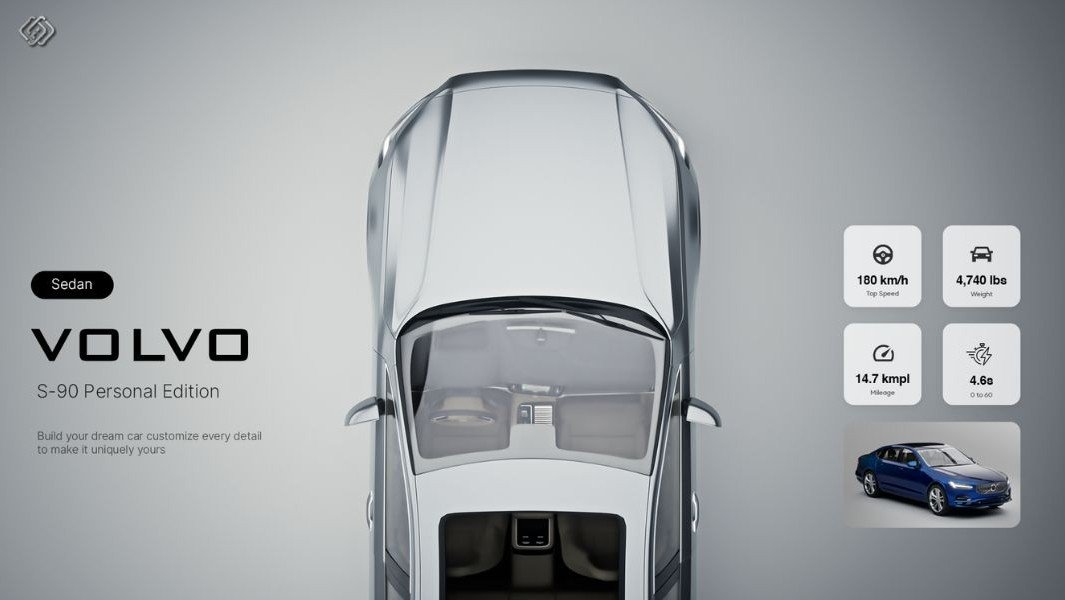
TL;DR: The Future of Car Buying with Automotive Configurators. Learn about costs, features, ROI, and how US brands use this technology in 2026.
The Technology Transforming How the World Buys Cars
There’s a quiet revolution happening in how people buy cars — and most consumers don’t even realize they’re standing in the middle of it.
Walk into any dealership today and you’ll notice something different. The glossy brochures that used to stack up at reception desks are thinner. The showroom floors hold fewer units. And the salespeople? They’re spending less time talking features and more time pointing customers toward screens.
That’s because in 2026, the automotive configurator has become the single most important sales tool in the car industry. It’s not a nice-to-have feature on a manufacturer’s website anymore. It’s the new showroom. The new test drive. The new conversation starter between a brand and its buyer.
And for automotive brands, dealerships, and EV startups that haven’t fully embraced what today’s configurator technology can do — the window to catch up is narrowing fast.
Understand about automotive configurators in 2026: what they are, how far the technology has come, why buyers are demanding them, what the best ones look like right now, and how to build one that actually moves the needle for your business.
What Is an Automotive Configurator?
(And Why the 2026 Version Is Nothing Like What You Remember)
An automotive configurator is an interactive digital tool that lets customers build, personalize, and visualize a vehicle before purchasing it. At its most basic, you choose a color, pick a trim, and see an image update. At its most advanced — which is where the industry is in 2026 — it’s a fully immersive, photorealistic, AI-assisted, real-time 3D experience that runs directly in your browser, on your phone, or inside a VR headset.
The gap between the old version and the new version is enormous.
Five years ago, most automotive configurators were essentially glorified dropdown menus layered on top of a series of pre-rendered flat photographs. The user experience was clunky. Colors didn’t look accurate. Interior options were hard to visualize. And if you wanted to get a feel for the actual scale and presence of the vehicle, you had no choice but to go to a dealership.
In 2026, that entire experience has been rebuilt from the ground up. Today’s best automotive configurators feature:
Real-time 3D rendering that shows every configuration change instantly — color, wheels, trim, roof, interior — in photorealistic quality, rendered live inside the browser without any download or plugin.
360-degree interactive exploration where users can rotate the vehicle freely, zoom into details, open doors, inspect the interior, and even look up at a panoramic roof from inside the virtual cabin.
AI-powered personalization that learns from browsing behavior, saved preferences, and interaction history to proactively suggest configurations the customer is most likely to love.
Augmented Reality (AR) placement that lets users point their smartphone at their own driveway or garage and see a life-size, photorealistic version of their configured vehicle appear in that exact space.
Virtual Reality (VR) showrooms where customers put on a headset and step inside a branded virtual environment to explore vehicles in full three-dimensional presence.
Integrated pricing and financing that updates in real time as customers build their configuration, with options to apply for financing, request a quote, or place a deposit directly within the tool.
This is what an automotive configurator looks like in 2026. And this is what buyers now expect.
Why 2026 Is the Defining Year for Automotive Configurator Technology
A few forces have converged in 2026 to make this the most important year yet for automotive configurator adoption — and the consequences for brands that fall behind are serious.
EV Brands Built Digital-First From Day One
The rise of electric vehicle manufacturers has fundamentally shifted consumer expectations around the car buying process. Many leading EV brands operate without traditional dealership networks, selling directly to consumers online. Their configurators aren’t supporting tools — they are the entire sales process. They had to get it right from the beginning, and they did.
That standard has now become the baseline expectation for every automotive brand, regardless of powertrain. Buyers who configure an EV in a seamless, beautiful, photorealistic online tool aren’t going to lower their expectations when they visit a legacy automaker’s website. They’ll hold every brand to the same standard.
Mobile-First Car Buying Is Now the Norm
More than 65% of automotive research and initial configuration sessions now happen on mobile devices. Consumers are starting their car buying journey on their phones — often in the evening, often at home, often months before they’re ready to purchase. The brands that capture that attention early, through a fast, beautiful, mobile-optimized configurator, own the customer relationship at its most impressionable stage.
Consumer Demand for Personalization Has Never Been Higher
The 2026 consumer doesn’t want to buy what’s in stock. They want to build what they want. Across every major retail category — fashion, furniture, footwear, electronics — customization and personalization have become defining purchase motivators. The automotive industry is no different. Buyers want to express themselves through their vehicle choices, and configurators are the tool that makes that expression possible.
3D and Immersive Technology Has Become Affordable and Scalable
Building a photorealistic 3D automotive configurator that runs smoothly on any device used to require enterprise-level investment. The technology stack has matured significantly. Costs have come down. Development timelines have shortened. And the quality available at mid-market investment levels in 2026 would have required top-tier budgets just three years ago. This means more brands can access genuinely excellent configurator technology — and more brands are doing exactly that.
The Top High-Volume Searches Driving Automotive Configurator Traffic in 2026
Understanding what buyers are actually searching for is essential for any brand investing in configurator technology and the content strategy around it. Here are the highest-volume search intents driving automotive configurator traffic right now:
“Build and price [car model]” — This remains the dominant search pattern for buyers in active purchase mode. Queries like “build and price Ford F-150 2026,” “build and price Tesla Model Y,” and “build and price BMW 3 Series” represent millions of high-intent searches every month. Brands whose configurators surface for these queries capture buyers at the exact moment they’re ready to commit.
Car configurator online — A broad research query from buyers who want to compare vehicles across brands using configurator tools. High volume, mid-funnel intent.
3D car configurator — Buyers specifically looking for immersive, visual configurator experiences. This query has seen explosive growth as consumers become aware that the technology exists and actively seek it out.
Design your own car — A high-volume aspirational query with strong emotional intent. Users here are often in the early stages of the buying journey, exploring possibilities.
[Brand] car customizer — Brand-specific configurator searches indicate buyers who are already sold on the brand and looking to personalize their vehicle. Extremely high conversion intent.
Online car builder — Similar to “design your own car” but often from a slightly younger, more digitally native buyer demographic.
Virtual car showroom — A growing search category as VR and immersive technology becomes more mainstream. Buyers actively seeking next-generation digital experiences.
AR car configurator — Augmented reality-specific searches from tech-forward buyers who want to see their configured vehicle in their own space before purchasing.
EV configurator — Electric vehicle-specific configurator searches, driven by the massive growth in EV consideration among mainstream buyers.
Custom car builder online — Broad creative customization intent, often from enthusiast buyers interested in deeper personalization options.
Any automotive brand building a configurator in 2026 should be creating content that captures all of these search intents — not just optimizing the configurator tool itself, but building educational and contextual content around these queries to capture buyers across the full research journey.
Inside a World-Class Automotive Configurator: What Excellence Looks Like in 2026
Not all configurators are created equal. The gap between the average implementation and a truly excellent one is wider than most brands realize. Here’s what separates the best from the rest in 2026.
Photorealistic Real-Time Rendering
The visual quality of the configurator is the first and most critical factor in user trust and engagement. When a buyer changes the paint color on a configured vehicle, they need to see that color render accurately — showing realistic metallic flake, paint depth, how it interacts with light, how it looks in different lighting environments (sun, overcast, night, showroom). This level of fidelity requires a sophisticated real-time rendering pipeline, not a library of pre-photographed swatches.
The best configurators in 2026 use WebGL-based rendering engines that run entirely in the browser, delivering near-photorealistic visual quality with no latency between a user interaction and the visual update.
Zero-Friction Mobile Performance
Speed is trust. A configurator that takes twelve seconds to load on a mobile device has already lost most of its users. A configurator that stutters or drops frames when the user rotates the vehicle is eroding confidence in the brand it represents.
World-class configurators in 2026 are engineered for mobile performance from the ground up — using compressed 3D model assets, level-of-detail (LOD) streaming, progressive loading, and GPU acceleration to deliver smooth, responsive experiences on mid-range smartphones, not just premium flagship devices.
Intelligent Configuration Logic
The backend of a great configurator is as important as the frontend visuals. Configuration logic manages which combinations of options are valid, which accessories are compatible with which trim levels, and which features are market-specific. Poor configuration logic leads to dead ends, error states, and invalid combinations that frustrate users and waste their time.
Sophisticated configurators also use this logic layer to power smart upselling — surfacing complementary upgrades at the right moment in the configuration journey, based on what the user has already selected.
AR and VR Integration
In 2026, AR and VR are no longer optional additions to a flagship configurator — they are expectations for premium automotive brands. Buyers who have experienced placing a life-size configured vehicle in their own driveway via AR don’t want to go back to looking at a thumbnail on a product page. The brands that offer this experience capture stronger emotional investment and significantly higher conversion rates.
The technical challenge here is not the AR or VR technology itself — it’s the seamless integration between the browser-based configurator and the immersive experience. A user should be able to build their configuration in a browser, tap a single button, and instantly see that exact configuration — their specific color, wheels, and trim — appear in AR or VR. Any friction in that handoff is a lost opportunity.
End-to-End Purchase Journey
The configurator should not be an island. In 2026, the best automotive configurators connect directly to the next step of the purchase journey — whether that’s requesting a quote, scheduling a test drive, checking local inventory for a similar specification, applying for financing, or placing an order deposit. The buyer should never have to leave the configurator experience to advance toward a purchase.
This requires deep integration with CRM platforms, inventory management systems, pricing engines, and financing partners. It’s complex to build well, but it’s what separates a marketing tool from a revenue-generating machine.
Automotive Configurators for EV Brands: A Special Opportunity
Electric vehicle brands occupy a uniquely powerful position when it comes to configurator technology, and it’s worth addressing this segment specifically.
EV manufacturers frequently operate direct-to-consumer sales models, which means their configurator is not supplementing a dealership experience — it is the experience. Every dollar they invest in configurator quality has a direct and measurable impact on conversion rates and revenue.
But beyond the sales mechanics, EV brands have a story to tell that configurators are exceptionally well-suited to convey. Range, charging infrastructure, software updates, battery technology, performance specs — these are complex, intangible benefits that are difficult to communicate through traditional advertising. An interactive configurator that visualizes range on a map overlay, shows charging network coverage for the buyer’s location, and simulates different driving modes brings those abstract benefits to life in ways static content never can.
In 2026, the EV configurator is also becoming a key tool for educating first-time EV buyers through the configuration process — surfacing information about home charging setup, government incentives based on the buyer’s location, and total cost of ownership comparisons at contextually relevant moments in the configuration journey.
This kind of intelligent, educational configurator experience doesn’t just sell a car. It builds brand trust and turns hesitant consideration into confident purchase decisions.
How Dealership Networks Are Using Automotive Configurators in 2026
The relationship between automotive manufacturers and their dealership networks has always been complex, and configurator technology has added a new dimension to that dynamic.
For dealer groups and franchise networks, configurators serve a different but complementary purpose to the manufacturer-level tool. Where manufacturer configurators focus on building desire and feeding qualified leads into the purchase funnel, dealer configurators focus on connecting configured preferences to real available inventory, managing the local purchase experience, and retaining the customer relationship post-sale.
The most innovative dealer groups in 2026 are using configurator data from manufacturer platforms — which vehicles buyers configured, which options they prioritized, where they dropped off — to personalize their outreach and tailor their in-store experience. A customer who spent twenty minutes configuring a specific vehicle in a specific color is a very different prospect than a walk-in. Treating them the same way is a missed opportunity.
Some forward-thinking dealer networks are also building their own configuration tools, particularly for certified pre-owned and dealer-stocked inventory — allowing buyers to visualize available vehicles with optional accessories and dealer-fitted upgrades in the same immersive format as the manufacturer’s new-vehicle configurator.
The Role of AI in Next-Generation Automotive Configurators
Artificial intelligence is quietly becoming one of the most powerful forces reshaping what automotive configurators can do in 2026. Here’s where AI is making the biggest impact:
Personalized Configuration Suggestions
AI systems analyze signals from a user’s behavior — how long they hover over different color options, which trim levels they compare, what they’ve viewed before — to generate proactive configuration recommendations. Rather than confronting a new user with a blank slate and infinite options, AI-powered configurators begin suggesting starting points based on what similar buyers have chosen, or based on the individual user’s own browsing history.
Dynamic Pricing and Incentive Surfacing
AI-driven pricing engines update configuration costs in real time based on inventory levels, regional demand, available manufacturer incentives, and financing conditions. A user configuring a vehicle in a market where that specific specification is in oversupply might see a different incentive automatically surfaced compared to a buyer in a market where that configuration has a waitlist. This kind of dynamic, AI-managed pricing intelligence makes the configurator a genuinely smart commercial tool.
Natural Language Configuration
In 2026, leading configurators are beginning to incorporate conversational AI interfaces — allowing buyers to describe what they want in plain language rather than navigating menus. “I want something that looks sporty but isn’t too dark. Show me options with red detailing.” The AI interprets the intent, applies the relevant filters, and surfaces a curated set of configuration options that match the description. This dramatically lowers the barrier to entry for less tech-savvy buyers and makes the configuration process feel more like a conversation than a task.
Predictive Inventory and Build-Slot Matching
For brands operating build-to-order models, AI can match a buyer’s finished configuration to available production slots, providing accurate estimated delivery timelines and flagging if minor configuration changes would significantly reduce wait times. This kind of intelligent guidance keeps buyers engaged rather than abandoning the process when they encounter long lead times.
Choosing the Right Development Partner for Your Automotive Configurator
Building a genuinely excellent automotive configurator in 2026 requires a development partner with a very specific skill set. This is not a project for a general-purpose web development agency. The technology stack — real-time 3D rendering, mobile performance optimization, AR integration, VR development, AI personalization, backend system integration — demands specialized expertise across multiple disciplines simultaneously.
When evaluating development partners, these are the questions that matter most:
Have they built 3D configurators before? Generic web developers don’t have the expertise in real-time rendering pipelines, 3D model optimization, or WebGL performance tuning that a high-quality configurator requires. Ask for a portfolio of live configurator projects and test them yourself on a mid-range mobile device.
Can they handle the full stack — front-end visuals, configuration logic, and backend integration? Many agencies can do one or two of these well. Few can do all three. An automotive configurator that looks incredible but doesn’t connect to your CRM or pricing engine is only doing half its job.
Do they have AR and VR capability? If you want to offer AR placement or VR showroom experiences — and in 2026, you should — confirm that these capabilities are built in-house, not outsourced.
How do they approach mobile performance? Ask specifically how they optimize for mobile devices. What asset compression techniques do they use? How do they handle level-of-detail streaming? How do they test performance across different device tiers?
What does ongoing support and iteration look like? A configurator is not a one-time build. New model years, new color options, new trim levels, and new features will require ongoing updates. Make sure the partner structure and pricing support a long-term relationship.
Ink N Algorithm: Purpose-Built for Automotive Configurator Excellence
At Ink N Algorithm, 3D web-based configurators are not a service line that was added to a portfolio of generic digital work. They are a core specialization — built into the DNA of how the company operates and what its team was assembled to do.
The agency brings together expertise in real-time 3D rendering, augmented reality development, virtual reality production, app development, and website engineering — all under one roof, working together toward a single objective: building configurator experiences that are not just technically impressive but commercially effective.
For automotive clients specifically, Ink N Algorithm approaches every project with an understanding that the configurator is not a marketing brochure. It’s a revenue tool. Every design decision, every performance optimization, every integration choice is evaluated against its impact on buyer confidence, time on page, configuration completion rate, and conversion to lead or purchase.
Whether the client is a global automotive OEM modernizing its digital buying experience, a regional dealership network looking to differentiate with a premium configurator tool, or an emerging EV brand building its entire sales infrastructure around a direct-to-consumer online model — Ink N Algorithm has the depth of capability and the track record to deliver.
The team’s work spans industries and product categories, which brings a cross-disciplinary perspective to every automotive project. Techniques proven in furniture configurators for material rendering, approaches developed for real estate virtual tours for spatial navigation, AR workflows refined across consumer product launches — all of this experience informs the automotive configurator work and elevates it above what a purely automotive-focused agency could offer.
What Happens to Brands That Skip the Configurator Investment
It’s worth being direct about what happens to automotive brands that continue treating configurators as an optional feature in 2026.
They lose the research phase. Buyers who discover they can have an immersive, photorealistic, personalized configuration experience on one brand’s website will not settle for a static gallery and a spec sheet on another brand’s website. The research phase decision — which brands make the shortlist — is increasingly won or lost in the first digital experience a buyer has with each vehicle.
They lose the emotional connection. Configurators create ownership psychology before the purchase. When a buyer has spent time building something, customizing it, naming it as theirs in their minds — they are emotionally invested. Brands that don’t create that experience miss the most powerful pre-purchase bonding moment available to them.
They lose the data. Every configurator session is a dataset about what buyers actually want, not what they say they want in a focus group. Brands skipping configurator investment are also skipping access to this intelligence — leaving product teams, marketing teams, and inventory planners working with incomplete information.
They lose ground to competitors who have made the investment. In a category where a buyer is choosing between two similarly priced vehicles, the brand with the better digital experience will win an increasingly large share of purchase decisions. This advantage compounds over time.
The Road Ahead: Automotive Configurators in 2027 and Beyond
2026 is not the ceiling. The technology continues to evolve, and the most ambitious implementations being developed right now will define what mainstream automotive configurators look like in two to three years.
Generative AI customization will allow buyers to describe their ideal vehicle in open-ended language and have a generative system create visualization options that don’t exist in any current catalog — exploring what their perfect car would look like if they could define it from scratch, before translating those preferences into available specifications.
Shared configuration experiences will allow two people in different locations to configure a vehicle together in real time — a couple deciding on a family car from different cities, or a buyer and a financial advisor jointly optimizing a configuration around a specific monthly payment target.
Persistent digital vehicle twins will mean that a buyer’s configuration doesn’t disappear when they close the browser tab. Their digital vehicle — with all its specifications, their saved changes, their notes — will persist across devices and sessions, ready to pick up exactly where they left off, updated with new color options when they become available, notified when their configured specification enters production.
Full metaverse integration will allow automotive brands to maintain persistent virtual showrooms where buyers can experience configured vehicles in beautifully designed branded environments, alongside other buyers, guided by virtual brand ambassadors, on platforms that exist independently of any single website.
The automotive configurator of 2026 is the most powerful it has ever been. And it’s only going to get more powerful from here.
Conclusion: In 2026, the Configurator Is the Car Buying Experience
The car hasn’t changed in what it represents — freedom, status, identity, practicality, joy. What has changed completely is how buyers discover it, fall in love with it, and decide to make it theirs.
In 2026, that journey begins and largely unfolds in a 3D configurator. The brands that understand this — and invest accordingly in building exceptional, immersive, intelligent configurator tools — are building the customer relationships that will sustain them for the next decade of automotive retail.
The brands still treating configurators as a website feature are watching that window close.
If you’re ready to build an automotive configurator that doesn’t just showcase your vehicles but sells them — Ink N Algorithm is the team that knows how to make that happen. From photorealistic 3D web configurators to AR placement tools and full VR showroom environments, the capability is here, the experience is proven, and the results speak for themselves.
Start the conversation today at inknalgorithm.com
Ink N Algorithm — Innovative Solutions and Expert Services
info@inknalgorithm.com | +1 618 965 8617 | 1812 McCormick Ln, Hanover Park, IL 60133
Ready to get started? Contact Ink & Algorithm to discuss your project—we’ll help you create results that drive sales.
Cost & Pricing
| Service | Cost Range | Timeline |
|---|---|---|
| Basic package | $5,000-$15,000 | 2-4 weeks |
| Standard package | $15,000-$50,000 | 4-8 weeks |
| Premium package | $50,000-$150,000+ | 8-16 weeks |
FAQ
How much does car buying with automotive configurators cost?
The cost varies based on project scope and complexity. Contact us for a custom quote tailored to your specific needs.
How long does car buying with automotive configurators take?
Typical projects take 2-8 weeks depending on scope. We provide detailed timelines during consultation.
Do you work with US brands?
Yes, we work with US brands across all 50 states. Our team understands the US market and delivers solutions that drive results.