
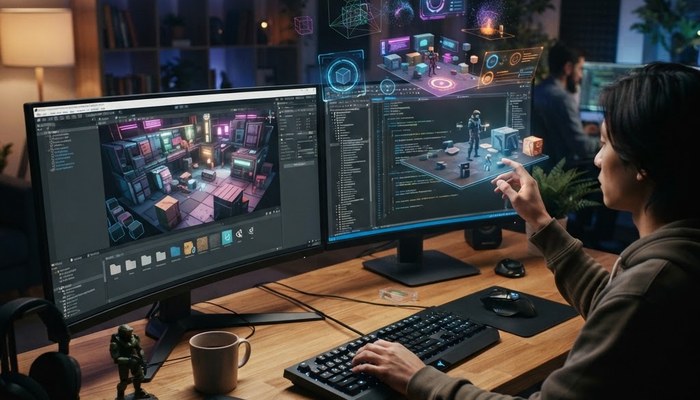
TL;DR: Unity powers the world’s most popular AR/VR apps, games, and enterprise 3D experiences. This guide explains what a Unity development company actually does, project costs in 2026, and how to hire the right Unity developers in the USA.
What Does a Unity Development Company Do?
Unity development covers the full build cycle in the world’s most widely deployed real-time engine: C# scripting, 3D asset integration, physics, UI, multiplayer networking, and deployment to iOS, Android, headsets, and the browser via WebGL.
A dedicated Unity development company typically delivers AR and VR applications, serious games and training simulations, 3D product configurators, digital twins, and interactive marketing experiences.
What US Teams Build With Unity in 2026
AR & VR Applications
From AR product visualization to fully immersive VR training, Unity’s XR tooling supports Meta Quest, Apple Vision Pro, and mobile AR in a single codebase.
Enterprise Training & Simulation
Manufacturers and logistics teams use Unity-based simulations for safety training, equipment walkthroughs, and procedure certification — with measurable retention gains over video-based training.
Games & Interactive Content
Indie studios and brands alike use Unity for casual games, branded experiences, and playable ads deployed to every major platform.
How Much Does Unity Development Cost?
In 2026, a focused Unity prototype starts around $15,000–$40,000. Production AR/VR applications typically run $50,000–$150,000, and multiplayer or simulation-heavy builds can exceed $200,000. Most MVPs ship in 8–14 weeks.
Why Hire a Unity Development Company in the USA
- Time-zone alignment for live reviews and sprint demos.
- IP protection under US contracts and jurisdiction.
- Platform compliance: App Store, Meta Horizon, and VisionOS submission experience.
How to Evaluate Unity Developers
Ask for shipped titles — not just demos. Check profiling discipline (frame-time budgets on target devices), experience with URP/HDRP pipelines, and comfort with your backend (REST, Firebase, or custom multiplayer). Strong studios talk about performance first.
FAQ
What is Unity used for?
Building AR/VR apps, games, 3D configurators, simulations, and real-time 3D experiences across mobile, headset, desktop, and browser platforms.
Is Unity better than Unreal Engine?
Unity leads for mobile AR, cross-platform reach, and faster iteration; Unreal leads for photorealism. The right choice depends on your target platforms and visual goals.
How long does a Unity project take?
A prototype takes 4–8 weeks; a production AR/VR app typically ships in 3–6 months.
Do Unity apps work on Apple Vision Pro?
Yes. Unity’s visionOS support lets you build spatial apps for Vision Pro alongside Quest and mobile targets.
Work With a US Unity Development Team
Ink & Algorithm designs and ships Unity applications for US brands — AR product experiences, VR training, configurators, and simulations. Share your concept and target platforms; we will return a scoped plan and quote. Book a free consultation today.