
TL;DR: The Business Case for VR Sales Centers in US Real Estate 2026. Learn about costs, features, ROI, and how US brands use this technology in 2026.
The US real estate industry is undergoing a major digital transformation, and Virtual Reality (VR) Sales Centers are becoming one of the most effective tools for developers, brokers, and property marketers. Today’s buyers expect more than static brochures, photo galleries, and traditional property visits. They want immersive, interactive experiences that allow them to explore properties before construction is completed or without traveling long distances.
VR Sales Centers meet this demand by enabling potential buyers to walk through properties virtually, customize layouts, compare finishes, and experience developments in realistic 3D environments. These immersive experiences not only improve customer engagement but also accelerate decision-making and increase sales conversions.
As competition grows in the US real estate market, developers are investing in VR technology to stand out, shorten sales cycles, and reach a wider audience. At Ink N Algorithm, we help real estate companies build advanced VR Sales Centers that combine immersive visualization, interactive property experiences, and enterprise-grade technology to drive measurable business results.
What Is a VR Sales Center?
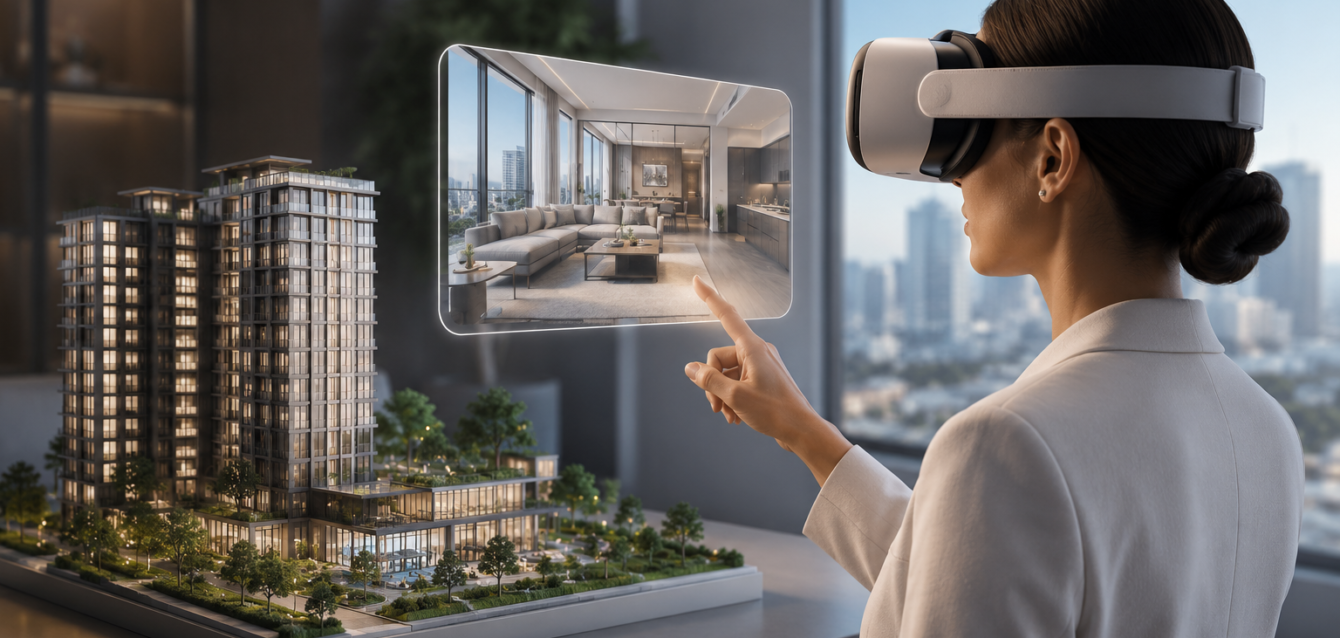
A VR Sales Center is a digital showroom where buyers can explore residential or commercial properties using Virtual Reality headsets or desktop-based immersive applications. Instead of relying on physical model homes or printed brochures, customers experience realistic 3D environments that simulate completed developments.
Modern VR Sales Centers often include:
- Interactive property walkthroughs
- Fully furnished virtual apartments
- Neighborhood exploration
- Floor plan customization
- Material and color selection
- Real-time property comparisons
- Virtual meetings with sales consultants
These features provide buyers with greater confidence and allow developers to showcase projects long before construction is complete.
Why US Real Estate Companies Are Investing in VR
The modern buyer expects convenience, personalization, and digital accessibility. Traditional sales offices often require significant investment in physical infrastructure, marketing materials, and staffing. VR Sales Centers offer a more scalable and cost-effective alternative.
Key business drivers include:
- Increased buyer engagement
- Faster purchasing decisions
- Reduced marketing costs
- Improved customer experience
- Remote property selling
- Better international buyer access
- Competitive market differentiation
As hybrid work and remote purchasing continue to grow, VR technology enables developers to connect with clients regardless of location.
Business Benefits of VR Sales Centers
Higher Sales Conversion Rates
One of the biggest advantages of VR Sales Centers is their ability to convert interested visitors into qualified buyers. Immersive property experiences help customers visualize living or working in the space, creating a stronger emotional connection than traditional images or videos.
When buyers can virtually walk through a property, understand room dimensions, and experience the surrounding environment, they are more likely to move forward with a purchase.
Reduced Sales Cycle
Traditional property sales often involve multiple site visits, repeated consultations, and lengthy decision-making processes. VR significantly shortens this cycle by providing detailed property experiences during the first interaction.
Sales teams spend less time explaining layouts because buyers can explore every room independently.
Lower Marketing Costs
Physical model homes are expensive to build and maintain. Developers also invest heavily in printed brochures, promotional events, and temporary sales offices.
VR Sales Centers reduce these costs by offering:
- Digital property presentations
- Unlimited virtual walkthroughs
- Interactive product catalogs
- Virtual property launches
- Online buyer demonstrations
The same VR environment can be used across multiple marketing campaigns without additional construction expenses.
Improved Buyer Confidence
Buying property is one of the largest financial decisions most people make. VR reduces uncertainty by allowing buyers to experience realistic environments before committing.
Interactive visualization helps answer questions like:
- How large is the living room?
- How does natural lighting change throughout the day?
- What does the balcony overlook?
- How will selected interior finishes appear?
Greater confidence leads to fewer canceled deals and higher customer satisfaction.
Real Estate Case Studies in the United States
Luxury Residential Developments
Luxury developers across cities like Miami, New York, and Los Angeles increasingly use VR Sales Centers to market premium properties before construction finishes.
Buyers can explore penthouses, customize interiors, and experience rooftop amenities without visiting the construction site.
This approach attracts international investors who may not be able to travel during the purchasing process.
Master-Planned Communities
Large residential communities often include parks, schools, shopping centers, and recreational facilities.
VR allows buyers to experience the entire neighborhood rather than viewing only individual homes.
Interactive tours help families understand commuting routes, nearby amenities, and future community development.
Commercial Office Spaces
Commercial real estate firms use VR to demonstrate office layouts, meeting rooms, collaborative workspaces, and customizable interiors.
Corporate clients can evaluate multiple office configurations before leasing space.
Mixed-Use Developments
Developments combining residential, retail, entertainment, and office spaces benefit significantly from immersive visualization.
VR enables investors and buyers to understand how every component connects within the larger project.
How VR Improves Customer Experience
Modern buyers expect digital experiences similar to online shopping.
VR delivers:
- Interactive exploration
- Realistic room scaling
- Personalized customization
- Instant property comparisons
- Immersive storytelling
Rather than imagining a future property, customers experience it virtually.
Technologies Behind Modern VR Sales Centers
Successful VR Sales Centers combine multiple advanced technologies.
Virtual Reality
Immersive property walkthroughs create realistic buying experiences.
Digital Twins
Digital Twins replicate buildings with exceptional accuracy, allowing buyers to explore every detail.
Artificial Intelligence
AI personalizes recommendations based on customer preferences and behavior.
Interactive 3D Visualization
High-quality rendering improves realism and customer engagement.
Cloud Technology
Cloud-based VR enables remote property demonstrations without requiring expensive local infrastructure.
IoT Integration
Smart home features can be demonstrated within the virtual property environment.
ROI of VR Sales Centers
Companies investing in VR often experience measurable returns.
Benefits include:
- Reduced property marketing expenses
- Increased qualified leads
- Faster sales
- Higher customer engagement
- Better buyer retention
- Lower travel costs
- Increased international sales opportunities
Although implementation requires an initial investment, long-term savings and higher sales performance deliver substantial ROI.
Common Features Buyers Love
Today’s buyers appreciate immersive features such as:
- Virtual property walkthroughs
- Interactive floor plans
- Furniture customization
- Lighting simulations
- Material selection
- Exterior landscaping previews
- Neighborhood exploration
- Virtual balconies and rooftop views
These capabilities provide a much richer experience than traditional brochures or image galleries.
Why VR Is the Future of Real Estate Sales
Consumer expectations continue evolving.
Buyers increasingly prefer:
- Digital convenience
- Remote decision-making
- Personalized experiences
- Interactive property exploration
- Smart technology integration
Developers adopting VR today position themselves ahead of competitors while improving operational efficiency.
How Ink N Algorithm Helps Real Estate Businesses
At Ink N Algorithm, we develop enterprise-grade VR Sales Centers tailored to the evolving needs of the US real estate industry. Our solutions help developers, builders, and property agencies showcase projects through immersive experiences that engage buyers and support faster purchasing decisions.
Our capabilities include:
- Custom VR Sales Center Development
- Interactive Property Walkthroughs
- Virtual Property Configurators
- Digital Twin Solutions
- AI-Powered Property Recommendations
- 3D Architectural Visualization
- Mobile & Desktop VR Applications
- Cross-Platform VR Experiences
- Real Estate Software Integration
- Enterprise Visualization Platforms
Our team works closely with clients to create scalable VR environments that align with their sales strategies, branding, and customer expectations.
Future Trends for 2026 and Beyond
The future of VR in real estate will be driven by innovation and integration.
Emerging trends include:
- AI-assisted virtual property advisors
- Hyper-realistic Digital Twins
- Mixed Reality property demonstrations
- Real-time property customization
- Multi-user collaborative VR tours
- Integration with CRM and ERP platforms
- Blockchain-enabled digital property transactions
- Cloud-based immersive sales experiences
These technologies will continue transforming how properties are marketed, sold, and experienced.
Conclusion
Virtual Reality Sales Centers are no longer experimental—they are becoming a strategic advantage for US real estate companies seeking to improve buyer engagement, reduce marketing costs, and accelerate property sales. By replacing static presentations with immersive, interactive experiences, developers can showcase projects more effectively and reach local as well as international buyers.
As customer expectations shift toward digital-first experiences, investing in VR technology is a practical business decision that delivers long-term value. From virtual walkthroughs and Digital Twins to AI-powered personalization, VR Sales Centers redefine how properties are presented and purchased.
At Ink N Algorithm, we help real estate businesses unlock these opportunities through innovative VR development services. Whether you’re launching a luxury residential project, marketing commercial spaces, or promoting large-scale developments, our immersive solutions empower your team to sell properties with greater confidence, efficiency, and impact.
Frequently Asked Questions
What is a VR Sales Center?
A VR Sales Center is an immersive digital environment where buyers can virtually explore residential or commercial properties using Virtual Reality technology.
How do VR Sales Centers benefit real estate companies?
They improve customer engagement, shorten sales cycles, reduce marketing costs, and increase buyer confidence through interactive property experiences.
Can VR Sales Centers be used before construction is complete?
Yes. Developers can showcase off-plan projects using realistic 3D models, helping buyers visualize the finished property and make informed purchasing decisions.
What technologies power modern VR Sales Centers?
Modern solutions combine Virtual Reality, Artificial Intelligence, Digital Twins, Interactive 3D Visualization, Cloud Computing, and IoT integration to create engaging and scalable experiences.
Why choose Ink N Algorithm for VR development?
Ink N Algorithm specializes in custom VR development, Digital Twin solutions, and immersive real estate platforms designed to help US businesses improve customer engagement, accelerate sales, and achieve measurable business growth.
Ready to get started? Contact Ink & Algorithm to discuss your project—we’ll help you create results that drive sales.
Cost & Pricing
| Service | Cost Range | Timeline |
|---|---|---|
| Basic package | $5,000-$15,000 | 2-4 weeks |
| Standard package | $15,000-$50,000 | 4-8 weeks |
| Premium package | $50,000-$150,000+ | 8-16 weeks |