
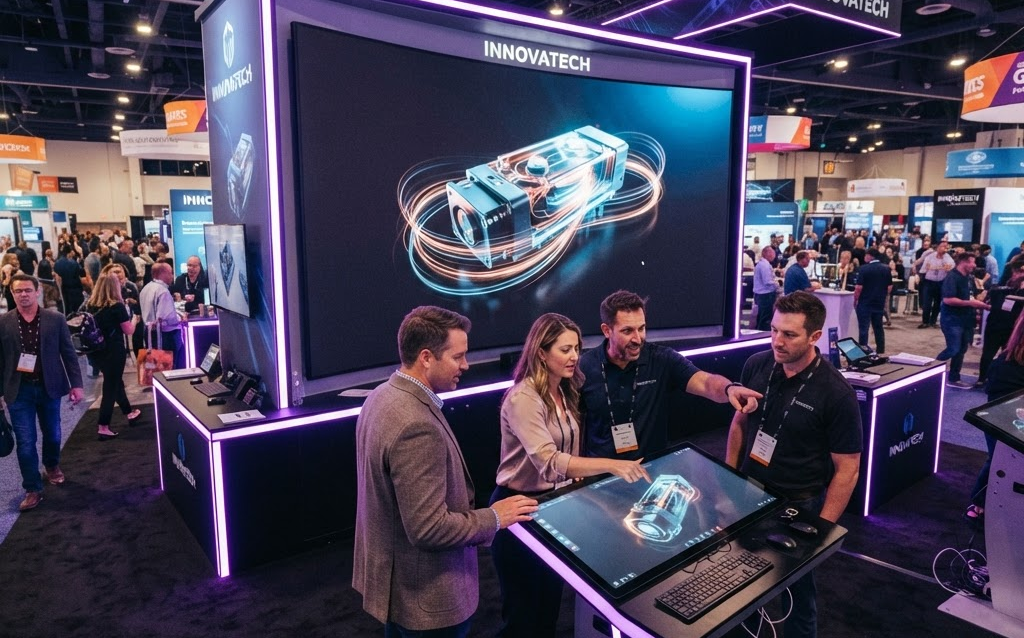
TL;DR: 3D animation at trade shows—interactive touchscreens, holographic displays, and immersive product demos—draws 3x more booth traffic and generates 40% more qualified leads than static displays. Here’s how brands use 3D animation to stand out on the trade show floor in 2026.
Trade shows are noisy, crowded, and competitive. Every booth is fighting for attention. Static banners and product samples don’t stop foot traffic. 3D animation does. A large screen showing a product rotating, exploding into components, and demonstrating features in photorealistic 3D makes people stop, watch, and engage.
Types of 3D Animation for Trade Show Booths
Interactive Touchscreen Demos
Large touchscreen displays running interactive 3D product animations. Attendees tap to rotate products, trigger exploded views, and watch feature demonstrations. This self-guided exploration keeps attendees engaged 3x longer than static displays.
Holographic Product Displays
3D animations projected as holograms above the booth—products appearing to float and rotate in mid-air. These eye-catching displays draw foot traffic from across the hall and create memorable brand impressions.
Large-Screen Product Cinematics
30–60 second cinematic 3D animations playing on loop on large LED walls. Professionally rendered product reveals, feature demonstrations, and brand stories. These function as digital billboards that stop foot traffic.
VR Product Experiences
Attendees put on a VR headset and explore a product in immersive 3D—walk around it, look inside it, operate it. VR experiences create the longest engagement times and the strongest brand recall.
AR Product Overlays
Attendees scan a physical product on display with their phone and see 3D animation overlays—feature callouts, internal components, and usage demonstrations appearing on the real product through AR.
Why 3D Animation Wins at Trade Shows
3x More Booth Traffic
Motion and 3D visuals stop people walking past. A screen showing a product in photorealistic 3D rotation is infinitely more attention-grabbing than a static banner. Brands using 3D animation report 3x more booth visitors.
40% More Qualified Leads
Interactive 3D demos qualify leads automatically. An attendee who spends 5 minutes exploring a product in 3D is genuinely interested. Sales reps can focus on engaged visitors rather than chasing passersby.
Memorable Brand Experience
Attendees visit hundreds of booths at a trade show. The booth with an interactive 3D experience is the one they remember. 3D animation creates a brand impression that lasts long after the event.
Cost of 3D Animation for Trade Shows
| Component | Cost |
|---|---|
| Interactive touchscreen 3D demo | $10,000–$40,000 |
| Cinematic product animation (30-60s) | $5,000–$25,000 |
| Holographic display content | $8,000–$30,000 |
| VR trade show experience | $20,000–$80,000 |
| AR product overlay experience | $10,000–$35,000 |
| Full booth 3D package (multiple elements) | $30,000–$120,000 |
FAQ: 3D Animation for Trade Shows
How much does 3D animation for a trade show booth cost?
An interactive touchscreen 3D demo costs $10,000–$40,000. A cinematic product animation for LED walls costs $5,000–$25,000. A VR experience costs $20,000–$80,000. A full booth package with multiple 3D elements costs $30,000–$120,000.
Can the 3D animation be reused after the trade show?
Yes—and this is where 3D animation has a major advantage over physical booth materials. The same 3D models and animations can be repurposed for your website, social media, product pages, and sales presentations. The trade show is just the first use of a reusable asset.
What hardware do we need at the booth?
For touchscreen demos: a large touchscreen display (55–85 inch). For cinematics: an LED wall or large screen. For VR: Meta Quest headsets and a small play area. For holographic displays: a holographic projection system. All content runs from a laptop or media player.
How long does it take to create trade show 3D animation?
An interactive touchscreen demo takes 3–8 weeks. A cinematic animation takes 2–6 weeks. A VR experience takes 6–14 weeks. Plan to start 8–12 weeks before the event to allow time for iteration and testing.
Can attendees interact with the 3D animation?
Yes. Interactive touchscreen demos let attendees tap to rotate, zoom, explode, and explore products in 3D. This self-guided exploration keeps attendees engaged 3x longer than passive video and generates more qualified conversations with sales reps.
Getting Started
- Start with your flagship product — the one you most want attendees to remember
- Build an interactive touchscreen demo — highest ROI for booth engagement
- Add a cinematic loop on your LED wall — stops foot traffic from across the hall
- Repurpose the 3D content post-show — website, social media, sales decks
Ready to create 3D animation for your trade show booth? Contact Ink & Algorithm to discuss your event—we’ll help you create an interactive experience that stops traffic and generates leads.