
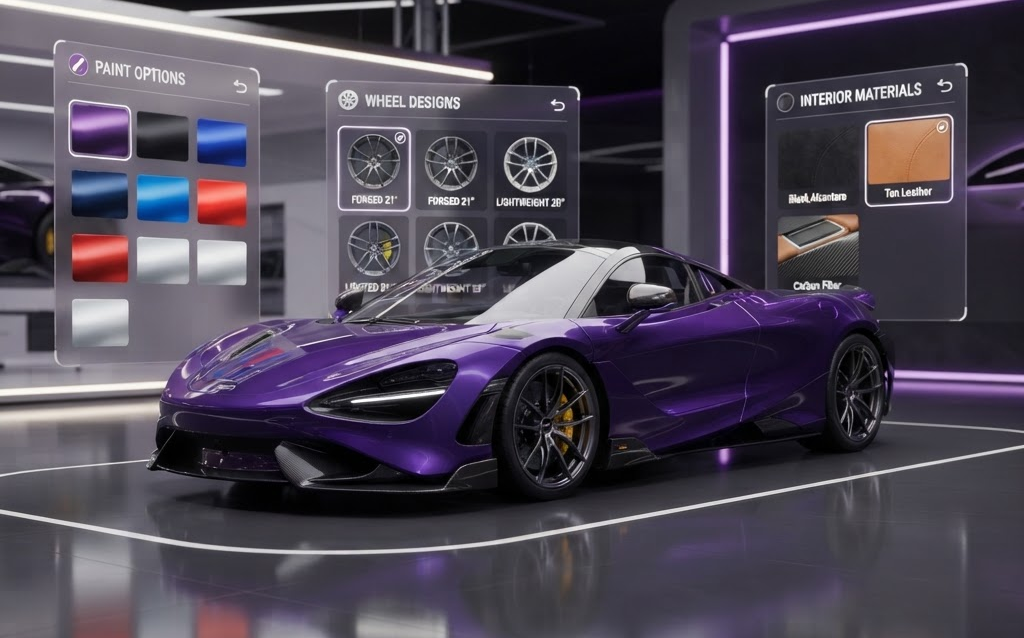
TL;DR: Automotive configurators have evolved from simple color pickers into real-time 3D experiences with ray-traced reflections, virtual test drives, and AR garage placement. Brands using advanced configurators see 35% more qualified leads, 20% higher trim selection, and 50% shorter purchase decisions. With Unreal Engine powering the most premium experiences and web-based configurators handling the rest, 2026 is the year every car brand needs a real-time configurator.
Buying a car is one of the most considered purchases a consumer makes. Weeks of research, multiple dealership visits, and endless option combinations. The automotive configurator exists to compress that process—letting buyers design their perfect vehicle online, see it in photorealistic 3D, and arrive at the dealership knowing exactly what they want.
In 2026, automotive configurators have become the primary sales tool for car brands. They’re not just a website feature—they’re the digital showroom where purchase decisions are made. This guide covers how the industry has evolved, what features matter, and what brands are doing to stand out.
How Automotive Configurators Have Evolved
Generation 1: Static Images and Dropdowns (2010s)
Early configurators were essentially product configurators—select a color from a dropdown, see a pre-rendered image of the car in that color. Each angle required a separate pre-rendered image. Changing a wheel option loaded a different static image. These were functional but disconnected from the emotional experience of buying a car.
Generation 2: 360° Spins with Pre-Rendered Variants (2020s)
Configurators improved with 360° rotation and real-time image swapping. The car could be rotated to any angle, and color/wheel changes updated the image. However, the images were still pre-rendered—meaning only a limited set of combinations was available, and lighting couldn’t change dynamically.
Generation 3: Real-Time 3D with Ray Tracing (2026)
The current state of the art. The car is a full 3D model rendered in real time using Unreal Engine 5 or similar. Key capabilities:
- Real-time ray tracing — paint colors show accurate reflections of the environment, not fake textures
- Dynamic lighting — move the car from showroom lighting to sunset to garage lighting and see materials respond
- Infinite angles — orbit, zoom, and explore from any position, not just pre-set angles
- Material accuracy — metallic, pearl, matte, and satin finishes render with correct light response
- Interior exploration — step inside the car, change seat materials, dashboard trims, and ambient lighting
- AR garage placement — place the configured car in your actual driveway or garage
Essential Features of a 2026 Automotive Configurator
Exterior Customization
- Paint colors — full range with accurate metallic, pearl, matte, and satin finishes
- Wheel selection — multiple designs and sizes, visible on the car in real time
- Trim packages — body kits, spoilers, chrome deletes, black packages
- Caliper colors — visible through wheel spokes
- Decals and wraps — racing stripes, custom graphics, full-body wraps
Interior Customization
- Seat materials — leather, alcantara, fabric, vegan leather with correct texture rendering
- Stitching colors — contrast stitching visible in close-up detail
- Dashboard and trim — carbon fiber, wood, aluminum, piano black
- Ambient lighting — choose interior accent colors and see them illuminated
- Headliner options — panoramic roof, starlight headliner, fabric colors
Performance and Package Selection
- Engine options — visual indicators of performance differences
- Suspension packages — ride height visualization changes
- Technology packages — HUD, audio systems, driver assistance features
- Price comparison — side-by-side comparison of packages and their value
Real-Time Pricing
Every selection updates the price instantly. The configurator shows:
- Base MSRP + selected options = total price
- Monthly lease and finance estimates (integrated with lender APIs)
- Package savings vs individual options
- Resale value projections for popular configurations
AR Garage Placement
The customer places their configured car in their real driveway or garage using AR. This answers the ultimate question: “Will this car fit in my life?” Seeing a configured BMW in your actual driveway creates an emotional connection that no screen-based experience can match.
Virtual Test Drive
Some brands now offer VR test drive experiences where the customer sits in a VR simulator and drives the configured car through virtual environments—city streets, highways, mountain roads. While not a full replacement for a physical test drive, it gives a sense of the car’s character and features.
Save, Share, and Dealer Handoff
Configurations can be saved, shared via link, and sent directly to a local dealership. The dealer receives the exact configuration with all selected options, streamlining the in-dealership experience. The customer arrives knowing what they want—the dealer’s job shifts from selling to closing.
The Technology Behind Modern Automotive Configurators
Unreal Engine 5 (Premium Tier)
The brands with the most photorealistic configurators—Audi, Porsche, Mercedes-Benz—use Unreal Engine 5 with full ray tracing. Key features:
- Lumen global illumination — showroom lighting changes instantly affect every material
- Nanite geometry — CAD-quality interior details (stitching, textures) rendered in real time
- Pixel Streaming — the Unreal experience streams to the customer’s browser via cloud GPU. No download, no powerful GPU needed on the client side.
- Path tracing mode — highest quality rendering for marketing screenshots and video export
Three.js / WebGL (Mid-Tier)
Brands that need broad reach without the streaming cost of Unreal Engine use Three.js-based configurators. These run entirely in the browser on the customer’s device—no cloud GPU required. Quality is good but not film-grade. Best for brands where configurator load speed matters more than absolute photorealism.
Unity (Cross-Platform)
Brands deploying configurators across web, iOS app, Android app, and dealership kiosks use Unity. One codebase, four platforms. Quality is between Three.js and Unreal Engine—good enough for most consumers, with the advantage of app store distribution.
Comparison: Automotive Configurator Approaches
| Approach | Quality | Cost | Delivery | Best For |
|---|---|---|---|---|
| Unreal Engine + Pixel Streaming | Film-grade | $150K–$500K | Browser (cloud) | Premium brands, flagship models |
| Three.js WebGL | Very good | $40K–$120K | Browser (client-side) | Volume brands, full lineup |
| Unity cross-platform | Excellent | $80K–$250K | Web + iOS + Android + kiosk | Brands with app ecosystem |
| Pre-rendered image swap | Good (static) | $20K–$60K | Browser | Budget constrained, legacy systems |
ROI: What Automotive Brands Are Measuring
- 35% more qualified leads — configurator users are pre-qualified buyers who know what they want
- 20% higher trim selection — visualizing premium options increases willingness to upgrade
- 50% shorter purchase decision time — buyers who configure arrive ready to buy
- 15% higher conversion at dealership — configured-car leads convert better than walk-ins
- 30% reduction in “wrong car” returns — buyers who configured know exactly what they ordered
- 25% increase in option attachment rate — seeing wheels, trim, and packages in 3D drives add-ons
Cost of Building an Automotive Configurator
| Component | Cost Range |
|---|---|
| 3D vehicle model (exterior + interior, high-detail) | $10,000–$50,000 per model |
| Material system (paint, leather, metal, carbon) | $10,000–$30,000 |
| Configurator engine setup | $20,000–$80,000 |
| UI/UX (material picker, pricing, comparison) | $15,000–$50,000 |
| AR garage placement module | $10,000–$30,000 |
| Backend (pricing engine, dealer API) | $15,000–$40,000 |
| Pixel Streaming infrastructure (if used) | $20,000–$50,000 setup + $0.50–$3/hr |
| Total (single model, web-based) | $80,000–$280,000 |
| Total (single model, Unreal + streaming) | $150,000–$500,000 |
| Multi-model platform (full lineup) | $300,000–$1,000,000+ |
FAQ: Automotive Configurators
How much does an automotive configurator cost?
A web-based Three.js configurator for a single vehicle model costs $80,000–$280,000. An Unreal Engine configurator with Pixel Streaming for premium quality runs $150,000–$500,000. A full multi-model platform covering an entire vehicle lineup costs $300,000–$1,000,000+. The 3D vehicle model ($10,000–$50,000 per model) is often the largest single cost component.
Do customers need a powerful device to use an automotive configurator?
For web-based (Three.js) configurators, no—any modern smartphone or laptop can run them. For Unreal Engine configurators with Pixel Streaming, the rendering happens on cloud GPUs, so the customer only needs a browser. The configurator experience auto-adjusts quality based on the device’s capabilities.
Can an automotive configurator integrate with dealership systems?
Yes. Configurators integrate with dealer management systems (DMS), CRM platforms, and inventory systems via API. When a customer saves or submits a configuration, it’s sent to the nearest dealership with all selected options, pricing, and customer contact information. Dealers can also use the configurator as an in-showroom tool on touchscreens.
How long does it take to build an automotive configurator?
A web-based configurator for a single model takes 8–16 weeks. An Unreal Engine configurator with Pixel Streaming takes 12–24 weeks. Multi-model platforms with full lineup support take 6–12 months. The 3D vehicle modeling (exterior + interior at production quality) is typically the longest individual task at 4–8 weeks per model.
What’s the ROI of an automotive configurator?
Brands report 35% more qualified leads, 20% higher trim selection, and 50% shorter purchase decisions. For a brand selling 10,000 vehicles per year at $40,000 average price, a 15% conversion improvement at dealership generates $60M in additional annual revenue—an ROI that pays back a $300,000 configurator investment in days, not months.
The Future of Automotive Configurators
Automotive configurators are no longer a “nice to have” website feature—they’re the center of the digital sales funnel. Buyers in 2026 expect to design their car online, see it in photorealistic 3D, place it in their garage with AR, and arrive at the dealership ready to buy.
Brands that invest in premium real-time configurators create a measurable advantage: more qualified leads, higher trim selection, faster sales cycles, and fewer returns. The configurator isn’t just a tool—it’s the brand’s most powerful salesperson, working 24/7, available globally, and never showing the wrong configuration.
Ready to build an automotive configurator? Contact Ink & Algorithm to discuss your project—we’ll help you architect a real-time 3D configurator that turns browsers into buyers.