
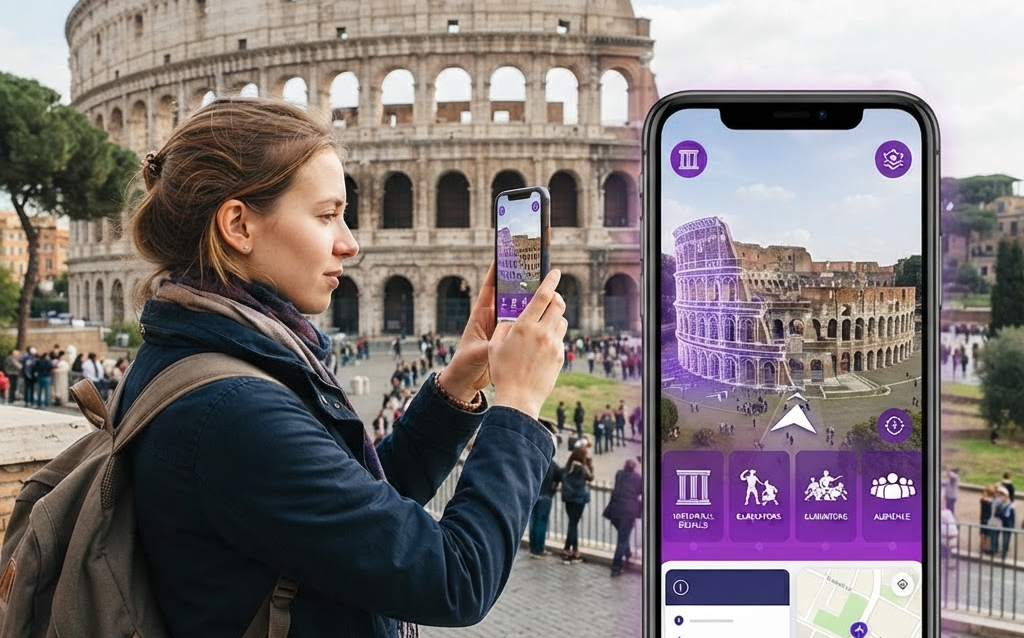
TL;DR: AR for travel and tourism lets visitors scan landmarks, museums, and cities to see historical reconstructions, interactive guides, and navigation overlays through their phone. US destinations using AR report 3x longer visitor engagement and 25% higher spending. Here’s how AR is transforming travel in 2026.
Tourism is about discovery—but most of what visitors see is limited to physical plaques, guide books, and audio tours. AR transforms every destination into an interactive experience. Point your phone at a landmark and see it as it looked 200 years ago. Scan a museum exhibit and watch artifacts come to life. Walk a city and see historical events overlaid on modern streets.
What AR Travel Experiences Include
- Historical reconstructions — see ruins, monuments, and buildings as they originally looked
- Interactive museum guides — scan exhibits for 3D models, historical context, and audio narration
- City navigation overlays — directional arrows, points of interest, and distance markers on streets
- Cultural storytelling — historical events and characters overlaid on real locations
- Translation overlays — signs and menus translated instantly through the camera
- Virtual tour guides — AR characters that guide visitors through attractions
- Scavenger hunts and games — gamified city exploration with AR clues and rewards
Why Tourism Destinations Need AR
3x Longer Visitor Engagement
Visitors who use AR experiences spend 3x longer at attractions. Instead of a 5-minute photo stop, they spend 15 minutes exploring historical overlays, interactive elements, and hidden stories. Longer engagement means more spending at gift shops, cafes, and nearby businesses.
Differentiating from Competing Destinations
Every city has plaques and audio tours. Few have AR experiences. Destinations that offer AR stand out in travel planning, attract tech-savvy visitors, and generate media coverage that drives tourism.
Year-Round Engagement
AR experiences work in any season and any weather. A rainy day that empties outdoor attractions becomes an opportunity for AR storytelling. Destinations can update AR content seasonally without physical infrastructure changes.
Cost of AR Tourism Experiences
| Scope | Cost | Timeline |
|---|---|---|
| Single landmark AR experience (WebAR) | $10,000–$40,000 | 4–8 weeks |
| Multi-site city AR tour | $40,000–$150,000 | 8–16 weeks |
| Full destination AR platform | $100,000–$400,000+ | 14–28 weeks |
FAQ: AR for Travel and Tourism
Do tourists need to download an app for AR tourism experiences?
No. WebAR lets tourists scan a QR code at the attraction and launch the AR experience directly in their browser. No app download, no storage space, no friction. This is critical for tourists who won’t download an app for a one-time visit.
How much does an AR tourism experience cost?
A single landmark WebAR experience costs $10,000–$40,000. A multi-site city AR tour costs $40,000–$150,000. A full destination platform with multiple attractions, games, and navigation costs $100,000–$400,000+.
Can AR show what historical sites looked like in the past?
Yes. AR historical reconstruction overlays 3D models of the original structure on the current ruins or site. Tourists see a Roman amphitheater as it stood 2,000 years ago, or a colonial building in its original condition—all through their phone camera.
Can AR translate signs and menus for international tourists?
Yes. AR translation overlays translate street signs, restaurant menus, and information plaques in real time through the camera. This removes a major barrier for international tourists and improves their experience.
Can AR experiences generate revenue for destinations?
Yes. AR experiences can include sponsored content from local businesses, premium guided tours, and gamified city hunts with paid participation. Destinations report 25% higher visitor spending from AR-engaged tourists who stay longer and explore more.
Getting Started
Start with your most-visited landmark. Build a WebAR experience with historical reconstruction and interactive storytelling. Add QR codes at the site. Measure visitor engagement time and spending impact.
Ready to bring AR to your tourism destination? Contact Ink & Algorithm to discuss your project—we’ll help you create AR experiences that make your destination unforgettable.