
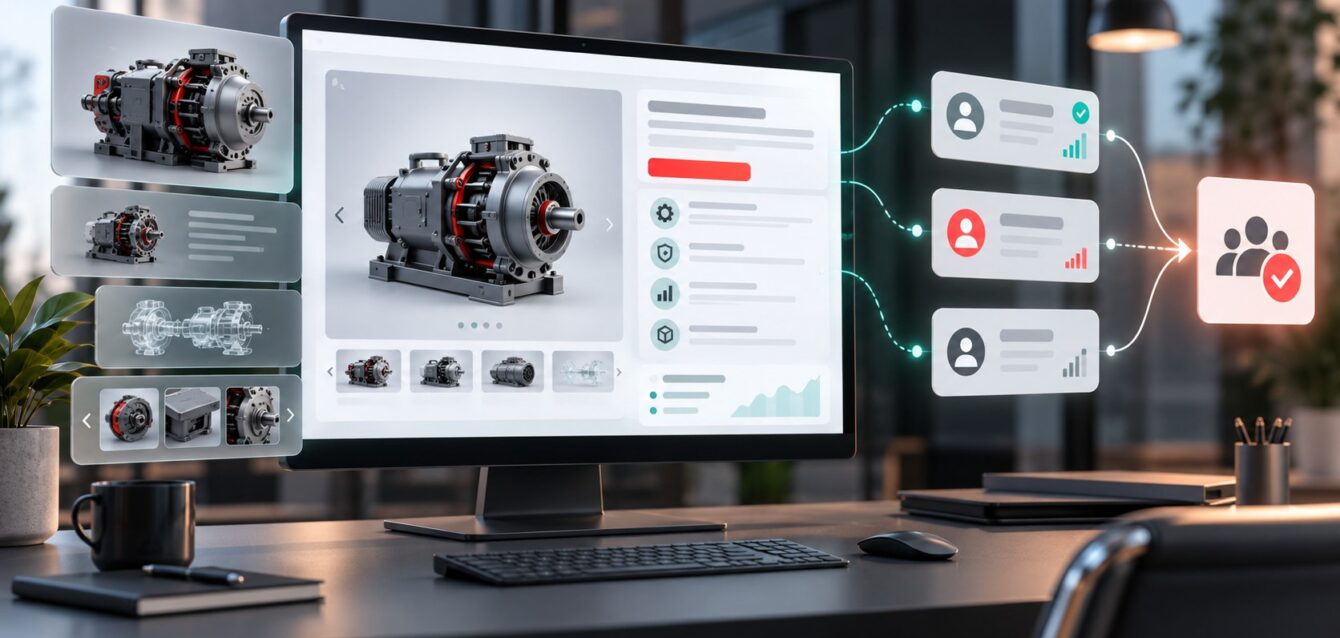
Configure, price, quote systems help manufacturers turn complex product rules into accurate proposals. The difficult decision is whether to buy a packaged platform or build custom CPQ software around existing workflows. The right choice depends on product complexity, sales channels, integration requirements, ownership, and the cost of adapting operations to software.
What Does a CPQ System Do?
A CPQ system guides sales teams or buyers through valid product options, applies pricing rules, and generates a consistent quote. Modern systems can also create bills of materials, route approvals, update CRM opportunities, and send order data to ERP or production tools.
Off-the-Shelf CPQ: Strengths and Tradeoffs
Packaged CPQ platforms can be a good fit when requirements follow common patterns. They offer established features, vendor support, and a predictable starting point. However, licensing costs, platform constraints, and complex customization can grow as workflows become more specialized.
Best fit for:
- Standard product bundles and discount rules.
- Teams willing to adapt processes to the platform.
- Organizations that prefer vendor-managed infrastructure.
- Projects that need common CPQ features quickly.
Custom CPQ Software: Strengths and Tradeoffs
Custom CPQ software is designed around the company’s products, approval logic, pricing structure, and systems. It can support unusual dependencies, dealer-specific pricing, engineering calculations, visual configuration, and workflows that packaged tools cannot model cleanly.
Best fit for:
- Engineer-to-order or highly configurable products.
- Complex dealer, territory, or contract pricing.
- Deep ERP, CRM, PIM, inventory, or production integration.
- Customer or dealer portals with branded user experiences.
- Organizations that need code and data ownership.
Seven Questions to Guide the Decision
1. How complex are the product rules?
Count dependencies, exclusions, calculations, and approval conditions. If rules change frequently or require engineering knowledge, validate whether a packaged rules engine can represent them without fragile workarounds.
2. Which systems must exchange data?
Map every source of customer, product, inventory, pricing, and order data. Reliable APIs, webhooks, monitoring, and error handling are essential. Our custom solutions and systems integration work focuses on these operational connections.
3. Who will use the system?
Internal sales teams, distributors, customers, and engineers have different needs. A dealer portal may require account pricing and approval controls, while a customer experience may prioritize clarity and visual guidance.
4. What is the five-year cost?
Compare implementation, licenses, per-user fees, integration work, support, upgrades, and ongoing rule maintenance. A lower initial price can become expensive when every workflow change requires vendor services.
5. How important is speed to quote?
Measure current turnaround time and the cost of delays. Automation has the most value where sales teams repeatedly wait for pricing, drawings, or engineering validation.
6. Do buyers need visual configuration?
For products where appearance or spatial relationships influence the decision, connect CPQ rules with a real-time 3D product configurator. The visual layer should read the same validated options used for pricing and production.
7. What level of ownership is required?
Review code access, data portability, hosting, API limits, and exit terms. Ownership matters when the system becomes a core sales channel rather than a supporting tool.
A Practical Hybrid Approach
The choice is not always fully custom or fully packaged. Some businesses retain an established CRM or commerce platform while building a dedicated rules, pricing, or portal layer. This approach preserves reliable systems while removing the constraints that create manual work.
Plan Around the Quote-to-Order Workflow
Start by documenting how a request becomes a valid, approved, production-ready order. The best CPQ architecture reduces handoffs, prevents invalid combinations, and gives every team one dependable source of truth. Discuss your CPQ workflow with Ink & Algorithm to identify the right build, buy, or hybrid path.