
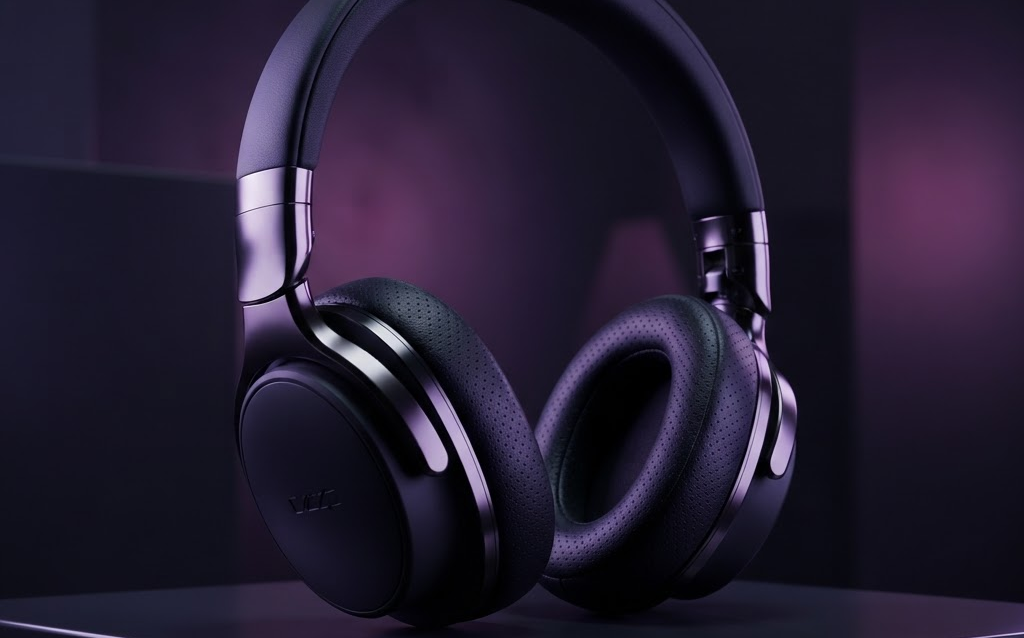
TL;DR: Unreal Engine 5 produces film-quality product renders with Lumen global illumination, Nanite geometry, and ray-traced reflections. Brands use UE5 for hero product shots, 360° spins, and interactive configurators that no standard renderer can match. Here’s how to use UE5 for product visualization in 2026.
Product visualization has two tiers: standard and film-grade. Standard renders (Three.js, KeyShot, Blender) produce good-quality images. UE5 produces film-grade images—indistinguishable from professional photography. For hero product shots, premium marketing campaigns, and high-end configurators, UE5 is the tool that delivers quality no other engine can match.
What Makes UE5 Product Visualization Different
Lumen Real-Time Global Illumination
When light hits a product, it bounces—warm light reflects off a gold watch onto the surface below, colored light from a red background tints the shadows. Lumen calculates all of this in real time. The result: lighting that behaves like the real world, not like a computer simulation.
Nanite Virtualized Geometry
Import a 3D scan of a product with 50 million polygons—every scratch, every texture detail preserved. Nanite handles it without optimization. Standard engines require polygon reduction that loses detail. UE5 keeps every detail.
Ray-Traced Reflections
Chrome, glass, metallic paint, and glossy surfaces reflect their environment accurately. A watch’s crystal reflects the studio lights. A car’s paint reflects the environment map. This accuracy is what makes UE5 renders look like photographs, not CG.
Quixel Megascans Library
10,000+ free photoreal materials and 3D scans. Real-world surfaces scanned at 8K resolution—leather, metal, fabric, wood, stone. Apply them to products or environments with perfect accuracy.
UE5 Product Visualization Use Cases
Hero Product Shots
Film-grade product images for advertising, packaging, and hero website banners. UE5 renders match or exceed professional photography—with the advantage of perfect lighting control and unlimited angles from one model.
360° Product Spins
Render 36 frames (one per 10°) for interactive 360° product viewers. Each frame has ray-traced quality. These spins load in any web browser and give customers a photorealistic product view.
Interactive Configurators
UE5 configurators with real-time material swapping—customers change colors, materials, and features with Lumen recalculating lighting instantly. Delivered via Pixel Streaming to any browser.
Product Launch Cinematics
30–60 second cinematic product reveals with dramatic lighting, camera moves, and photorealistic rendering. These are the renders used in major product launches—Apple-style reveal videos without the production cost.
UE5 vs Standard Renderers for Products
| Feature | Unreal Engine 5 | KeyShot/Blender |
|---|---|---|
| Global illumination | Lumen (real-time, accurate) | Approximate or pre-computed |
| Reflections | Ray-traced (physically accurate) | Screen-space (approximate) |
| Geometry detail | Nanite (unlimited polygons) | Limited (needs optimization) |
| Render speed | Real-time (60fps) | Minutes to hours per frame |
| Interactivity | Full real-time interaction | Static images only |
| Web delivery | Pixel Streaming | Image/video only |
| Cost per project | $10,000–$50,000 | $2,000–$15,000 |
Cost of UE5 Product Visualization
| Service | Cost | Timeline |
|---|---|---|
| Single product UE5 render | $2,000–$10,000 | 1–3 weeks |
| 360° spin (36 frames) | $3,000–$15,000 | 1–3 weeks |
| Product launch cinematic (30-60s) | $10,000–$50,000 | 3–8 weeks |
| Interactive UE5 configurator | $80,000–$250,000 | 10–20 weeks |
FAQ: UE5 Product Visualization
How much does UE5 product visualization cost?
A single product UE5 render costs $2,000–$10,000. A 360° spin (36 frames) costs $3,000–$15,000. A product launch cinematic costs $10,000–$50,000. An interactive UE5 configurator with Pixel Streaming costs $80,000–$250,000.
Is UE5 product visualization better than photography?
For premium products with reflective surfaces (watches, jewelry, cars), UE5 can match or exceed photography. UE5 offers perfect lighting control, unlimited camera angles from one model, and no need for physical prototypes. For products with organic textures (food, fabric), photography may still be preferable.
Can UE5 renders be used on websites and e-commerce?
Yes. UE5 renders export as high-resolution images, 360° spins, and videos for any digital use. For interactive experiences, Pixel Streaming delivers the UE5 quality to any web browser via cloud GPU streaming.
How long does UE5 product rendering take?
A single hero render takes 1–3 weeks (including 3D modeling, material setup, and lighting). A 360° spin takes the same time (the model is reused). A cinematic launch video takes 3–8 weeks. An interactive configurator takes 10–20 weeks.
What’s the difference between UE5 and KeyShot for product rendering?
KeyShot produces excellent static images but lacks real-time interactivity, ray-traced reflections, and Lumen global illumination. UE5 produces film-grade quality with real-time lighting and can be delivered interactively via Pixel Streaming. KeyShot is simpler and cheaper; UE5 is premium and interactive.
Getting Started
Start with your flagship product. Create a UE5 hero render and 360° spin. Compare the quality to your current photography. If the UE5 render matches or exceeds your photos, scale to your full product line and consider an interactive configurator.
Ready to create film-grade product visualization with UE5? Contact Ink & Algorithm to discuss your project—we’ll help you create renders that elevate your brand.