
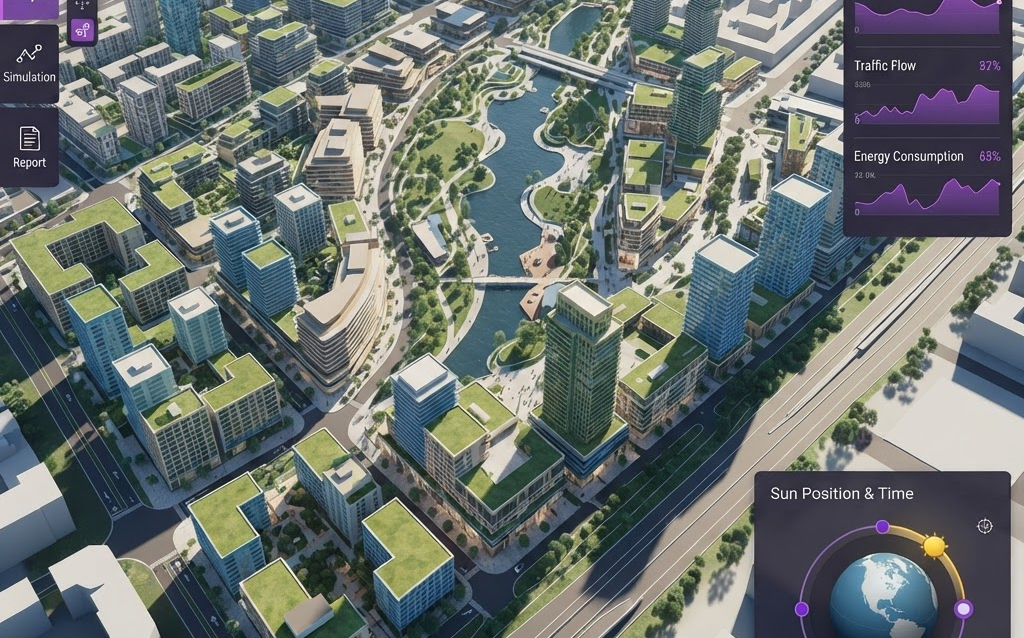
TL;DR: Landscape architecture visualization lets firms present outdoor designs—gardens, parks, plazas, campuses—in photorealistic 3D with seasonal changes, growth simulation, and real-time material swapping. US landscape firms using 3D visualization report 50% faster client approvals and 30% higher win rates on competitive bids. Here’s how it works in 2026.
Landscape design is uniquely visual. A 2D plan shows the layout—where trees go, where paths run, where water features sit—but it can’t show what the space will feel like when you’re standing in it. How tall will those trees be in 5 years? What does the plaza look like in summer vs winter? How does the light filter through the pergola at sunset?
3D landscape visualization answers all of these questions by rendering the outdoor space in photorealistic 3D, with seasonal lighting, plant growth simulation, and real-time material changes.
What Landscape Visualization Includes
- Photorealistic 3D rendering — every plant, path, structure, and water feature rendered with accurate materials and lighting
- Seasonal simulation — see the space in spring bloom, summer green, autumn color, and winter dormancy
- Growth simulation — visualize how trees and shrubs will look in 1, 5, 10, and 20 years
- Time-of-day lighting — morning, noon, golden hour, and evening lighting with accurate shadow patterns
- Material swapping — change paving materials, plant species, furniture styles, and lighting fixtures in real time
- Walkthrough animation — a video flythrough of the designed space at human eye level
- VR experience — clients walk through the landscape design in virtual reality before it’s built
Why Landscape Firms Need 3D Visualization
Winning Competitive Bids
When competing for public projects, corporate campuses, or high-end residential work, the firm that shows a photorealistic 3D walkthrough wins more often than the one that shows a 2D plan. The 3D presentation communicates the design’s value more effectively than any plan drawing can.
Communicating Growth Over Time
A landscape design is a 20-year investment. Clients need to understand how the space will evolve as plants mature. 3D growth simulation shows the space at 1, 5, 10, and 20 years—managing expectations and demonstrating long-term value.
Seasonal Confidence
Clients worry about how the landscape will look year-round. Seasonal simulation shows the space in every season, proving that the design works in January as well as June. This addresses a common objection that 2D plans cannot.
Tools for Landscape Visualization in 2026
| Tool | Best For | Cost |
|---|---|---|
| Lumion | Fast landscape rendering with plant library | $1,500–$3,500/yr |
| Twinmotion | Interactive walkthroughs + seasonal changes | $500/yr |
| Unreal Engine 5 | Premium quality, VR, growth simulation | Free (royalty >$1M) |
| Enscape | SketchUp/Land F/X integration | $300–$500/yr/seat |
| D5 Render | Cost-effective with good plant rendering | $360–$600/yr |
Cost of Landscape Visualization
| Service | Cost | Timeline |
|---|---|---|
| Single space 3D render | $1,000–$5,000 | 3–7 days |
| Full site visualization (multiple views) | $5,000–$25,000 | 1–3 weeks |
| Animated flythrough (60-120s) | $5,000–$20,000 | 2–4 weeks |
| VR landscape walkthrough | $15,000–$50,000 | 3–8 weeks |
| Seasonal/growth simulation | $3,000–$15,000 | 1–3 weeks |
FAQ: Landscape Architecture Visualization
Can 3D visualization show how plants will grow over time?
Yes. Growth simulation renders the landscape at 1, 5, 10, and 20 years, showing how trees mature, shrubs fill in, and canopies expand. This helps clients understand the long-term vision and justifies the investment in mature vs. young plantings.
How much does landscape visualization cost?
A single space 3D render costs $1,000–$5,000. A full site visualization costs $5,000–$25,000. An animated flythrough costs $5,000–$20,000. A VR walkthrough costs $15,000–$50,000. Seasonal/growth simulation costs $3,000–$15,000.
Which tool is best for landscape visualization?
Lumion has the best plant library and is designed for landscape architects. Twinmotion offers interactive walkthroughs with seasonal changes. Unreal Engine 5 delivers the highest quality for premium bids. Enscape integrates with SketchUp and Land F/X. For most firms, Lumion or Twinmotion provides the best balance of quality and ease of use.
Can clients walk through the landscape in VR?
Yes. VR landscape walkthroughs let clients walk through the designed space at human scale, experiencing the proportions, sight lines, and atmosphere before construction begins. This is especially powerful for public projects where stakeholders need to approve the design.
Can I show the landscape in different seasons?
Yes. Seasonal simulation shows the space in spring (blooming), summer (full green), autumn (color change), and winter (dormant). This proves the design works year-round and addresses the common client concern about winter appearance.
Getting Started
- Start with Lumion or Twinmotion — both have excellent plant libraries and are designed for landscape work
- Add seasonal simulation — show clients the design in all four seasons
- Create a flythrough — a 60-second video is more persuasive than any plan drawing
- Offer VR for competitive bids — a VR walkthrough sets you apart from firms using 2D plans
Ready to upgrade your landscape presentations to 3D? Contact Ink & Algorithm to discuss your project—we’ll help you create landscape visualizations that win bids and delight clients.