
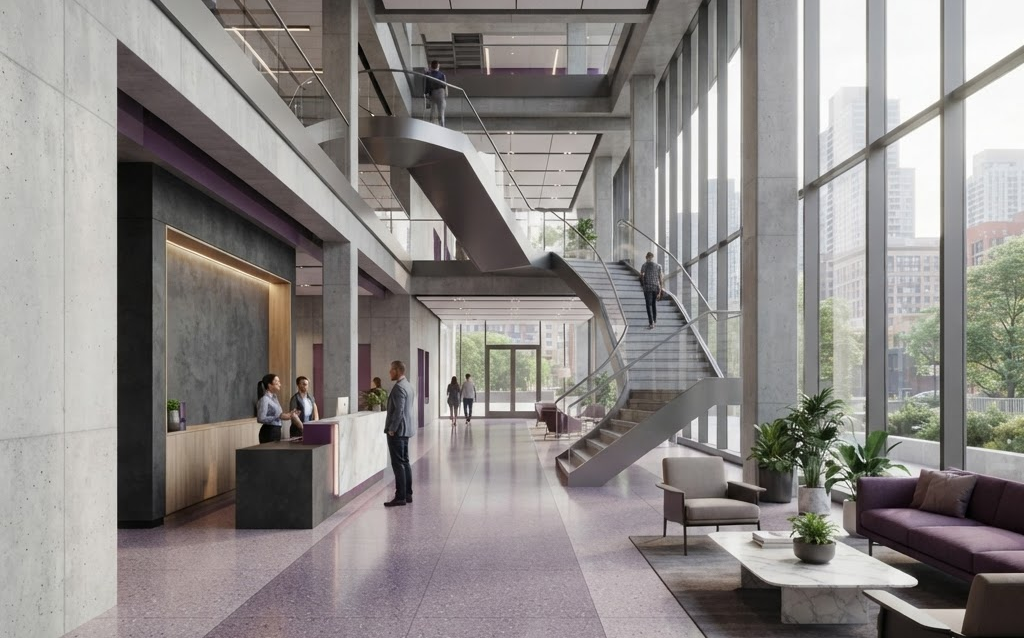
TL;DR: Architecture visualization has shifted from static renders to real-time 3D experiences. Firms using interactive walkthroughs, VR tours, and real-time configurators win more bids, get faster approvals, and sell properties pre-construction. With Unreal Engine 5 and Enscape making real-time rendering accessible, the gap between firms that visualize interactively and those still sending flat images is widening fast in 2026.
For decades, architecture visualization meant a static render—a beautifully lit, high-resolution image that took hours to compute and couldn’t be changed once rendered. Clients looked at the image, nodded, and asked, “But what if we changed the windows?” Back to the render farm for another 8-hour wait.
In 2026, that workflow is obsolete. Real-time 3D visualization lets architects and clients walk through a building before it’s built, change materials in real time, adjust lighting throughout the day, and explore every room at human scale. What used to take a day now happens in seconds. This isn’t a minor improvement—it’s a fundamental shift in how architecture is presented, sold, and approved.
What Is Real-Time Architecture Visualization?
Real-time architecture visualization uses game engine technology—primarily Unreal Engine 5 and Enscape—to render 3D architectural models instantly, at 60 frames per second, with photorealistic quality. Instead of waiting hours for a single image, the architect and client can:
- Walk through the building in first-person view
- Change wall colors, floor materials, and furniture instantly
- See how natural light changes from morning to evening
- Switch between design alternatives with a single click
- View the building in VR for full spatial immersion
The key difference from traditional rendering is interactivity. The client isn’t looking at a picture of a building—they’re standing inside it. That shift from passive viewing to active exploration changes how clients understand and connect with a design.
How Real-Time Visualization Helps Firms Win Bids
Emotional Connection Through Immersion
A static render shows what a building looks like. A real-time walkthrough shows what a building feels like. When a client walks through their future lobby in VR, feels the scale of the atrium, and sees how light pours through the glass facade, they connect emotionally in a way that flat images cannot achieve.
Firms using real-time visualization report 40–60% higher bid win rates because clients understand the design more deeply and feel more confident in their choice. The experience of walking through a space is fundamentally more persuasive than looking at a picture of one.
Faster Iteration and Approval Cycles
Traditional visualization creates a bottleneck: render → review → feedback → re-render → review. Each cycle takes hours or days. Real-time visualization eliminates this loop. The client says “can we try darker wood floors?” and the architect clicks a button—the floors change instantly, the client reacts, and the decision is made in 10 seconds instead of 10 hours.
This compression of the feedback cycle means faster project approvals. Projects that used to take 3 rounds of revision over 2 weeks can be finalized in a single 1-hour interactive session.
Pre-Construction Sales for Developers
For residential and commercial developments, real-time visualization enables pre-construction sales. Potential buyers put on a VR headset and walk through their future apartment, choosing finishes, flooring, and layout options. They can see the view from their window, feel the proportions of the rooms, and make a purchase decision before ground is broken.
Developers using VR pre-sales report 30–50% of units sold before construction begins, improving cash flow and reducing financial risk.
The Technology Stack for Architecture Visualization in 2026
Unreal Engine 5
The gold standard for real-time architectural visualization. Key features:
- Nanite — handles multi-billion polygon scenes without performance loss. Import high-detail CAD models directly.
- Lumen — real-time global illumination. Change a wall color and the entire scene’s lighting updates instantly—reflections, shadows, color bleed.
- MetaHuman — populate scenes with realistic human characters for scale and life-like presence.
- Datasmith — direct import from Revit, ArchiCAD, SketchUp, and Rhino with materials and geometry preserved.
- Pixel Streaming — stream the visualization to a client’s web browser. No software install, no powerful GPU needed on their end.
Enscape
Real-time visualization plugin that works directly inside Revit, SketchUp, ArchiCAD, and Rhino. Simpler than Unreal Engine but highly effective for firms that want real-time visualization without leaving their BIM software.
- One-click real-time walkthrough from your BIM model
- Material editor for quick swaps during client meetings
- VR support for Meta Quest and other headsets
- Video and panorama export for marketing materials
- Lower learning curve than Unreal Engine
Twinmotion
Unreal Engine-powered visualization tool designed specifically for architecture. Easier than full Unreal Engine, more powerful than Enscape. Includes weather effects, vegetation, and crowd population tools. Best for firms that need more than Enscape but less complexity than full Unreal Engine.
D5 Render
Rising challenger with real-time ray-traced rendering, AI-assisted features, and competitive pricing. Growing adoption among firms that want Unreal-quality visuals without the complexity.
Comparison: Choosing the Right Tool
| Tool | Learning Curve | Quality | Cost | Best For |
|---|---|---|---|---|
| Unreal Engine 5 | Steep | Film-grade | Free (5% royalty >$1M) | Competitions, premium bids, VR |
| Enscape | Low | Very good | $300–$500/yr/seat | Everyday client presentations |
| Twinmotion | Medium | Excellent | $500/yr | Marketing renders + walkthroughs |
| D5 Render | Medium | Excellent | $360–$600/yr | Cost-effective alternative |
| Lumion | Low | Good | $1,500–$3,500/yr | Fast massing + concept viz |
Most firms use two tools: Enscape for day-to-day client meetings (fast, integrated with BIM) and Unreal Engine for high-stakes competitions and presentations (maximum quality, full interactivity).
Real-World Applications
Competitions and Bid Presentations
Firms competing for major projects use real-time walkthroughs in their presentations. Instead of showing 10 static renders, the architect walks the jury through the building in real time, pausing at key moments, changing lighting conditions, and answering “what if” questions on the spot. This level of responsiveness sets them apart from competitors using traditional presentation methods.
Client Design Reviews
Interactive design sessions where the client sits with the architect and explores the building together. The client can suggest changes (“move that wall 2 feet to the left”) and see the result instantly. This collaborative approach produces better designs and more satisfied clients.
Planning and Zoning Approvals
Municipal planning boards increasingly request 3D visualizations for major projects. Real-time visualization lets architects show how a building fits into its context, how it affects sight lines, and how shadows fall on neighboring properties—all in a live, interactive presentation that answers board members’ questions in real time.
Real Estate Pre-Sales
Developers create interactive virtual tours of unbuilt properties. Buyers walk through the space in VR, customize finishes, and make purchase decisions. Some developers offer interactive configurators where buyers select flooring, cabinetry, and layout options in real time.
Marketing and Investor Relations
Real-time visualizations produce not just walkthroughs but also high-quality stills, videos, and 360° panoramas for marketing materials—all from the same 3D model. One model, multiple outputs.
Cost of Real-Time Architecture Visualization
| Service | Cost | Timeline |
|---|---|---|
| Interactive walkthrough (single building) | $5,000–$25,000 | 1–3 weeks |
| VR presentation (competition) | $15,000–$50,000 | 2–4 weeks |
| Real-time configurator (finishes, layout) | $20,000–$80,000 | 3–8 weeks |
| Full marketing suite (walkthrough + renders + video) | $30,000–$120,000 | 4–10 weeks |
| Multi-building development visualization | $50,000–$250,000+ | 6–16 weeks |
FAQ: Architecture Visualization in 2026
What’s the difference between real-time visualization and traditional rendering?
Traditional rendering computes a single image over hours—you get a fixed picture that can’t be changed without re-rendering. Real-time visualization uses game engine technology to render at 60fps, meaning you can walk through the building, change materials instantly, adjust lighting, and explore interactively. A change that takes 8 hours in traditional rendering takes 1 second in real-time.
Do clients need VR headsets to experience real-time visualization?
No. Real-time visualizations can be delivered via web browser using Pixel Streaming (for Unreal Engine) or web export. The client opens a link and walks through the building using keyboard and mouse. VR headsets enhance the experience but aren’t required. For client meetings, a large screen or projector with a game controller works well.
Which is better for architecture firms: Unreal Engine or Enscape?
Most firms use both. Enscape is better for everyday client meetings—it integrates directly into your BIM software (Revit, SketchUp, ArchiCAD) and has a low learning curve. Unreal Engine 5 is better for high-stakes competitions and marketing—it delivers film-grade quality and full interactivity but requires more training. Start with Enscape, add Unreal for premium projects.
How much does real-time architecture visualization cost?
An interactive walkthrough of a single building costs $5,000–$25,000. A VR presentation for a competition runs $15,000–$50,000. A full marketing suite with walkthrough, stills, and video costs $30,000–$120,000. The 3D model creation (from BIM or CAD) is often the primary cost driver and can be done in-house if the firm has modeling capability.
Can real-time visualization integrate with my existing BIM workflow?
Yes. Unreal Engine’s Datasmith plugin imports directly from Revit, ArchiCAD, SketchUp, and Rhino, preserving materials, geometry, and metadata. Enscape runs as a plugin inside these same programs. There’s no need to switch modeling software—the real-time visualization builds on your existing BIM pipeline.
The Future of Architecture Visualization
The firms still sending static renders to clients are losing bids to firms that offer interactive walkthroughs. It’s that simple. Clients in 2026 expect to experience a building, not just look at it. The technology to deliver that experience is accessible, affordable, and proven.
The trajectory is clear: real-time visualization will become as standard in architecture as CAD was in the 1990s and BIM was in the 2010s. Firms that adopt now build the capability and client expectations that make them competitive for years. Firms that wait will find themselves bidding against competitors who let clients walk through buildings while they’re still sending PDFs.
Ready to upgrade your architecture visualization to real-time 3D? Contact Ink & Algorithm to discuss your project—we’ll help you create interactive, real-time visualizations that win bids and sell projects.