
| ⚡ TL;DR — Quick Answer
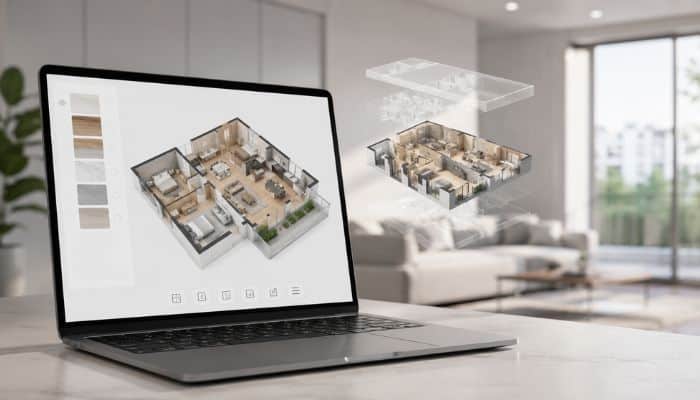
An apartment configurator is an interactive 3D web tool that lets potential buyers customize an unbuilt or available apartment in real time — choosing layouts, finishes, fixtures, lighting, and furnishings while seeing a photorealistic preview update instantly. Property developers in 2026 use apartment configurators primarily to sell off-plan units faster, lift average sale prices through premium upgrades, reduce post-handover complaints by setting accurate expectations, and reach international buyers who cannot visit physical sales centres. A typical apartment configurator built on modern technologies like Unreal Engine or WebGL costs between 10 to 24 weeks to deploy, and integrates with the developer’s CRM, sales centre kiosks, and broader marketing campaign. Ink n Algorithm designs and builds custom apartment configurator platforms for property developers across the United States and internationally. |
Selling apartments has fundamentally changed across the past three years. Property buyers who once spent weeks comparing static brochures, fuzzy renderings, and PDF floor plans now expect to interactively customize their future home before signing a purchase agreement. They want to see exactly what their chosen layout looks like with their selected flooring, their preferred kitchen finishes, and their specific view orientation — all updated in photorealistic real time. The technology making this possible is called the apartment configurator, and it has become essential infrastructure for serious property developers in 2026.
This guide explains exactly what an apartment configurator is, how property developers actually use this technology to sell more units at better prices, what features matter, what it costs to build, and how to commission an apartment builder that delivers measurable commercial outcomes. Written by the team at Ink n Algorithm based on years of building configurator platforms for real estate developers and luxury brands across the United States and globally.
What is an apartment configurator?
An apartapartment design tool real-time interactive 3D application — typically delivered through a web browser, sales centre kiosk, or mobile app — that allows potential buyers to customize an apartment unit’s specifications and see those choices reflected immediately in a photorealistic visualization. The buyer might select a specific floor plan, change wall colours, swap kitchen cabinet finishes, adjust flooring materials, position furniture layouts, or modify lighting moods — all while the apartmhousing configuratorrs the result in real time without page reloads or perceptible delay.
Behind the visual interface, a modern apartmenunit configurators substantial backend technology. The configuration system tracks every selection, calculates updated pricing based on upgrade choices, validates which combinations are commercially available, generates structured data for the sales team’s CRM, and produces production-ready specifications for the contractors who will eventually build out the finished unit. The apartment conapartment builderltaneously the marketing tool, the sales tool, and the order-management tool — collapsing three traditionally separate functions into one continuous buyer experience.
Most apartment configurapartment design tool run on either Unreal Engine 5 for premium photorealistic fidelity or WebGL-based engines like Three.js and Babylon.js for maximum web reach. Ink n Algorithm’s apartment configurahousing configuratororks fluently across both technology stacks, recommending the right approach based on the developer’s specific commercial goals, target buyer profile, and integration requirements rather than imposing a single technology preference.
How do property developers use apartment configurators in 2026?
Property developers deploy apartment configuratounit configuratorven specific commercial scenarios. Most successful developers implement multiple use cases simultaneously rather than treating the apartment builder as apartment builder
1. Selling off-plan apartments before construction completes
The headline use case. Off-plan apartments physically do not exist yet — there is nothing to walk through, nothing to photograph, nothing for buyers to experience in person. An apartapartment design tooles tapartment design toolm by letting buyers experience the unit before construction. They see exactly what their future apartment will look like, walk through the layout, customize the finishes, and commit to purchase based on a confident emotional connection to the space. This is the single most important driver of apartmhousing configuratorion housing configuratorrs.
2. Lifting average sale prices through premium upgrades
ApartmenUnit configuratortentUnit configuratorrices because every customization choice typically carries a small premium — upgraded flooring, premium kitchen finishes, smart lighting packages, premium bathroom fittings. Each small upcharge feels acceptable because the buyer is choosing to upgrade rather than being charged more for the same product. Across the basket of choices, these premium increments lift the final transaction value substantially. Developers report measurable average sale price increases within months of launching their apartment conapartment customizerhing international buyers who cannot visit in person
Many property markets — luxury condominiums in particular — depend on international buyers who cannot easily fly in for every sales presentation. An apartment confiapartment builderleapartment builderobally. A buyer in Singapore explores apartments in Chicago, a London investor configures units in Miami, a Dubai family customizes apartments in New York — all without leaving their home cities. The apartment configuratapartment design toolesapartment design tool of the sales territory.
4. Reducing post-handover complaints and misunderstandings
Post-handover complaints are the silent profit killer of apartment sales. Buyers receive a finished unit that differs subtly from what they expected, leading to disputes, refund requests, and damaged developer reputations. An apartment configuratohousing configuratorhihousing configuratorrs see exactly what they have specified before signing. The configurator’s output becomes the contractual reference for what gets built — leaving little room for expectation gaps at handover.
5. Differentiating in competitive property launch markets
In cities with many simultaneous off-plan launches, developers compete intensely for buyer attention. An apartment configurator unit configuratoresunit configuratorg technological sophistication, customer-led thinking, and serious investment in the buying experience. Buyers feel the developer cares enough to give them control — which translates directly into stronger brand perception and faster sales-cycle conversion.
6. Enabling sales centre and broker enablement
Modern apartment configurators run apartment customizer aapartment builderes, on iPads carried by brokers visiting investor offices, and integrated into multimedia presentation rooms. The same underlying apartment configurator powers apartment buildergs asapartment design tool, providing consistent experience and consistent specifications regardless of where the buyer encounters the product.
7. Integrating with AR, VR, and immersive marketing campaigns
Leading developers extend the apartment configurator with companiapartment design toolknalgorithm.com/augmented-reality-ar/”>augmented reality experiences — letting buyers visualize their configured apartment in 3D space — and virtual reality walkthrough integrations for fully immersive sales centre presentations. The shared 3D asset pipeline means a single investment powers configurator, AR, VR, and marketing animation deliverables simultaneously.
What features does a professional apartment configurator include in 2026?
A serious apahousing configuratorcludes eight categories of featuresunit configuratoressional platforms from basic visualization tools. These features are what separate apartment configurators that genuinehousing configurator those apartment buildereloper websites.
Real-time photoreal rendering
The apartment configurator must render eveunit configuratorth photoreapartment design tools cannot wait three seconds between selecting a flooring option and seeing it applied. Modern apartment configurators built by Ink n Algoapartment customizerub-sechousing configuratoron mid-range mobile devices, using optimized 3D asset pipelines and intelligent rendering strategies.
Floor plan and layout customization
Buyers can select between alternative layouts where available, adjust room configurations, and see updated dimensions immediately. The apartment configurator validates which combinapartment buildery feasunit configuratorloper’s engineering constraints rather than letting buyers configure impossible units.
Interior finish selection libraries
Comprehensive material libraries covering flooring (hardwood, marble, porcelain, carpet), wall finishes (paint colours, wallpapers, panels), kitchen elements (cabinets, countertops, backsplashes), bathroom fixtures, lighting options, and built-in furniture. Each material rendered with scanned real-world accuracy.
Furniture and styling preview
Optional furniture packages, styling preferences, and personalization let buyers visualize the apartment as their actual future home rather than an empty shell. Some apartment configurator platforms allow buyers to iapartment design toolure prapartment buildersonalization.
View accuracy and orientation
Geographically accurate views from each apartment configurator unit — showing real surroundhousing configuratore sun posiapartment design toolday, and precise view orientations based on actual floor and unit numbers. View accuracy directly drives premium-floor pricing and prevents post-handover view-related disputes.
Pricing logic and quote generation
Each customization choice updates the total apartment price in real time. The apartment configurator generates structured quotes thunit configuratorrt directhousing configuratorments, integrating with CRM platforms like Salesforce, HubSpot, or custom developer systems.
Cross-device compatibility
The apartment configurator must work seamlessly across desktopapartment customizeres, taunit configuratorles centre kiosks. Mobile performance is particularly critical since most initial buyer browsing happens on smartphones — and an apartment configurator that fails on mobile loses the entireapartment builderel.
Backend integration with CRM and sales systems
Every buyer interaction with the apartment configurator becomes structured data flowing into the dapartment design tool uniapartment builderh customizations they preferred, where they hesitated, where they abandoned. This intelligence transforms sales team prospecting and dramatically improves lead quality scoring.
| An honest production reality
The apartment configurator that genuinely converts buyers takes seriouhousing configuratorve invesapartment design toolapartment configurator — inaccurate dimensions, stuttering performance, ugly materials, broken inhousing configuratordamages credibility more than not having a configurator at all. Property developers winning with apartment configurator technology in 2026 treat it as serious infrasunit configurator marketinunit configuratorxisting websites. |
How much does an apartment configurator cost in 2026?
Apartment configurator pricing apartment customizery scope, fidelity, cusApartment builderintegration complexity. Use these ranges as realistic starting points for serious apartment configurator development projects in 2026.
- Basic apartment apartment design toolnit type, limited finishes): USD 25,000 to USD 50housing configuratorrd apartment configurator (multiple unit types, full finish library): USD 50,000 to USunit configuratorremium apartment configurator with photoreal Unreal Engine pipeline: USD 100,000 to USD 200,000apartment customizer apartment configurator with AR/VR integration and full CRM connectivity: USD 150,000 to USapartment builderMulti-property apartment configurator platform for developer with multiple projects: USD 250,000 and upwardHow long does apartment configurator development take?
A standard apartment configurator typically takes 10unit configuratorect kickoff to public launch. Premium apartment configurator platforms with multiple unit types, photoreal rendering, and deep CRM integration extend to 16 to 24 weeks. Multi-property apartment configurator platforms covering several developments simultaneously can extend to six months or more depending on scope.
The largest single timeline variable in apartment configurator development is usually how quickly the developer’s architectural drawings, material specifications, and integration requirements are finalized. Apartment configurator projects move quickly when the developer is ready with complete specs at project start; they stall when specifications evolve mid-project. Ink n Algorithm’s structured discovery process minimizes this risk by completing detailed specification documents before development begins.
Planning an apartment configurator for your property project? Ink n Algorithm designs and develops custom apartment configurator platforms for property developers across the United States and internationally. Our team handles every aspect in-house — 3D modelling, photoreal materials, real-time engine development, configurator UX design, CRM integration, and ongoing support. Tell us about your apartment configurator project at https://inknalgorithm.com/contacts/ and a senior team member will respond within one business day with indicative timeline, budget framing, and platform recommendations. You can also explore complete web configurator services and recent apartment configurator projects in the Ink n Algorithm portfolio.
Frequently asked questions
How is an apartment configurator different from a standard 3D walkthrough?
A 3D walkthrough is passive — the buyer watches a pre-rendered video of the apartment without any interaction. An apartment configurator is fundamentally interactive — buyers actively customize layouts, finishes, fixtures, and styling in real time, seeing photorealistic updates immediately. Walkthroughs are marketing assets; apartment configurators are sales tools that collapse marketing and ordering into one continuous buyer experience.
Do apartment configurators work on mobile phones?
Yes — and they must. Most initial property browsing in 2026 happens on smartphones. An apartment configurator that performs poorly on mobile loses the entire top of the sales funnel. Ink n Algorithm engineers apartment configurator projects for real consumer mobile devices throughout development, not just desktop testing, ensuring smooth performance on mid-range Android phones and recent iPhones alike.
Can an apartment configurator integrate with our existing CRM?
Yes. Professional apartment configurator platforms integrate cleanly with Salesforce, HubSpot, Pipedrive, and custom developer CRM systems. Every buyer interaction generates structured data — units explored, customization preferences, pricing thresholds, abandonment points — flowing directly into the sales team’s prospect pipeline for follow-up and qualification.
Which technology should an apartment configurator be built on?
The two leading approaches are Unreal Engine 5 for premium photorealistic fidelity (best for luxury and high-end developers) and WebGL-based engines like Three.js or Babylon.js for maximum web reach without app downloads (best for mass-market developers). Ink n Algorithm’s apartment configurator team works fluently across both technology stacks and recommends based on each developer’s specific goals.
Can apartment configurators include AR or VR features?
Yes. Modern apartment configurator platforms increasingly include companion AR experiences (letting buyers visualize their configured apartment in 3D space) and VR walkthrough integrations (for fully immersive sales centre presentations). The shared 3D asset pipeline means a single investment powers configurator, AR, and VR deliverables simultaneously — dramatically improving cost-per-asset economics.
How do we start an apartment configurator project with Ink n Algorithm?
Contact Ink n Algorithm through the contact page with a brief description of your apartment configurator project — which property development it serves, what features matter most, target launch timeline, and any existing CRM or web platform you need integration with. A senior team member will respond within one business day, typically with a structured discovery call to scope the apartment configurator project properly before any formal proposal.
FAQ
How much does is an apartment configurator cost?
The cost varies based on project scope and complexity. Contact us for a custom quote tailored to your specific needs.
How long does is an apartment configurator take?
Typical projects take 2-8 weeks depending on scope. We provide detailed timelines during consultation.
Do you work with US brands?
Yes, we work with US brands across all 50 states. Our team understands the US market and delivers solutions that drive results.