
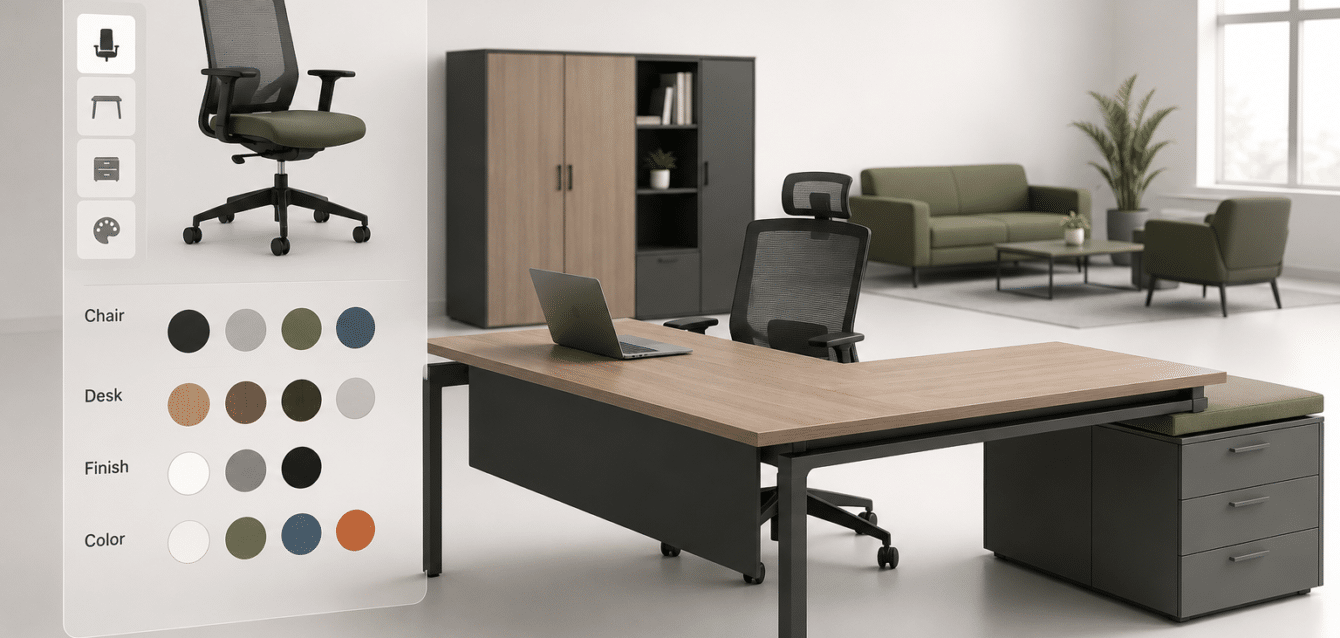
Furniture buyers do not only want to see a product. They want to understand how it will look in their room, workplace, showroom, or project before they commit. For furniture brands in the USA, that makes a 3D furniture configurator one of the most useful digital sales tools in 2026.
A 3D furniture configurator lets customers customize furniture in real time. They can switch fabrics, leather, wood finishes, metal frames, dimensions, layouts, legs, cushions, modules, and accessories while the product updates visually in the browser. For ecommerce teams, dealers, sales reps, architects, and B2B buyers, this creates a clearer path from interest to quote or purchase.
The best configurators are not just visual toys. They connect product options, pricing logic, ecommerce workflows, lead capture, and sometimes WebAR into one guided buying experience.
What Is a 3D Furniture Configurator?
A 3D furniture configurator is an interactive product experience that lets buyers build a furniture item or furniture system online. Instead of showing every possible variant as separate photos, the configurator uses 3D models, materials, textures, and rules to generate each valid combination on demand.
For example, a sofa configurator may allow customers to choose size, sectional layout, fabric color, leg finish, cushion style, and add-ons. An office furniture configurator may include desk systems, workstations, acoustic panels, conference tables, storage, power modules, and finish packages. A cabinet or shelving configurator may include dimensions, door styles, handles, wood species, and hardware.
The goal is simple: help buyers see the exact product they are considering, reduce uncertainty, and send cleaner purchase or quote data to the business.
Why Furniture Brands Need Configurators
Furniture is a high-consideration purchase. Buyers care about color, texture, scale, space fit, durability, and how the product works with the rest of the environment. Static photos are useful, but they do not scale well when a brand offers dozens of finishes, modular layouts, or made-to-order choices.
A 3D configurator solves this by turning the product page into a guided customization flow. Instead of asking the customer to imagine the final result, the website shows it instantly. This can reduce hesitation, improve time on page, increase quote quality, and help sales teams avoid long back-and-forth conversations about basic options.
For B2B furniture brands, the value is even stronger. Dealers, interior designers, workplace teams, architects, and procurement managers need accuracy. A configurator can turn a complex catalog into a more usable buying system.
Core Features to Include
A strong furniture configurator should feel simple to the customer even when the product rules are complex behind the scenes. The interface should guide the buyer through logical choices without overwhelming them.
Useful features include real-time 3D rotation, zoom, fabric and finish swatches, module selection, size controls, pricing updates, product summaries, saved configurations, quote requests, cart integration, share links, and downloadable specification sheets. For retail furniture, WebAR can be especially powerful because shoppers can place the configured piece in their space from a mobile browser.
For commercial furniture, useful features may include room layout logic, bulk quote support, dealer routing, SKU mapping, lead forms, and exportable product data for sales teams.
WebAR for Furniture Configurators
WebAR lets a buyer preview furniture in the real world without installing an app. A visitor can open the product page on a phone, customize a sofa or chair, and place it in the room using the mobile camera.
This matters because furniture purchases are tied to space. Buyers want to know whether the scale feels right, whether the color works with the room, and whether the product feels too large or too small. WebAR gives them a faster answer than measurements alone.
When WebAR is connected to a configurator, the buyer can preview the customized version, not just a default model. That means the selected fabric, finish, and layout can be reflected in the AR view when the asset pipeline is planned correctly.
Typical Cost in the USA
The cost of a 3D furniture configurator depends on model complexity, number of products, number of materials, option rules, ecommerce integration, and whether WebAR is included. A focused configurator for one product line may start around $20,000 to $45,000. A more advanced ecommerce configurator with multiple products, pricing logic, and cart integration may range from $45,000 to $100,000.
Enterprise furniture configurators with dealer workflows, CPQ integration, product databases, advanced material libraries, saved projects, analytics, and multiple product families can exceed $100,000. The investment is larger, but it can replace many manual sales steps and create a reusable digital product platform.
The biggest cost driver is not the visual interface alone. It is the number of product rules and the quality of the 3D asset system. A sofa with five fabric options is simple. A modular office system with sizes, finishes, accessories, availability rules, and quote logic is a much larger build.
3D Asset Planning Matters
Furniture configurators depend on clean, optimized 3D assets. Models must look good, load quickly, and support material changes without breaking visual quality. Heavy CAD files usually need to be rebuilt or optimized for the web before they can be used in a browser-based configurator.
Good asset planning includes geometry optimization, UV mapping, texture compression, realistic material setup, lighting, model variants, and naming standards. If the configurator supports WebAR, assets may also need USDZ or GLB workflows depending on target devices.
Brands that plan this correctly can reuse the same 3D assets across product pages, ads, sales tools, showroom screens, WebAR experiences, and future product launches.
Ecommerce and Quote Integration
A furniture configurator becomes more valuable when it connects to the business workflow. For ecommerce, this may mean passing selected options into Shopify, WooCommerce, Magento, BigCommerce, or a custom checkout. For B2B sales, it may mean sending configuration data to a CRM, email workflow, ERP, dealer portal, or CPQ system.
The configurator should capture structured data, not just screenshots. A useful submission includes product ID, selected materials, dimensions, modules, add-ons, price, customer details, and any notes needed by sales or production teams.
This is where many basic visualizers fall short. They look good, but they do not help the team process orders or quotes. A serious furniture configurator should support the buying workflow from the beginning.
ROI for Furniture Brands
The return on investment usually comes from a mix of better conversion rates, fewer manual mockups, stronger lead quality, lower return risk, and faster quote cycles. When buyers can see what they are choosing, they are more confident. When sales teams receive structured configuration data, they spend less time clarifying simple details.
Furniture brands with many variants can also reduce dependence on expensive photoshoots. Instead of photographing every fabric, leg, and finish combination, the brand can create a reusable 3D material and model system. This does not eliminate all photography, but it can make product launches faster and more scalable.
Best Use Cases
3D furniture configurators are especially useful for modular sofas, office desks, conference tables, cabinets, wardrobes, outdoor furniture, commercial seating, hospitality furniture, shelving systems, custom beds, and made-to-order furniture lines.
They are also useful for manufacturers that sell through dealers. A configurator can help dealers present products more clearly, generate more consistent quotes, and reduce the need for custom visual mockups on every opportunity.
How to Start
The best first step is to choose one high-value product line rather than trying to configure the entire catalog at once. Start with a product where buyers often ask for visual confirmation, where options affect price or lead time, and where sales teams spend too much time explaining combinations.
From there, define the option list, product rules, required integrations, 3D asset sources, WebAR requirements, and success metrics. A well-scoped first launch can become the foundation for a larger furniture configuration platform.
Final Takeaway
A 3D furniture configurator helps buyers move from imagination to decision. For US furniture brands, it can improve online selling, support dealers, reduce manual work, and create a more confident buying journey.
If your team is planning an interactive furniture configurator, Ink & Algorithm can help with 3D asset preparation, WebGL development, WebAR preview, ecommerce integration, and scalable configuration logic. Explore our 3D configuration services, learn about web-based configurators, or contact us to plan the right configurator for your furniture brand.