
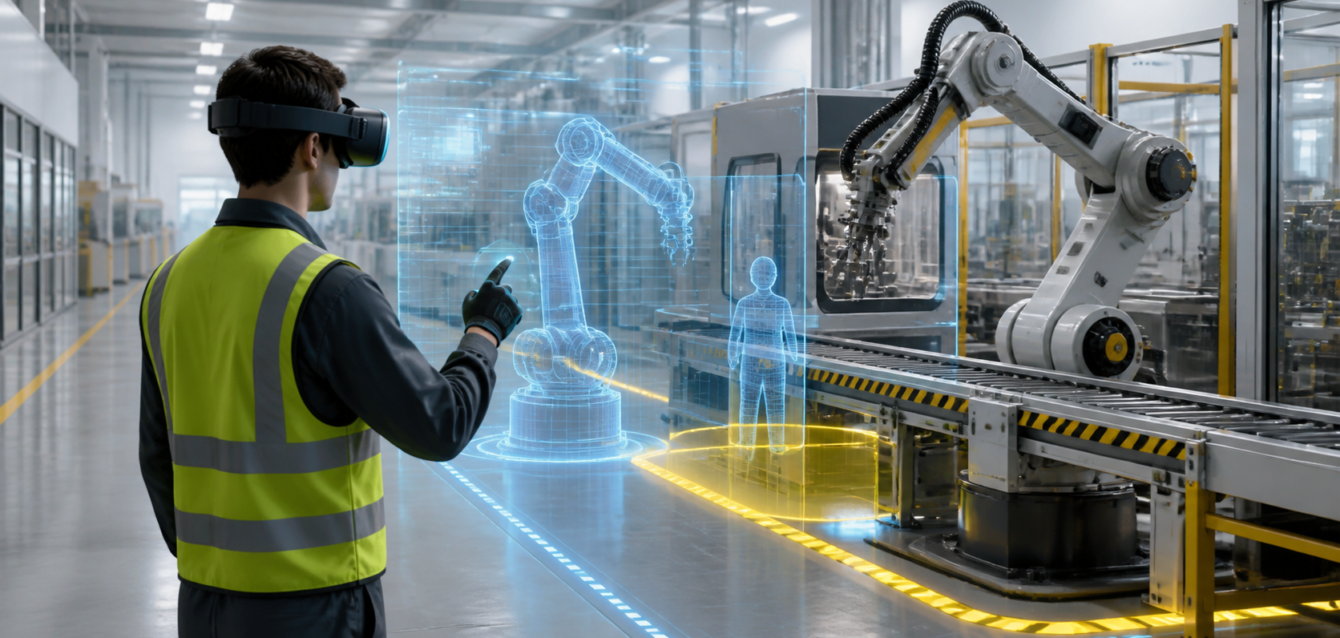
TL;DR: VR training for manufacturing safety is helping US factories reduce workplace accidents by up to 50% and cut training costs by 60%. Instead of putting new workers on live machinery, VR simulations let them practice in a risk-free virtual environment. This guide covers how VR training works for manufacturing, ROI data, and implementation steps for 2026.
Why Manufacturing Needs VR Safety Training
Manufacturing remains one of the most dangerous industries in the USA. The Bureau of Labor Statistics reports over 100,000 manufacturing injuries annually. Traditional safety training — videos, manuals, and classroom sessions — fails to prepare workers for real-world hazards.
Virtual reality training changes this by immersing workers in realistic factory environments where they can practice operating machinery, handling hazardous materials, and responding to emergencies — all without any physical risk.
The Problem with Traditional Training
- Classroom training has low retention rates (workers forget 70% within 24 hours)
- Hands-on training on live machinery puts workers at real risk of injury
- Training facilities are expensive to maintain and require downtime on production equipment
- New hires wait weeks for training slots, delaying time-to-productivity
How VR Training Simulations Work for Manufacturing
A VR manufacturing training program typically includes these modules:
- Machinery operation: Practice starting, operating, and shutting down equipment in VR
- Hazard recognition: Identify dangers like moving parts, hot surfaces, and chemical spills
- Emergency response: Practice fire drills, evacuation routes, and first aid scenarios
- Lockout/tagout procedures: Step-by-step safety protocols for machine maintenance
- PPE training: Learn proper use of safety equipment through interactive scenarios
ROI: The Numbers Behind VR Manufacturing Training
US manufacturers who have implemented VR training report compelling returns:
- 50% reduction in workplace accidents during the first year
- 60% lower training costs compared to traditional hands-on methods
- 4x faster onboarding — new workers reach competency in days, not weeks
- 75% better retention of safety procedures compared to classroom training
- $200K+ annual savings for mid-size manufacturing facilities
Want to explore VR development services for your manufacturing facility? Our team builds custom VR training simulations for US manufacturers.
Choosing the Right VR Hardware for Manufacturing Training
- Meta Quest 3: Wireless, affordable ($499), great for general safety training
- HTC Vive Pro 2: Higher resolution, ideal for detailed machinery simulation
- Pico 4 Enterprise: Lightweight with enterprise management features
- PC-VR setups: Best for photorealistic environments with complex physics
Frequently Asked Questions
How long does it take to develop a VR training simulation?
A typical VR manufacturing training module takes 6-12 weeks to develop, depending on the complexity of the machinery, the number of training scenarios, and the level of realism required.
What does VR manufacturing training cost?
VR training for manufacturing ranges from $15,000 for a single safety module to $100,000+ for a comprehensive multi-module program covering multiple machines and scenarios.
Can VR training replace all traditional safety training?
VR training is most effective as a complement to traditional training, not a complete replacement. It excels at hazardous scenarios and machinery operation, while classroom training still works well for policy and compliance topics.
Start Your VR Training Project
VR manufacturing training is proven to reduce accidents, cut costs, and accelerate onboarding. US manufacturers who adopt in 2026 will gain a significant safety and productivity advantage. Get in touch to discuss your VR training needs.