
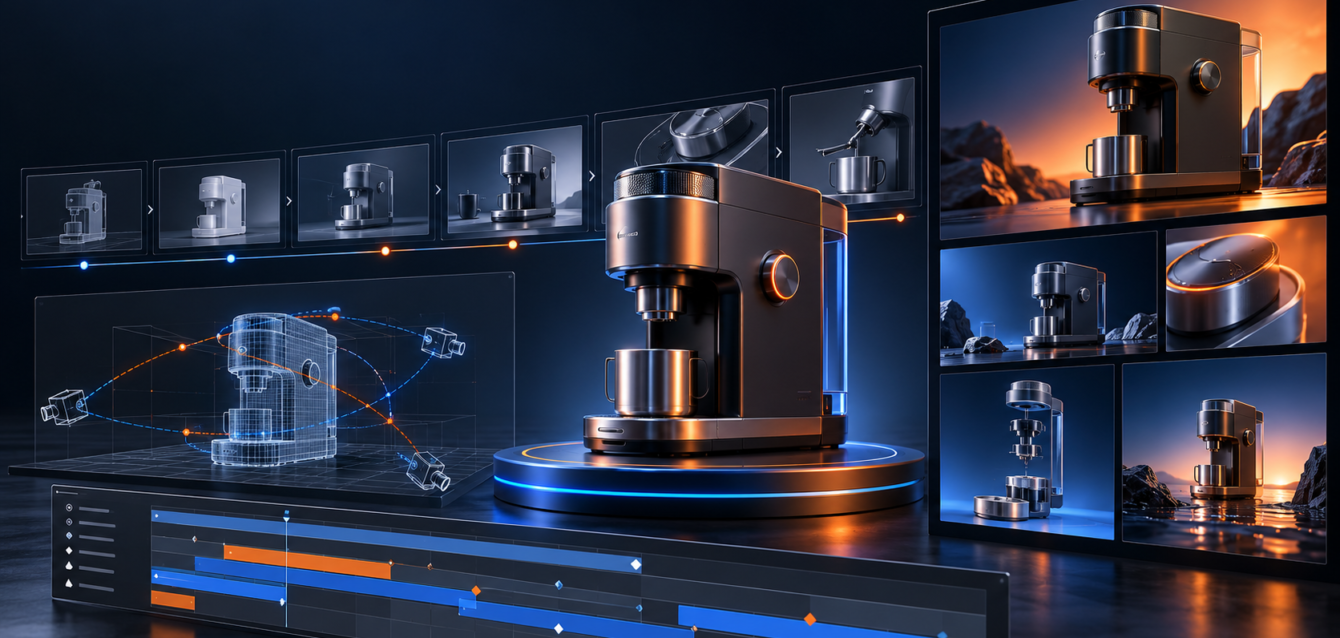
Product launch animation helps teams explain what a product does, why it matters, and how buyers should understand it before they ever touch it. For technical products, ecommerce launches, trade shows, and B2B campaigns, animation can turn complex features into clear visual stories.
The strongest launch animations are not just attractive videos. They are built around a specific campaign goal: awareness, education, comparison, conversion, investor communication, sales enablement, or post-launch training.
Start With the Launch Goal
Before creating a storyboard, teams should decide what the animation must accomplish. A launch teaser, a product explainer, a trade show loop, and a paid ad all need different pacing and structure.
- A teaser should create interest quickly.
- An explainer should make the product easy to understand.
- A sales animation should answer buyer objections.
- A trade show loop should work without sound and still catch attention.
- A website animation should support conversion without slowing the page.
Build the Message Before the Visuals
Animation works best when the message is simple. Teams should identify the buyer problem, the product advantage, the feature proof, and the next action. If the message is unclear, even high-end animation can feel confusing.
A good launch animation usually focuses on one main idea, then supports it with visual proof. That proof may include product structure, material detail, workflow steps, use cases, or before-and-after comparisons.
Choose the Right Animation Format
Different formats serve different parts of the launch campaign. A single brand may need several versions from the same core assets.
- Short social cuts for awareness.
- A full product explainer for the website or sales team.
- Looping trade show visuals for booths and displays.
- Technical close-up shots for product pages.
- Motion graphics overlays for data, benefits, or process steps.
For campaigns that need product accuracy, 3D animation services can show internal parts, material finishes, and product motion that may be hard to capture with live video.
Use Storyboards to Prevent Rework
A storyboard is where the launch message becomes a sequence. It helps marketing, product, and sales teams agree on what appears in each scene before production begins.
Strong storyboards reduce late changes because they define the visual flow early: what the viewer sees first, how the product is introduced, where key benefits appear, and how the call to action is supported.
Plan Assets for Multiple Channels
Launch animation should not be planned as one video file only. The same production can often create assets for the website, social platforms, email campaigns, paid ads, sales decks, and event screens.
Planning these outputs early saves time. It also keeps the launch campaign visually consistent across channels instead of forcing teams to create separate visuals later.
Connect Animation With Interactive Product Experiences
Animation is excellent for storytelling, but interactive tools help buyers explore details at their own pace. For complex products, animation and interaction can work together: the animation explains the value, while the interactive experience supports deeper evaluation.
For example, an animation can introduce the product use case, then a web-based 3D configurator can let buyers compare options, finishes, or components.
Measure Launch Performance
After publishing, teams should track how animation supports the campaign. Useful signals include video completion rate, landing page engagement, form submissions, product page clicks, sales team usage, and feedback from buyers.
Those metrics help decide whether to create shorter cuts, update product messaging, add sales-specific scenes, or build related assets for future campaigns.
Final Takeaway
Product launch animation is most effective when strategy, script, storyboard, 3D assets, and channel planning work together. The goal is not just to make the product look impressive. The goal is to make the product easier to understand, easier to remember, and easier to sell.