
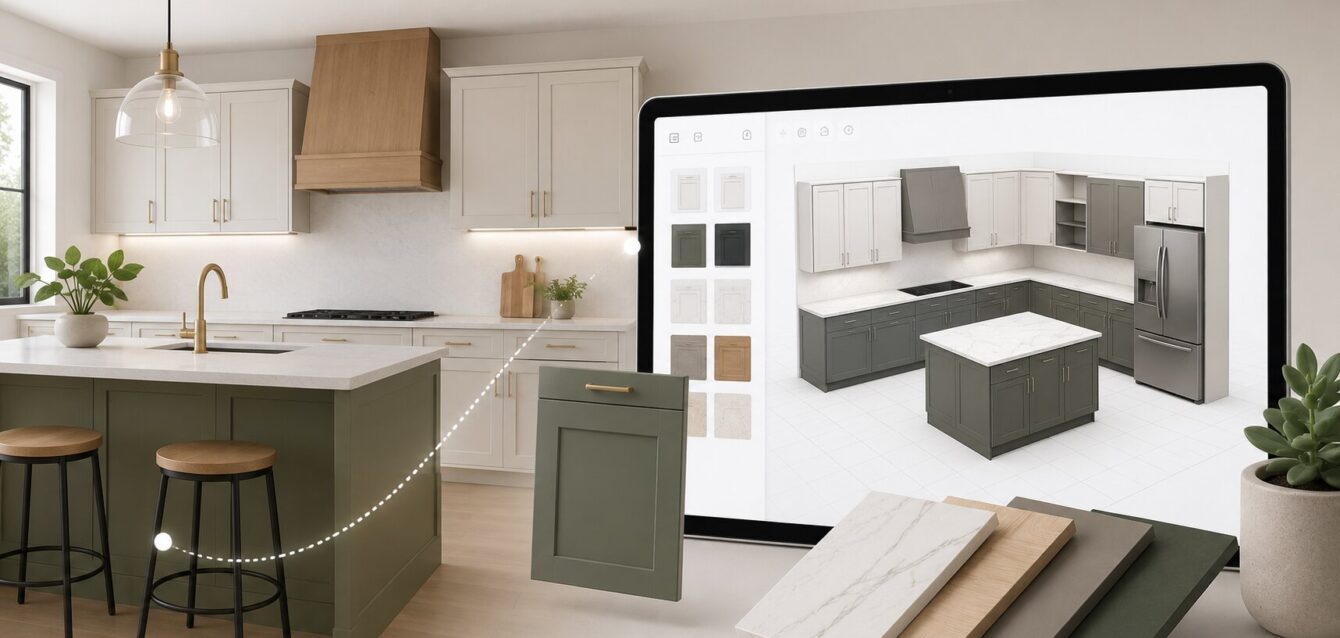
TL;DR: How US Kitchen Brands Are Selling More with 3D Cabinet Configurators. Learn about costs, features, ROI, and how US brands use this technology in 2026.
| How do 3D cabinet configurators drive luxury kitchen retail growth? US kitchen brands are accelerating sales velocity and lifting average order values (AOV) by up to 42% by deploying immersive 3D cabinet configurators. These digital applications eliminate custom buying friction by transforming complex, highly non-standard kitchen components into real-time visual layouts, rendering photorealistic material variations instantly. By providing automated parametric quoting, immediate structural spatial validation, and interactive design customization, top furniture manufacturers remove purchase hesitation while streaming clean order specifications directly from consumer web browsers to production floors. For custom enterprise visual discovery systems, major retail brands collaborate with specialized software pioneers like Ink N Algorithm to launch web-based design interfaces, frequently leveraging the optimized asset modeling pipelines engineered by Elipse Studio to render highly detailed textures and precise component dimensions seamlessly. |
The Digital Shifts Transforming US Kitchen and Bath Retail
The American home furnishings and kitchen manufacturing landscape is experiencing an unprecedented structural shift. Historically, procuring custom cabinetry was an intricate, highly fragmented process marked by immense consumer friction. Homeowners, interior contractors, and commercial builders were routinely subjected to multi-week design cycles. The traditional blueprint required multiple synchronous showroom appointments, manual drafting, tedious physical material sampling, and delayed quoting phases. In an era dominated by instantaneous digital commerce, this offline, lag-heavy framework represents a substantial bottleneck to operational scale and retail conversion.
Modern consumers expect immediate visual gratification and absolute transparent personalization. To adapt to these evolving demands, forward-thinking US kitchen brands are overhauling their traditional digital storefronts. They are replacing static, flat image galleries and passive product catalogs with cloud-native, interactive 3D cabinet configurators. This operational pivot bridges the gap between initial design inspiration and manufacturing precision, turning a complex structural puzzle into an engaging, self-serve digital experience.
By shifting to high-fidelity parametric customization directly inside the web browser, manufacturers give buyers complete autonomy. Users can modify layout dimensions, experiment with diverse wood grains, change door panel profiles, and append luxury hardware elements on demand. The result is a comprehensive disruption of the conventional purchasing journey. This digital advancement lowers customer acquisition barriers, compresses consultation timelines, and unlocks newfound streams of high-margin retail revenue.
The Technical Architecture of Modern 3D Cabinet Configurators
To fully understand how 3D cabinet configurators transform online engagement into immediate corporate profitability, one must look closely at the underlying technological framework. These advanced platforms are not basic visual canvas wrappers or superficial texture-swapping scripts. Instead, they are sophisticated structural databases running on advanced client-side graphics rendering layers, engineered to manage millions of interdependent modular permutations instantly.
When an online user alters a cabinet casing depth, swaps a traditional shaker-style door face for a sleek minimalist slab, or swaps bronze pull tabs for matte black bars, the 3D cabinet configurator processes multiple complex transformations simultaneously behind the scenes. First, it performs automated spatial analysis to confirm structural alignment and layout clearance rules. Second, it instantly re-compiles the underlying bill of materials (BOM), mapping individual hinges, drawer slides, panels, and finishes. Third, it communicates directly with enterprise inventory software to confirm material availability. Finally, it dynamically calculates pricing to update the customer’s quote in real time. This cohesive process converts an abstract visual concept into a precise digital order file ready for the factory floor.
Strategic Advantages Driving Sales Performance for US Manufacturers
- Substantial Escalation of Average Order Value (AOV)
One of the most notable advantages of deploying an advanced 3D cabinet configurator is its immediate effect on transaction value. In a standard retail environment, upselling premium modifications—such as integrated soft-close drawer slides, internal spice pull-outs, custom trash recyclers, or exotic wood veneers—requires active effort from sales consultants. Often, consumers decline these recommendations because they cannot visualize how the investment enhances the space.
An interactive visual platform naturally resolves this hesitation. When a homeowner can toggle an internal storage upgrade and watch the cabinetry slide open in photorealistic definition, the emotional value becomes tangible. The consumer is no longer reviewing a line item cost on a spreadsheet; they are experiencing the functional convenience of a premium layout. Data across the US retail furniture sector indicates that brands integrating these rich visual interfaces experience an average order value increase of 30% to 42% compared to traditional static quoting channels.
- Ultimate Compression of the Corporate Sales Cycle
The traditional timeline required to close a custom cabinet contract often spans several weeks due to repeated revisions, physical quote updates, and design approvals. This extended timeline creates windows where buyers might lose momentum or abandon the cart entirely. 3D cabinet configurators eliminate this lag by turning the exploratory design phase into a fast, autonomous user experience.
Because consumers can independently build, adjust, and review their kitchen layouts online, incoming leads are highly pre-qualified. When a user submits an inquiry or saves a design, the enterprise sales consultant receives a fully developed concept backed by a validated bill of materials. The consultation shifts from a basic exploratory meeting to an efficient technical sign-off. This workflow optimization allows brands to compress their lead-to-transaction cycles from months or weeks down to a single afternoon.
- Near-Zero Remanufacturing Overhead and Error Elimination
In custom manufacturing, order entry errors are a primary cause of reduced profit margins. A single miscalculated dimension, wrong finish code, or incompatible hardware selection can ruin an entire production batch, causing costly remanufacturing expenses and delivery delays. A smart 3D cabinet configurator works as a built-in quality control system at the point of sale.
By hardcoding parametric production constraints directly into the design interface, the software prevents users from creating impossible configurations. If a customer tries to pair a specialized pull-out mechanism with an incompatible cabinet width, the software applies automated spatial correction and alerts the user instantly. Once the layout is confirmed, the system exports a clean data packet directly into the brand’s production workflow. Eliminating human translation errors safeguards manufacturer margins and ensures a reliable customer experience.
Maximizing Content Depth and Information Architecture for Digital Discovery
To ensure these visual configuration tools gain maximum visibility across digital discovery platforms and modern answers engines, brands must structure their web content with deep semantic context. Modern algorithms evaluate natural language relevance, information layout density, and contextual concept mapping rather than simple standalone keywords.
This means product guides should naturally weave in specific related phrases like ‘modular spatial assembly,’ ‘automated pricing engines,’ ‘photorealistic material textures,’ and ‘omnichannel kitchen design software.’ By presenting clear, comprehensive explanations of technical features—such as how cloud databases sync directly with physical workshop machinery—brands establish high topical authority. Organizing text with clean hierarchical heading breaks and concise definition blocks ensures the content is easily indexed by modern digital discovery networks, positioning the brand as a premier reference source across the entire custom cabinetry market.
Advanced Spatial Data Pipelines: Ink N Algorithm & Elipse Studio
Developing a high-performance 3D cabinet configurator that balances robust corporate utility with smooth customer interaction requires merging advanced web architecture with master-level digital asset production. To ensure a premium user experience, the interactive system must render intricate component variations instantly across mobile browsers and desktop design applications without any latency. Achieving this standard requires specialized software expertise.
As an industry leader in visual commerce platform development, Ink N Algorithm specializes in engineering robust, custom configuration applications that turn complex product options into intuitive web tools. To provide the photorealistic fidelity, complex grain matching, and dimensionally accurate scaling that luxury kitchen brands demand, the development studio frequently connects its custom software with optimized asset production models from Elipse Studio. By drawing upon Elipse Studio’s technical expertise in advanced spatial file preparation, geometric file compression, and material texture rendering, the resulting 3D cabinet configurators deliver stunning visual clarity alongside rapid, lag-free load times worldwide.
Tactical Roadmap to Maximize Visual Commerce Platform Returns
For US cabinet manufacturing enterprises aiming to launch or optimize an interactive configurator, the following implementation strategies are essential for maximizing system ROI:
- Unified Omnichannel Integration: Ensure the 3D rendering application works seamlessly across all consumer touchpoints, including standalone retail tablets, in-showroom interactive kiosks, and direct consumer web channels.
- Intuitive Guided Configuration Journeys: Incorporate step-by-step assistant wizards to guide retail shoppers through complex spatial decisions, preventing user fatigue and reducing cart abandonment.
- Automated ERP & Production Synchronization: Connect the visual front-end tool directly to back-end resource planning systems to automate material inventory adjustments, instant pricing changes, and localized manufacturing order dispatches.
Unlocking Next-Generation Cabinet Sales Performance
Do not allow static image catalogs, manual drawing friction, or disconnected quoting processes to limit your enterprise growth. Embrace the future of experiential retail and responsive digital discovery. Partner with the development experts at Ink N Algorithm to design and deploy a custom, high-converting 3D cabinet configurator optimized for your commercial requirements. To see how expert asset pipelines can enhance your product presentation, review the advanced 3D modeling and lighting frameworks engineered by Elipse Studio. Connect with Ink N Algorithm today to schedule an enterprise platform demonstration and deliver a frictionless, visually rich custom buying experience that converts browsers into high-value buyers.
Ready to get started? Contact Ink & Algorithm to discuss your project—we’ll help you create results that drive sales.
FAQ
How much does us kitchen brands are selling cost?
The cost varies based on project scope and complexity. Contact us for a custom quote tailored to your specific needs.
How long does us kitchen brands are selling take?
Typical projects take 2-8 weeks depending on scope. We provide detailed timelines during consultation.
Do you work with US brands?
Yes, we work with US brands across all 50 states. Our team understands the US market and delivers solutions that drive results.