

TL;DR: How to Write a 3D Animation Brief. Learn about costs, features, ROI, and how US brands use this technology in 2026.

A clear 3D animation brief is the fastest way to get accurate proposals, reduce revisions, and keep production aligned with your business goal. It tells an animation studio what you need, who the content is for, how it will be used, and what a successful final result looks like. This practical 2026 guide shows US marketing, product, and sales teams how to write a brief that a 3D production partner can quote and execute with confidence.
What Is a 3D Animation Brief?
A 3D animation brief is a concise project document that defines the purpose, audience, creative direction, assets, deliverables, timeline, and approval process for an animation. It is not a finished script or a technical production manual. Its job is to give the creative team enough context to recommend the right approach and identify risks before work begins.
The best briefs are specific about business requirements but leave room for creative expertise. For example, state the product feature viewers must understand, rather than prescribing every camera angle before the studio has reviewed the product.
Why a Strong Brief Saves Time and Budget
Ambiguity is expensive in 3D production. A change to a sentence in a storyboard is simple; the same change after modeling, animation, lighting, and rendering may affect several departments. A complete brief moves important decisions to the beginning of the process.
- Studios can provide comparable proposals and realistic schedules.
- Stakeholders agree on the goal before reviewing creative work.
- Artists receive the correct product and brand references.
- Revision rounds focus on quality instead of missing requirements.
- Final files are prepared for the correct channels and aspect ratios.
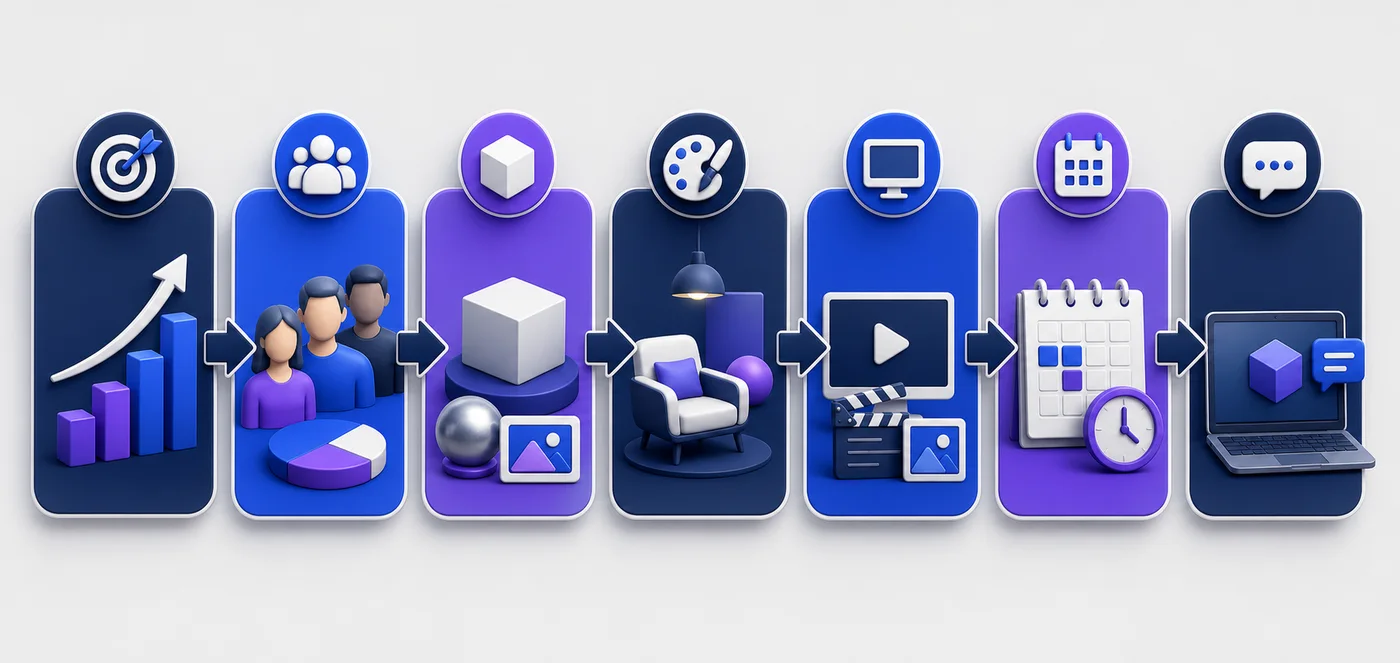
The 10 Essential Sections of a 3D Animation Project Brief
1. Project background
Start with two or three sentences about the company, product, and current situation. Explain whether this is a new launch, a product update, a sales enablement asset, an investor presentation, or an evergreen marketing video. This context helps the studio understand why the project matters now.
2. Primary business goal
Choose one main outcome. Do you want viewers to understand an internal mechanism, compare product options, request a demo, remember a new feature, or feel confident about a purchase? A video cannot prioritize every goal equally. A clear primary objective guides the story, pacing, and level of detail.
3. Target audience
Describe the people who will watch the animation. Include their role, level of technical knowledge, key concern, and stage in the buying journey. An engineer evaluating specifications needs a different explanation from a consumer discovering the product in a social ad.
4. Core message and supporting points
Write the single idea the audience should remember after watching. Then list three to five supporting points in priority order. Avoid copying an entire product page into the brief. The studio needs a message hierarchy, not a collection of every available fact.
5. Product assets and technical references
List the files you can provide: CAD data, 3D models, engineering drawings, product photography, material references, dimensions, brand guidelines, logos, and existing marketing assets. State the file formats when known. Clean source assets can reduce modeling work, although CAD files often still need optimization for animation.
6. Visual style and quality level
Describe whether the animation should feel photorealistic, technical, minimal, cinematic, playful, or stylized. Add two or three reference videos and explain what you like about each one—lighting, pacing, camera movement, materials, or storytelling. References are useful only when the reason for choosing them is clear.
If you are unsure which production style fits the goal, review the differences between 2D and 3D animation for business.
7. Scope and deliverables
Specify the approximate duration, number of videos, resolution, aspect ratios, frame rate if relevant, and required file formats. Include social cutdowns, still renders, transparent exports, language versions, or source files if they are part of the requirement. A 60-second master plus five social variations is a different scope from one finished video.
8. Distribution channels
Tell the studio where the content will appear: website, YouTube, paid social, ecommerce, trade show, broadcast, product presentation, training portal, or AR experience. The channel affects composition, safe areas, pacing, sound design, text size, and delivery specifications.
9. Timeline and milestones
Provide the required launch date and any fixed events, such as a trade show or product announcement. Work backward to include time for discovery, storyboard approval, asset creation, animation previews, rendering, sound, and final delivery. Mention internal review windows and holidays that may delay feedback.
10. Stakeholders and approval process
Name the project owner and final decision-maker. Explain who reviews technical accuracy, brand compliance, and creative direction. Consolidated feedback from one owner prevents conflicting comments and helps the production team keep each stage moving.
Information That Helps a Studio Price the Project
A studio can estimate more accurately when the brief includes the variables that drive production effort:
- Number and complexity of products or environments
- Condition of existing CAD or 3D assets
- Expected realism and material detail
- Character, fluid, cloth, particle, or mechanical simulation needs
- Number of scenes and unique camera setups
- Voice-over, music, sound design, and language requirements
- Number of review rounds and final versions
- Launch deadline and any rush requirement
If the project is product-led, this overview of 3D product animation can help stakeholders understand the production possibilities before completing the brief.
How to Describe Visual References Correctly
Do not simply paste links and write “make it like this.” For every reference, identify the specific quality you want to borrow. One video may demonstrate the preferred lighting, another the editing pace, and a third the level of technical detail.
Also explain what should not be copied. A reference may have excellent camera movement but the wrong color palette or tone. Clear notes help the studio build an original direction that serves your brand rather than imitating another company.
Common Briefing Mistakes to Avoid
- No primary objective: multiple equal goals create a crowded story.
- Undefined audience: the studio cannot choose the right language or detail level.
- Hidden deliverables: late requests for vertical or localized versions expand scope.
- Unrealistic deadline: compressed reviews increase cost and production risk.
- Too many decision-makers: conflicting feedback causes rework.
- Missing technical references: artists make assumptions that may be inaccurate.
- Prescribing every creative choice: the brief becomes restrictive without solving the business problem.
A Simple 3D Animation Brief Template
Use the following structure when preparing your document:
- Project name: a clear working title.
- Background: company, product, and reason for the project.
- Goal: the one main business outcome.
- Audience: role, knowledge, concern, and buying stage.
- Core message: one primary takeaway plus supporting points.
- Assets: CAD, models, photos, drawings, and brand files.
- Style: desired look, tone, and explained references.
- Deliverables: duration, versions, ratios, resolution, and formats.
- Timeline: launch date, milestones, and review windows.
- Approvals: owner, reviewers, and final decision-maker.
- Budget guidance: a range or approval ceiling, when available.
- Success metric: how the team will judge the result.
Should You Include a Budget in the Brief?
Including a realistic budget range helps the studio recommend an approach that can actually be produced. It does not remove the need for a detailed proposal. Instead, it prevents a mismatch between expectations and available resources.
If the budget is not approved yet, state that clearly and ask for tiered options. A studio might propose an essential product sequence, a polished marketing version, and a larger campaign package. The tradeoffs should be visible in scope, quality, duration, and deliverables.
Questions to Ask Before Sending the Brief
- Is the main goal clear in one sentence?
- Can a person outside the company understand the product and audience?
- Are all required deliverables and channels listed?
- Have technical experts confirmed the source assets?
- Does the schedule include internal review time?
- Is one person responsible for consolidated feedback?
- Are reference videos explained rather than merely linked?
Frequently Asked Questions
How long should a 3D animation brief be?
Most projects can be briefed effectively in two to five pages, plus links and attachments. The document should be complete but easy for creative and production teams to scan.
Do I need a finished script before contacting a studio?
No. A clear goal, audience, message hierarchy, and product information are usually enough to begin. Many studios can develop or refine the script during pre-production.
What files should I send with the brief?
Send relevant CAD or 3D models, technical drawings, product photography, brand guidelines, logos, material references, and examples of previous campaigns. Use secure file sharing for confidential product data.
Can the studio help define the scope?
Yes. A strong production partner should identify gaps, recommend deliverables, and explain how creative choices affect timeline and budget.
When should stakeholders review the animation?
Stakeholders should approve the brief, script, storyboard, visual style, and animation preview before final rendering. Early approvals reduce expensive late-stage changes.
Start Your 3D Animation Project with Clarity
A strong brief gives both the client and the animation studio a shared definition of success. It makes proposals easier to compare, exposes missing information early, and protects the quality of the final work. Ink & Algorithm helps businesses shape complex product ideas into clear 3D animation plans and production-ready visual stories. Prepare the essentials above, then share your brief with our team for a tailored recommendation.
Ready to get started? Contact Ink & Algorithm to discuss your project—we’ll help you create results that drive sales.
Cost & Pricing
| Service | Cost Range | Timeline |
|---|---|---|
| Basic package | $5,000-$15,000 | 2-4 weeks |
| Standard package | $15,000-$50,000 | 4-8 weeks |
| Premium package | $50,000-$150,000+ | 8-16 weeks |