

TL;DR: Interactive 3D Product Configurators. Learn about costs, features, ROI, and how US brands use this technology in 2026.
Introduction: The Moment Everything Changed for Online Shopping
Think about the last time you bought something online and felt genuinely confident about your purchase before clicking “Buy Now.” Chances are, that confidence didn’t come from reading a wall of bullet points or squinting at a single static product photo. It came from actually seeing the product — its size, its color options, its real-world context — in a way that felt honest and complete.
That experience is becoming the new standard, and interactive 3D product configurators are the technology making it possible.
We are no longer in an era where uploading five product images counts as a premium shopping experience. Customers today are digitally sophisticated, comparison-obsessed, and unwilling to accept doubt as part of their purchase journey. And with global e-commerce competition fiercer than ever, the brands that are winning aren’t just selling better products — they’re offering better experiences. The 3D product configurator is at the center of that shift.
We break down exactly what interactive 3D configurators are, why they drive conversions upward by 40% and more, how they work across different industries, and what you need to know before implementing one for your own business. Whether you’re in automotive, furniture, fashion, real estate, or B2B manufacturing, this technology has something transformative to offer.
What Is an Interactive 3D Product Configurator?
At its most fundamental level, a 3D product configurator is a web-based tool that allows customers to customize and visualize a product in real time, in three dimensions, directly from their browser — no app download required, no special hardware needed.
Imagine shopping for a sofa. Instead of choosing from twelve static photos and hoping the “walnut brown” fabric looks the way it does on your screen, you open a 3D configurator and spin the sofa around 360 degrees, swap the fabric to velvet, change the leg color to matte black, switch from a left-hand chaise to a right-hand one, and see it rendered realistically in real time. Every change happens instantly. Every detail looks accurate. You walk away from that experience confident, not guessing.
That’s a 3D configurator in action.
The technology typically runs on WebGL — a powerful web graphics standard supported by all modern browsers — and is built using 3D engines like Three.js, Babylon.js, or custom-built renderers. The result is a photorealistic, interactive product experience that lives entirely on a web page and loads fast enough to feel seamless.
At Ink & Algorithm, we build exactly these kinds of experiences. From seat configurators to apartment layout tools to complex B2B product builders, our web-based 3D configurators are designed to sit at the intersection of beautiful design and genuine business performance.
Why 40%? Understanding the Conversion Lift
The 40% figure isn’t arbitrary — it’s rooted in the documented behavioral science of how people make purchase decisions online. Here’s what’s really happening:
Reduced Purchase Anxiety
One of the biggest conversion killers in e-commerce is uncertainty. When a customer isn’t sure whether a product will look right in their home, fit their body, or match their existing setup, they hesitate. Hesitation leads to cart abandonment. Product visualization tools — especially 3D-powered ones — dramatically reduce this anxiety by replacing imagination with direct visual confirmation.
Longer Engagement Time = Higher Intent
When a shopper spends time interacting with a 3D configurator — spinning the product, experimenting with colors, testing different variants — they spend significantly more time on that product page than a passive scroll-and-click customer. Engagement time is one of the strongest predictors of purchase intent. A customer who has spent three minutes building their ideal product is far more likely to complete the purchase.
Personalization Creates Psychological Ownership
This is perhaps the most powerful psychological mechanism at work. When a customer customizes a product — even digitally — they begin to experience a sense of ownership over it. Behavioral economists call this the “endowment effect.” Once you’ve configured a chair in your preferred fabric and dimensions, it’s no longer “a chair” — it’s your chair. That psychological shift significantly increases the probability of purchase.
Fewer Returns, More Repeat Purchases
When customers make more informed purchase decisions, they return products less often. Fewer returns mean better net revenue, better customer satisfaction scores, and a higher likelihood that the same customer comes back to buy again.
Social Sharing and Organic Amplification
Configured products are shareable. A customer who has built their dream kitchen layout or designed their custom sneaker doesn’t just buy — they screenshot it, share it, and sometimes post it. This organic amplification drives new traffic and new conversions at zero additional ad spend.
Industries Being Transformed by 3D Configurators
The beauty of this technology is that it isn’t sector-specific. Here are some of the industries where 3D product configurators are creating measurable business impact.
Automotive
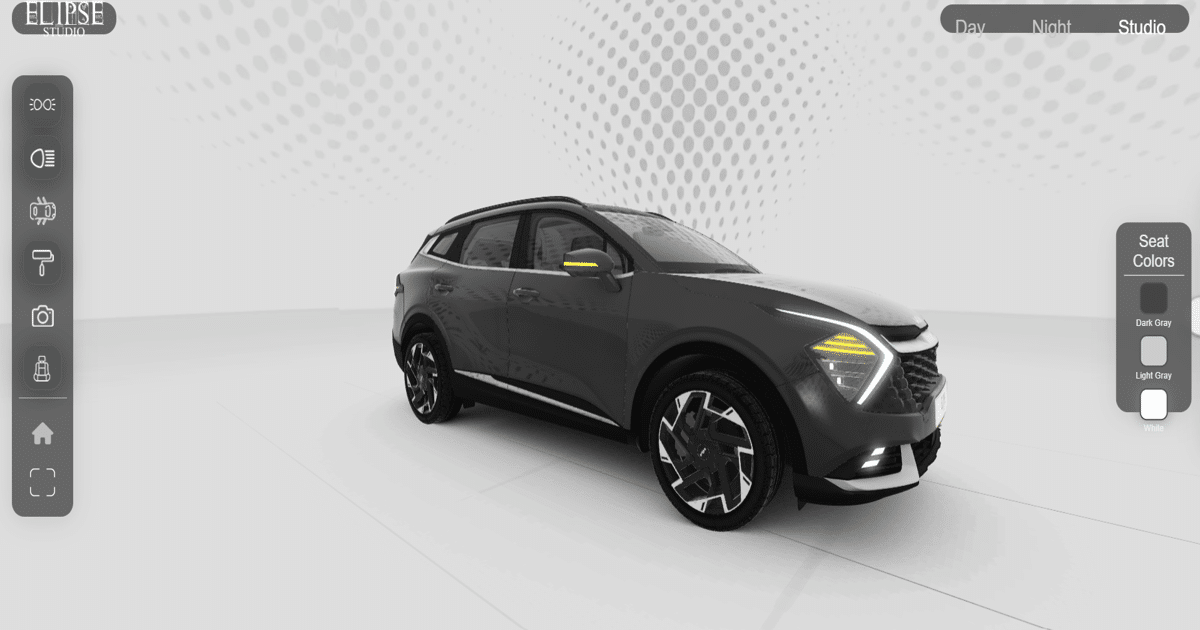
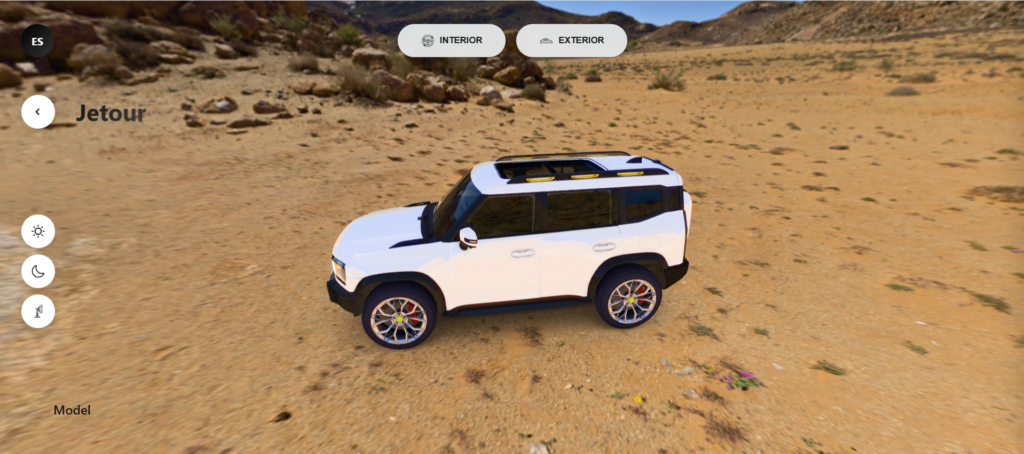
The automotive industry was one of the earliest adopters of 3D configurator technology. A car purchase is one of the most considered decisions a consumer makes, and the ability to customize and visualize that car — choosing paint color, interior trim, wheel style, and optional features — dramatically improves the buying experience. Customers arrive at dealerships already deeply committed to a specific configuration. The decision is essentially made before the test drive happens.
Furniture and Home Décor
Furniture is arguably the industry where 3D configurators have the most obvious and immediate value. The primary barrier to furniture purchases online is the “will this look right in my space?” problem. 3D configurators solve this directly, and brands offering room-scale visualization tools are seeing not only higher conversion rates but also significantly lower return rates.
Fashion and Footwear
Custom footwear configurators have become genuine brand differentiators. When a customer can design their own colorway, choose material finishes, and see the shoe rendered in 3D from every angle before ordering, the product becomes emotionally meaningful in a way a standard product page never achieves.
Real Estate and Architecture
Property developers and architects are using 3D configurators to let buyers visualize apartment layouts, select finishes, and customize their unit before it’s even built. Buyers who can see and customize their future home long before the keys are handed over enter the purchase process with a certainty that traditional renders and floor plans simply cannot provide.
B2B Manufacturing and Industrial Products
Complex industrial products — machinery, custom equipment, modular systems — often require detailed technical specifications that are difficult to communicate through static catalogs. 3D configurators allow industrial buyers to build and verify configurations in real time, reducing the back-and-forth of the traditional quote process.
Electronics and Consumer Tech
Laptop customization, PC building, smart home setup tools — electronics brands are leveraging configurators to help customers understand what they’re buying and visualize the finished setup. This is particularly powerful for products where the specifications are abstract and difficult to compare without visual context.
The Technical Architecture Behind a Great Configurator
Understanding what makes a 3D configurator excellent requires a brief look under the hood. Not all configurators are built equal, and the difference between a smooth, immersive experience and a frustrating, slow-loading one comes down to key technical decisions.
Real-Time Rendering vs. Pre-Rendered Assets
The most seamless configurators use real-time 3D rendering — meaning the product is built and lit dynamically as the user makes changes. Pre-rendered approaches rely on swapping images to simulate customization. Real-time rendering is more technically demanding but produces a far more fluid and authentic experience.
Level of Detail (LOD) Optimization
High-quality 3D models can be incredibly data-heavy. Well-built configurators use LOD optimization — serving simplified geometry for distant views and detailed geometry when the user zooms in. This keeps load times fast without sacrificing visual quality.
Material and Texture Libraries
Great configurators include high-quality PBR (Physically Based Rendering) material libraries. PBR materials respond to light realistically — a brushed aluminum surface reflects differently than a matte fabric, and both need to look accurate under different lighting conditions. This level of material fidelity is what builds customer confidence.
WebGL and Browser Compatibility
The configurator needs to work beautifully across all devices and browsers. Mobile performance is particularly critical, given that the majority of e-commerce browsing happens on smartphones.
Integration with E-Commerce Backends
A configurator that doesn’t connect to your actual product catalog, pricing engine, and checkout flow is an island. The best implementations integrate directly with e-commerce platforms — whether Shopify, WooCommerce, Magento, or a custom stack — so that the configuration flows seamlessly into the purchase process.
Common Mistakes Brands Make With Product Configurators
Overcomplicating the Options
More options aren’t always better. A configurator that confronts the user with twenty simultaneous choices triggers decision fatigue rather than purchase confidence. The best configurators are designed with a guided user journey — presenting choices in a logical sequence, with smart defaults and helpful recommendations.
Ignoring Mobile Experience
If your configurator doesn’t work smoothly on a smartphone, you’ve cut off a majority of your potential users. Mobile-first design isn’t optional — it’s essential.
Poor Load Performance
A configurator that takes eight seconds to load has already lost a significant portion of its audience. Performance optimization — lazy loading, asset compression, progressive rendering — must be a core priority, not an afterthought.
Lack of Call-to-Action Integration
The configurator is a means to an end. If users can build their perfect product but then face confusion about how to actually buy it, the experience fails. A clear, persistent call to action — “Add to Cart,” “Request a Quote,” “Book a Demo” — must be woven into the experience at every stage.
Not Measuring the Right Metrics
Tracking only final conversion misses the story. The metrics that matter include configuration session duration, most popular option combinations, abandonment points within the configurator flow, and the correlation between configuration depth and purchase completion.
How 3D Configurators Work Alongside AR and VR
3D configurators don’t exist in isolation. They are most powerful when part of a broader immersive commerce strategy that includes augmented reality (AR) and, for certain applications, virtual reality (VR).
AR extends the configurator experience into the real world. Once a customer has configured their product in 3D on the website, AR allows them to place that exact configuration in their actual physical space using their smartphone camera. The configured sofa appears in their living room. The configured desk appears in their home office.
VR takes this further. For real estate, large architectural projects, or complex industrial environments, virtual reality allows stakeholders to step inside a configured space and experience it at full scale before anything is built. This level of immersion is transformative for decisions involving significant investment.
At Ink & Algorithm, we build these capabilities as an integrated suite. A customer might start with a web configurator, extend the experience with AR on mobile, and for major B2B clients, present in a full VR environment. The result is a complete immersive buying journey.
What to Look for in a 3D Configurator Partner
Choosing the right development partner is one of the most important decisions in this process. Here’s what separates excellent partners from average ones:
- Domain expertise paired with business acumen — not just technical skill
- A strong portfolio in your product category or a closely related one
- A clear integration approach connecting the configurator to your e-commerce stack
- A defined maintenance model for adding products and variants over time
- Demonstrated mobile performance — test examples on a mid-range smartphone
At Ink & Algorithm, we approach every configurator engagement as a long-term partnership rather than a project hand-off. We build with scalability and performance as non-negotiables, and we ensure every tool we create is genuinely integrated into the client’s commercial workflow.
The ROI Calculation: Is a 3D Configurator Worth the Investment?
The investment in a professional 3D product configurator varies depending on product complexity, the number of configurable options, integration requirements, and visual fidelity. The return side of the equation, however, is substantial and multi-dimensional.
A 40% increase in conversion rate on a product category generating $500,000 in annual revenue adds $200,000 in revenue without increasing traffic. That’s the direct impact. Layer on the reduction in return rates, the reduction in customer service inquiries, and the brand differentiation that a premium configurator creates — the return is typically realized within the first twelve to eighteen months, with compounding benefits beyond.
The brands hesitating on this investment are generally calculating the cost without fully accounting for the cost of not investing — the conversions lost today to competitors who have already deployed this technology.
Real-World Success Stories: Configurators in Action
A seating manufacturer who deployed a customizable chair configurator saw buyer engagement time on product pages increase dramatically, with customers spending over three minutes per session on average — time directly correlated with purchase completion.
A residential developer who integrated our apartment configurator into their pre-sales process found that buyers were arriving at sales appointments with a specific configured layout already in mind, dramatically shortening the sales cycle and reducing the number of touchpoints required to close.
A custom product brand in the consumer space used our configurator to build a “design your own” experience that became a brand signature — customers shared their configurations on social media, creating an organic amplification loop the brand had never previously experienced.
The Future of 3D Configurators: What’s Coming Next
The technology underlying 3D configurators is evolving rapidly. Here’s what the next two to three years will bring:
- AI-driven personalization — configurators that learn from user preferences and suggest configurations matching their taste profile
- Real-time photorealistic rendering in the browser via WebGPU, closing the gap between configurators and professional product photography
- Generative AI integration — customers describe what they want in natural language and the configurator responds with custom materials generated on the fly
- Deeper AR and VR integration as spatial computing devices become mainstream, blurring the line between browsing online and experiencing the product
The brands that establish themselves in 3D commerce today are building competitive advantages that will compound in value as the technology matures. First-mover advantage in immersive commerce is real, and the window is still open — but not indefinitely.
Conclusion: The Configurator Is the New Storefront
There’s a retail concept that’s been true for as long as commerce has existed: the store environment shapes the sale. A well-designed physical store — with good lighting, thoughtful product displays, and a layout that guides the customer naturally — converts better than a cluttered, poorly lit one. That principle doesn’t disappear online. It just expresses itself differently.
The 3D product configurator is the online equivalent of a beautifully designed store environment. It gives the customer the space, the tools, and the confidence to engage deeply with your product. It replaces doubt with certainty. It transforms passive browsing into active investment. And it turns the purchase decision from a leap of faith into a logical, satisfying conclusion.
The 40% conversion lift is real. The psychology behind it is sound. The technology to deliver it exists today. The question isn’t whether interactive 3D configurators are worth investing in — it’s whether you can afford to let competitors continue pulling customers away from your store.
At Ink & Algorithm, we’ve built these tools across industries, and we’ve seen what they do to businesses that embrace them. If you’re ready to transform your product experience and turn your online store into a genuine destination, we’re ready to build it with you.
Ready to Build Your 3D Configurator?
inknalgorithm.com | info@inknalgorithm.com | +1 618 965 8617
Ready to get started? Contact Ink & Algorithm to discuss your project—we’ll help you create results that drive sales.
Cost & Pricing
| Service | Cost Range | Timeline |
|---|---|---|
| Basic package | $5,000-$15,000 | 2-4 weeks |
| Standard package | $15,000-$50,000 | 4-8 weeks |
| Premium package | $50,000-$150,000+ | 8-16 weeks |
FAQ
How much does interactive 3d product configurators cost?
The cost varies based on project scope and complexity. Contact us for a custom quote tailored to your specific needs.
How long does interactive 3d product configurators take?
Typical projects take 2-8 weeks depending on scope. We provide detailed timelines during consultation.
Do you work with US brands?
Yes, we work with US brands across all 50 states. Our team understands the US market and delivers solutions that drive results.