
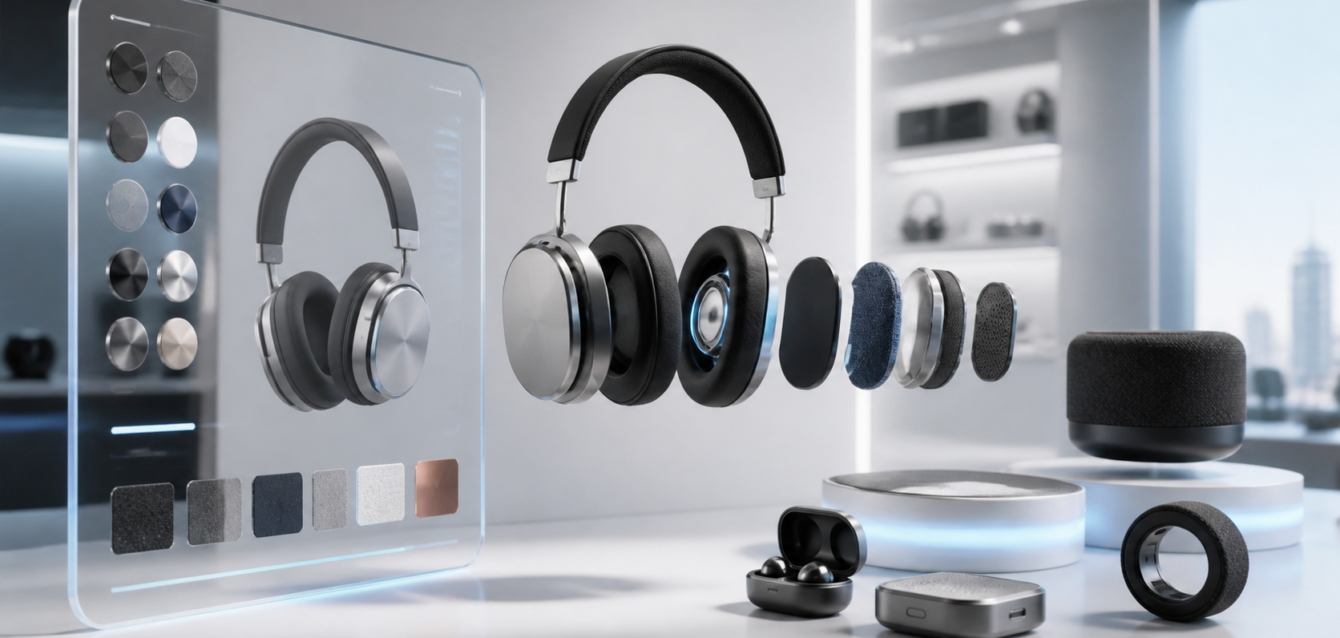
★ Quick answer: A 3D product configurator in the USA typically costs $12,000–$45,000 for one product, $35,000–$100,000 for a multi-product ecommerce configurator, and $90,000+ for enterprise CPQ, CRM, or dealer portal integration. The final cost depends on product complexity, number of variants, 3D model quality, ecommerce integration, AR support, and whether the configurator needs pricing logic.
By Ink & Algorithm, Hanover Park, Illinois — see 3D web configurator services →
Why 3D Product Configurator Pricing Varies So Much
Two configurators can look similar on the surface and have completely different production costs underneath. A simple furniture configurator that changes fabric colour, leg finish, and camera angle is a different build from an industrial product configurator that validates part compatibility, calculates pricing, generates a quote, and sends the configured product into a CRM.
Most US businesses ask for a 3D configurator because they want buyers to see every product option before they talk to sales or click checkout. The value is clear: fewer product returns, better buyer confidence, reduced photography costs, and a sales process that does not depend on a rep explaining every variant manually.
The cost comes from how many decisions the configurator needs to handle. A buyer changing the colour of a chair is one level. A buyer configuring a vehicle interior, selecting compatible wheels, previewing trim packages, and exporting a quote is another level entirely.
Typical 3D Product Configurator Cost in the USA
| Configurator Type | What It Includes | US Cost Range | Timeline |
|---|---|---|---|
| Starter Product Configurator | One product, basic colours/materials, 3D viewer, website embed | $12,000–$25,000 | 5–8 weeks |
| Ecommerce Configurator | Shopify/WooCommerce integration, product variants, add-to-cart flow | $25,000–$60,000 | 8–12 weeks |
| Multi-Product Platform | Multiple SKUs, shared materials, reusable 3D pipeline, admin controls | $35,000–$100,000 | 10–18 weeks |
| Enterprise Sales Configurator | Pricing logic, CPQ/CRM integration, PDF quote generation, role-based workflows | $90,000–$250,000+ | 16–28 weeks |
| Configurator + WebAR | 3D configuration plus “view in your space” browser AR | $25,000–$85,000 | 8–16 weeks |
1. 3D Model Complexity
The biggest cost driver is the product model itself. If your product already has clean CAD files, the process is faster. If the only source material is product photography or engineering drawings, the 3D model has to be rebuilt manually for real-time web use.
A product configurator does not use the same heavy CAD model your engineering team uses. CAD files are too dense for browser performance. They need to be optimized into lightweight GLB or USDZ assets that load quickly, preserve accurate shape, and still look premium on mobile devices.
A simple consumer product may need one optimized 3D model. A modular sofa line may need dozens of interchangeable components. A vehicle, industrial machine, or luxury product may require hundreds of parts, each with its own material behaviour, compatibility rules, and render states.
2. Number of Product Variants
Variant count changes the project scope quickly. A chair with six fabrics and three leg finishes is 18 combinations. A kitchen cabinet system with door styles, handles, wood species, stains, countertop types, hardware finishes, and layout options can reach thousands of combinations.
The good news is that a real-time 3D configurator does not require one image per variant. That is the entire point. Instead of photographing every option, the configurator renders each combination live from the same optimized 3D system.
For US ecommerce brands, this is where ROI starts to show up. If a brand would otherwise need 1,000 product images at $150–$300 per image, a 3D configurator can replace a large portion of that production cost while also creating an interactive buying experience.
3. Ecommerce Integration
A standalone 3D viewer is less expensive than a configurator connected to ecommerce. Once buyers need to add their configured product to cart, the configurator has to communicate with Shopify, WooCommerce, Magento, or a custom platform.
This means every visible option must map to real product data: SKU, inventory, price, variant ID, image fallback, and checkout rules. If a buyer selects matte black, walnut, and premium hardware, the cart needs to understand exactly what was selected.
For Shopify and WooCommerce stores, this is usually manageable. For custom enterprise ecommerce platforms, the integration can be a larger part of the budget than the 3D viewer itself.
Ink & Algorithm — 3D Web Configurators
Ink & Algorithm builds browser-based 3D product configurators for US brands — WebGL, Three.js, Shopify, WooCommerce, WebAR, and enterprise sales workflows. Based in Hanover Park, Illinois.
4. Pricing Logic and Rules
Some configurators only show visual changes. Others need to calculate price in real time. Price logic adds complexity because the system must know which choices affect cost, which choices are incompatible, and which combinations require custom quotes.
For example, an automotive configurator may need to prevent certain wheel packages from appearing with certain trims. A furniture configurator may need to calculate price based on fabric grade and size. A manufacturing configurator may need to send complex builds to sales instead of checkout.
This is where many US companies move from a simple ecommerce configurator to a CPQ-style sales configurator. CPQ means configure, price, quote. The buyer configures the product, the system calculates the price, and sales receives a quote-ready configuration.
5. WebAR Support
WebAR adds a strong conversion layer for products where size and real-world fit matter. Furniture, appliances, lighting, fitness equipment, consumer electronics, and outdoor products all benefit from “view in your space” functionality.
WebAR usually adds cost because the 3D asset must work in multiple formats and environments. A model that looks good in a WebGL viewer also needs to perform correctly in iOS Safari and Android Chrome AR mode.
For ecommerce products, WebAR is often worth the added cost because it helps buyers answer the question that static images cannot: will this product look right in my actual space?
See also AR development services → for browser-based AR product visualization.
3D Product Configurator Timeline
Most US configurator projects follow a clear production sequence:
- Discovery and product logic mapping: define options, compatibility, checkout rules, and user flows.
- 3D asset preparation: clean CAD files, model missing parts, optimize geometry, create materials.
- Configurator UI design: build the option panel, swatches, camera controls, thumbnails, and mobile layout.
- WebGL development: implement the real-time 3D viewer and configuration logic.
- Ecommerce or CRM integration: connect selected options to cart, quote, CRM, or backend systems.
- Testing and performance optimization: validate mobile load time, browser compatibility, and variant accuracy.
A single-product configurator can launch in 5–8 weeks when assets are ready. A complex enterprise platform can take 4–7 months because it requires stakeholder review, backend integration, and more rigorous testing.
How to Estimate ROI
A 3D configurator pays for itself when it improves at least one of four business metrics:
- Higher conversion: buyers understand the product faster and feel more confident selecting options.
- Lower returns: buyers see scale, finish, and configuration accurately before purchase.
- Reduced photography cost: one 3D model can generate unlimited product variants.
- Shorter sales cycle: sales teams spend less time explaining combinations manually.
For US ecommerce brands, the easiest ROI calculation is photography replacement. If a brand spends $40,000–$80,000 annually photographing variants, a configurator can offset that cost while improving the buying experience.
For B2B manufacturers, ROI usually comes from sales efficiency. A configurator that reduces back-and-forth quoting by 30% can free sales reps to focus on higher-value deals.
Questions to Ask Before Hiring a 3D Configurator Agency
- Can you show live configurators, not just rendered videos?
- Do you build in Three.js, Babylon.js, or a custom WebGL framework?
- Can the configurator integrate with Shopify, WooCommerce, CPQ, or CRM systems?
- Who prepares and optimizes the 3D models?
- Will the configurator support mobile browsers?
- Can you add WebAR later if we do not launch with it?
- How will we update materials, prices, and variants after launch?
Final Takeaway
A 3D product configurator is not just a visual upgrade. For US brands, it is a sales tool, product education tool, ecommerce conversion tool, and content production tool in one system.
The right budget depends on how much the configurator needs to do. If you only need one product with simple visual options, the cost can stay lean. If you need ecommerce checkout, WebAR, pricing logic, and CRM integration, the project becomes a larger digital product build.
The best place to start is not with the technology. Start with the buyer journey: what does the customer need to understand before they purchase, request a quote, or talk to sales? The configurator should make that decision easier.