
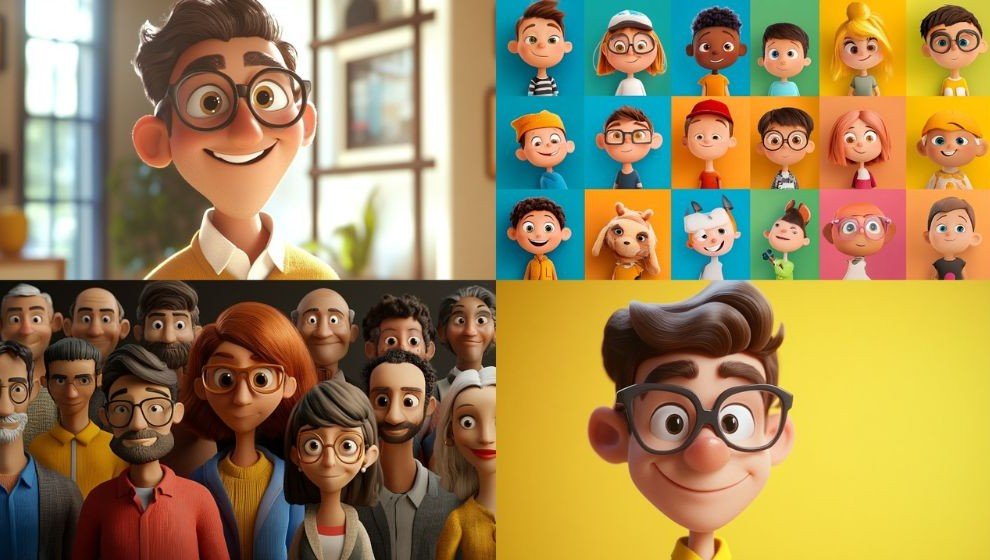
TL;DR: Top 10 Industries Using Character Animation to Boost Audience Engagement. Learn about costs, features, ROI, and how US brands use this technology in 2026.
The New Language of Engagement
We live in an era of scroll fatigue. People skim, swipe, and move on in seconds — unless something genuinely grabs their attention. That “something” more often than not is a character. A friendly animated face, a relatable persona, or an expressive digital mascot can cut through the noise in ways plain text and stock photos simply cannot. Character animation is no longer a luxury reserved for Hollywood studios or big-budget game companies. Today, it is a strategic business tool being adopted across nearly every major industry to boost engagement, improve understanding, and leave a lasting impression.
Why It Works: The Numbers
Before diving into each industry, here are the headline statistics that explain why character animation has become a strategic priority across sectors:
| 82%
of marketers say video delivers positive ROI |
95%
message retention when watched vs. 10% when read |
3×
more engagement from animated brand content vs. static |
72%
of consumers prefer learning about products via video |
The Psychology Behind Character Animation
Human brains are wired to respond to faces, movement, and narrative. Animated characters trigger mirror neurons — the same brain mechanisms that help us empathize with real people. When a brand introduces an animated character, audiences unconsciously form a relationship with it, the same way they would with a real spokesperson.
Beyond biology, animated characters give brands a unique advantage: full creative control. Unlike live-action actors, animated characters never age, never have bad PR days, never go off-script, and can be adapted for any cultural context. They communicate ideas that are difficult or impossible to show in real life — molecular biology, abstract financial concepts, future cities, machine learning pipelines — all rendered in a clear, visually engaging way.
Top 10 Industries Using Character Animation

| 01 Entertainment & Media
STORYTELLING AT SCALE |
| Entertainment is where character animation was born, and it remains its most dominant domain. From streaming giants to indie studios, animated characters are the heartbeat of the industry. But what has changed in recent years is not just the scale — it is the strategy.
Today’s entertainment companies use character animation not just to tell stories, but to build entire franchise ecosystems. Every touchpoint — merchandise, theme parks, apps, games, social media presences — is a fresh engagement opportunity, and character motion is the thread that ties them all together. Streaming platforms have doubled down on animated originals because animated content costs less to localize globally, appeals to multi-generational audiences, and can be produced under any physical constraint. During global disruptions when live-action productions paused entirely, animation studios kept rolling — proving that chacharacter CGI not just creative, it is resilient. Key Insight: The global animation market is projected to surpass $587 billion by 2030, with streaming and social platforms driving significant new demand for short-form animated character content. |
| 02 Education & E-Learning
MAKING LEARNING IRRESISTIBLE |
| Ask any teacher what the hardest part of their job is, and most will say: keeping students engaged. CharacterCharacter visualshis beautifully. When abstract concepts are delivered by a friendly animated guide walking students through problems step by step, comprehension and retention soar.
E-learning platforms like Khan Academy, Duolingo, and Coursera have all integrated animated characters to varying degrees. Duolingo’s green owl mascot, Duo, has become one of the most recognizable characters in digital learning history. Users feel a relationship with that character, which drives them to return, complete lessons, and maintain streaks — that is pure engagement engineering through animation. For younger learners, the impact is even more pronounced. Children’s educational content built around relatable animated characters — whether teaching mathematics, science, emotional regulation, or languages — consistently outperforms static or text-heavy materials in retention studies. Universities and corporate educators are also adopting animated explainer videos and character-led simulations for subjects ranging from medical training to compliance education. Key Insight: Studies in educational psychology show that students engaging with character-driven animated content demonstrate up to 40% better knowledge retention compared to traditional slide-based instruction. |
| 03 Healthcare & Pharma
CLARITY IN HIGH-STAKES COMMUNICATION |
| Healthcare has a communication problem. Medical information is dense, jargon-heavy, and anxiety-inducing. Patients receiving a complex diagnosis, caregivers trying to understand a treatment plan, or members of the public being educated about disease prevention — none of them benefit from walls of text or clinical diagrams. Character aAnimated charactersat gap profoundly.
Animated characters make medical content approachable. A friendly character explaining how a vaccine interacts with the immune system, or walking a patient through what to expect before surgery, transforms a frightening experience into a manageable one. This directly impacts health outcomes — when patients understand their condition and treatment, adherence improves. Pharmaceutical companies use character acharacter animation direct-to-consumer advertising to humanize medications and explain mechanisms of action. Hospital systems use animated videos in waiting rooms to reduce patient anxiety. Medical training is another frontier — character-based surgical simulations and animated anatomy lessons allow healthcare trainees to practice scenarios repeatedly without risk. Key Insight: Patient education videos using animated characters show significantly higher comprehension scores and lower pre-procedure anxiety levels compared to printed materials, according to multiple hospital system studies. |
| 04 Marketing & Advertising
WHERE CHARACTERS BECOME BRANDS |
| Marketing is perhaps where character acharacter motionts most immediately measurable results. A well-designed animated brand character can do in seconds what a paragraph of copy takes minutes to accomplish — and the emotional impact lasts far longer.
Think about brand mascots that have endured for decades: the GEICO Gecko, Tony the Tiger, the Michelin Man. These characters did not just sell products — they became cultural icons. Brand mascots give abstract companies a face, a personality, and an emotional identity. People do not fall in love with a corporation, but they absolutely can fall in love with a character that represents it. Today, animated brand characters appear across social media, YouTube ads, email campaigns, website landing pages, and packaging. Brands are using short-form animated content for platforms like TikTok, Instagram Reels, and YouTube Shorts — where thumb-stopping motion and distinctive character design can explode organic reach without paid amplification. Key Insight: Brands that use animated mascots and characters across their marketing consistently show higher brand recall, with some studies reporting that character-led ads are remembered two to three times more than equivalent non-character ads. |
| 05 Retail & E-Commerce
FROM BROWSERS TO BUYERS |
| E-commerce has an engagement problem that brick-and-mortar stores never had: shoppers cannot touch, try, or experience the product. Character animCharacter CGIat sensory gap in creative, conversion-friendly ways.
Animated characters are being deployed as virtual shopping assistants — guiding visitors through product categories, making personalized recommendations, and answering questions in a way that feels far more human than a traditional chatbot. When the assistant has a face, a name, and a personality, customers are more likely to trust it and engage with it deeply. Product demonstration animations narrated by characters help customers understand how complex products work — assembling furniture, using software, cooking with a new appliance. This reduces returns and increases satisfaction. Animated characters in onboarding sequences for subscription services also dramatically improve activation rates by making the first experience feel welcoming rather than administrative. Key Insight: E-commerce product pages featuring animated product explanations driven by a character persona show measurably higher add-to-cart rates and lower bounce rates compared to text-only descriptions. |
| 06 Gaming & Interactive Entertainment
CHARACTERS AS CORE PRODUCT |
| In gaming, character animation character visualstool — it is the product itself. The quality, expressiveness, and believability of animated characters directly determines whether a game succeeds or fails. Players invest emotionally in characters they control or interact with, and that emotional investment keeps them engaged for hundreds of hours.
The gaming industry has pushed the boundaries of character animation teanimated charactersan almost any other field. Real-time 3D character rendering, motion capture, procedural animation, and facial performance capture have reached extraordinary levels of sophistication. Games like The Last of Us and God of War are discussed alongside feature films for their narrative and character work — because animation quality makes that possible. Beyond AAA gaming, mobile games rely on distinctive animated characters for virality and monetization. Casual game characters become global phenomena precisely because their animated design is immediately recognizable, endlessly meme-able, and emotionally resonant. The emergence of the metaverse has made animated character creation accessible to users themselves — giving rise to a new economy where character tools are products in their own right. Key Insight: The global gaming industry exceeds $200 billion annually, and character design quality is consistently rated among the top factors in both player acquisition and long-term retention surveys. |
| 07 Corporate Training & HR
TURNING DULL MANDATORY INTO ACTUALLY WATCHABLE |
| Most employees do not look forward to compliance training, HR policy videos, or onboarding modules. The information is important — sometimes critically so — but the delivery is often so dry that very little of it sticks. Character animation chCharacter animationentirely.
Corporate training departments worldwide are replacing slide-deck modules with character-driven animated scenarios. Instead of reading about workplace harassment policy, employees watch animated characters navigate a realistic scenario, make choices, and experience consequences. This scenario-based learning approach improves comprehension, empathy, and real-world application in ways that abstract rule recitation simply cannot. For global corporations training across language and cultural barriers, animation is particularly valuable. An animated character can be voice-dubbed and culturally adapted far more easily than live-action footage, ensuring consistent training quality across international teams. Companies have also reported significantly higher onboarding satisfaction scores after introducing character-led animated content for new hires. Key Insight: Organizations using animated scenario-based training report up to 60% improvement in employee knowledge retention and significant reductions in compliance violations compared to traditional training formats. |
| 08 Real Estate & Architecture
BRINGING BLUEPRINTS TO LIFE |
| Real estate used to rely on floor plans, brochures, and the hope that buyers could visualize a finished property from a half-built shell. Character animation — Character motionombined with 3D visualization, AR, and VR — has fundamentally transformed what it means to sell a property before it is built.
Architectural animation now routinely features animated human characters populating virtual buildings. These characters serve a deliberate purpose: when a potential buyer sees animated people enjoying the rooftop garden or children playing in the courtyard, it triggers the most fundamental human desire — to picture themselves in that space. Scale comes alive, lifestyle becomes tangible, and emotional connection to an unbuilt property becomes possible. For large mixed-use developments, smart city projects, or commercial real estate pitches, character animation helpscharacter CGIlize not just the building but the entire community and ecosystem around it. An animated vision of a neighbourhood at peak activity is far more persuasive to an investor than a technical site plan. Key Insight: Real estate developers using animated character-driven walkthrough videos report that prospects who view animation content are significantly more likely to schedule a site visit or make a reservation deposit than those who only see static renders. |
| 09 Fintech & Banking
MAKING MONEY LESS SCARY |
| Financial services have a trust problem and a complexity problem — and character animation addresses bcharacter visualsis stressful. Financial products are confusing. Regulatory language is impenetrable. An animated character that walks through concepts in plain language, with warmth and patience, transforms that experience entirely.
Fintech startups have been particularly aggressive in adopting animated characters as part of their brand identity and user experience. From onboarding new users to explaining how budgeting algorithms work, animation makes complexity disappear. Companies like Monzo, Chime, and Robinhood have built user experiences layered with animated elements that make financial management feel less like banking and more like a helpful app users actually want to open. Banks and insurance companies are using animated explainer videos to communicate product terms, regulatory changes, and retirement planning concepts in ways that customers actually watch and understand. In investment platforms, animated characters break down portfolio performance and complex instruments in a way that removes intimidation and encourages continued engagement — driving customer lifetime value. Key Insight: Fintech apps that use character-driven onboarding animation report significantly higher user activation rates — with some companies seeing 30-50% improvements in first-week engagement after introducing animated guide characters. |
| 10 Non-Profit & Social Causes
STORIES THAT MOVE PEOPLE TO ACT |
| Non-profit organizations face one of the hardest communication challenges: convincing people to care about something they are not personally experiencing, and then motivating them to take action. Character animation is one of theAnimated characterss in that mission.
Animated characters allow non-profits to tell stories from perspectives that live-action cannot always reach ethically or practically — the experience of a refugee child, the daily life of someone living with a rare disease, the perspective of an endangered species. A well-crafted animated character can generate genuine empathy within minutes, making abstract statistics feel personal and urgent. Global health organizations use animated campaigns to communicate vaccination drives, hygiene practices, and disease prevention to communities with limited literacy or internet access — animation transcends language barriers in ways that text never can. On the advocacy side, animated short films and character-driven social content consistently outperform static posts in shares, donations driven, and petition signatures. Key Insight: Animated fundraising and awareness campaigns run by non-profits consistently generate higher sharing rates and donor conversion compared to static alternatives — particularly when content features a specific animated character whose journey viewers can follow. |
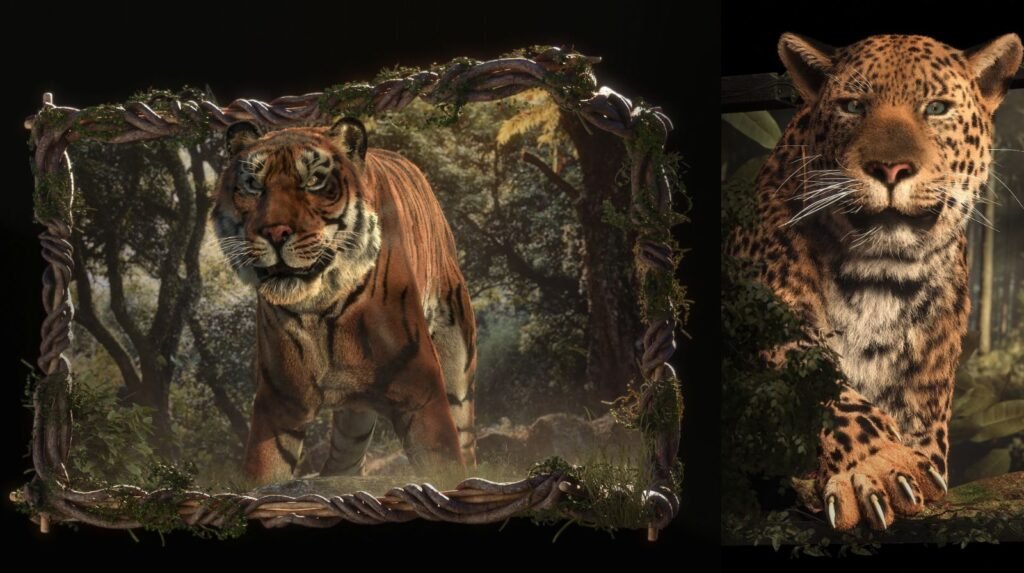
The Common Thread: Connection, Clarity, and Conversion
Looking across all ten industries, a clear pattern emerges. Character animation is being usedCharacter animations and organizations need to accomplish one or more of three fundamental goals: create genuine emotional connection with an audience, deliver clarity around complex information, and drive meaningful conversion — whether that is a purchase, a habit, a donation, or a behaviour change.
What makes character animation uniquely suited to all three is its ability to combine the emotional power of storytelling with the explanatory power of visual communication, all wrapped in a brand-controlled package that is infinitely adaptable. Unlike human spokespeople, animated characters do not create unpredictable liabilities. Unlike static graphics, they convey personality, emotion, and narrative. Unlike written content, they engage audiences who might otherwise scroll past.
The businesses winning with character animation right now are not necessarily those with the largest budgets. They are the ones who understand their audience deeply enough to create characters that audience genuinely relates to, and who are consistent in how they deploy those characters across every touchpoint. The question is not whether character animation is relevant to your industry — as this article has shown, it is relevant to virtually every industry. The real question is: what character could you create that your audience would actually care about?
Frequently Asked Questions
Q: Which industries benefit most from character animation?
While virtually every industry can benefit, the highest impact is seen in entertainment and media (where animation is core to the product), education and e-learning (where engagement and retention are critical), healthcare (where clarity reduces anxiety and improves outcomes), marketing and advertising (where emotional recall drives ROI), and corporate training (where engagement with mandatory content has historically been low).
Q: How does character animation improve audience engagement specifically?
Character animation boosts engagement through several psychological mechanisms: it triggers empathy by giving abstract brands a relatable face, it improves information retention because humans remember stories and visual narratives far better than facts alone, it creates habitual return behaviour by building audience attachment to characters over time, and it simplifies complex topics through visual metaphor and narrative structure.
Q: Is character animation expensive for small businesses?
The cost of character animation has dropped significantly with modern tools and creative studios. Simple 2D character animations can be very affordable, especially when produced by specialized agencies. The ROI from increased engagement, better retention, and higher conversion rates typically justifies the investment far more than equivalent spend on static content. Many small businesses start with a single animated explainer or mascot and scale from there.
Q: What is the difference between 2D and 3D character animation for business use?
2D character animation tends to be more cost-effective, faster to produce, and well-suited for explainer videos, social media content, and brand mascots. 3D character animation is more immersive and impactful for product visualization, architectural walkthroughs, gaming, and VR/AR experiences. The right choice depends on your budget, timeline, platform, and the emotional effect you want to create.
Q: How do I get started with character animation for my brand?
The best starting point is defining the purpose and personality of your character before worrying about style or production method. Who does your audience need this character to be? What tone — humorous, authoritative, warm, adventurous — aligns with your brand? Once you have that clarity, partnering with an experienced animation and digital experience studio like Ink n Algorithm allows you to develop a character that is genuinely strategic, not just visually attractive.
| Ready to Bring Your Brand Character to Life?
At Ink n Algorithm, we create immersive digital experiences — from character-driven animations to full AR and VR environments — that connect your brand with audiences in ways that truly stick. |
FAQ
How much does top 10 industries using character cost?
The cost varies based on project scope and complexity. Contact us for a custom quote tailored to your specific needs.
How long does top 10 industries using character take?
Typical projects take 2-8 weeks depending on scope. We provide detailed timelines during consultation.
Do you work with US brands?
Yes, we work with US brands across all 50 states. Our team understands the US market and delivers solutions that drive results.